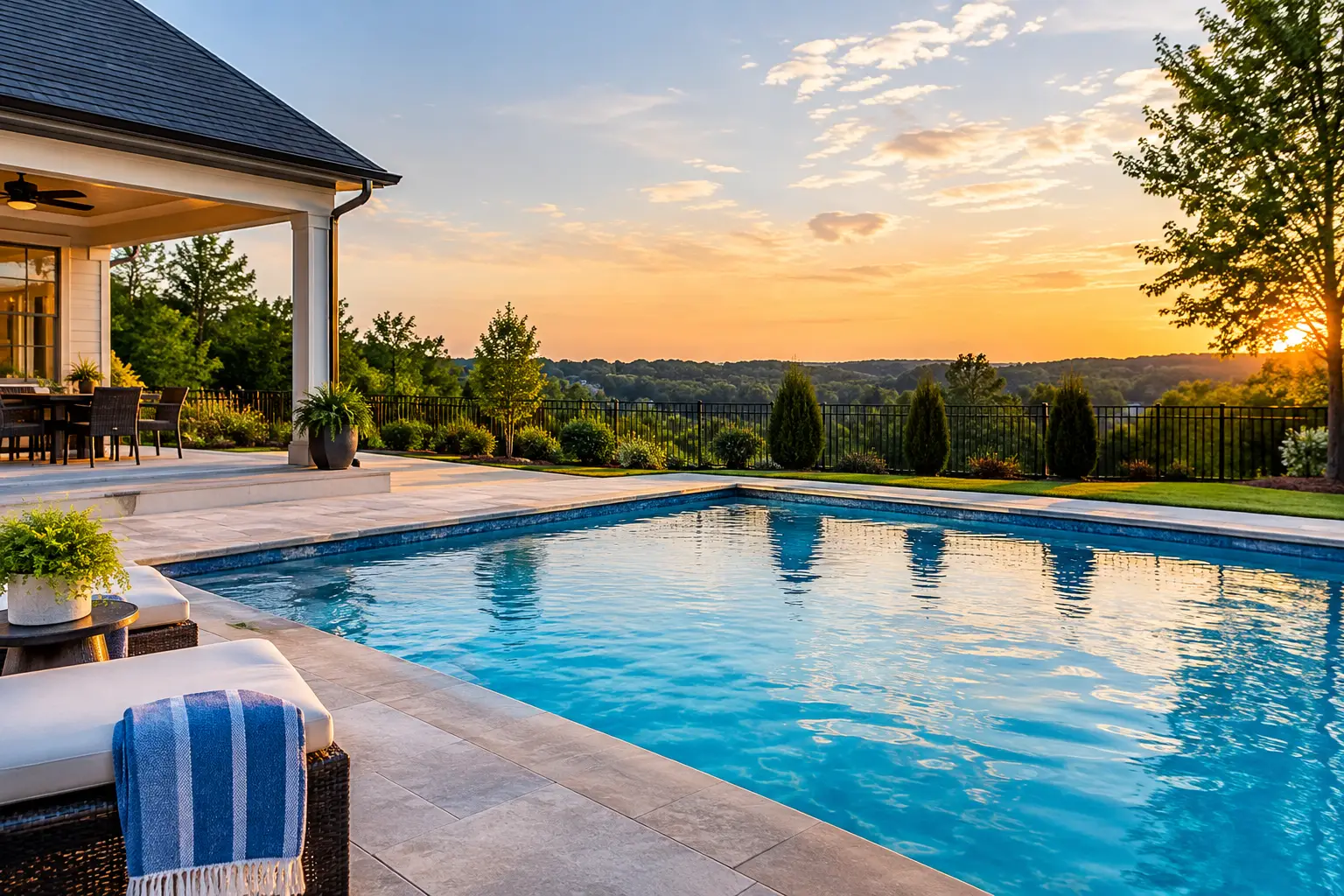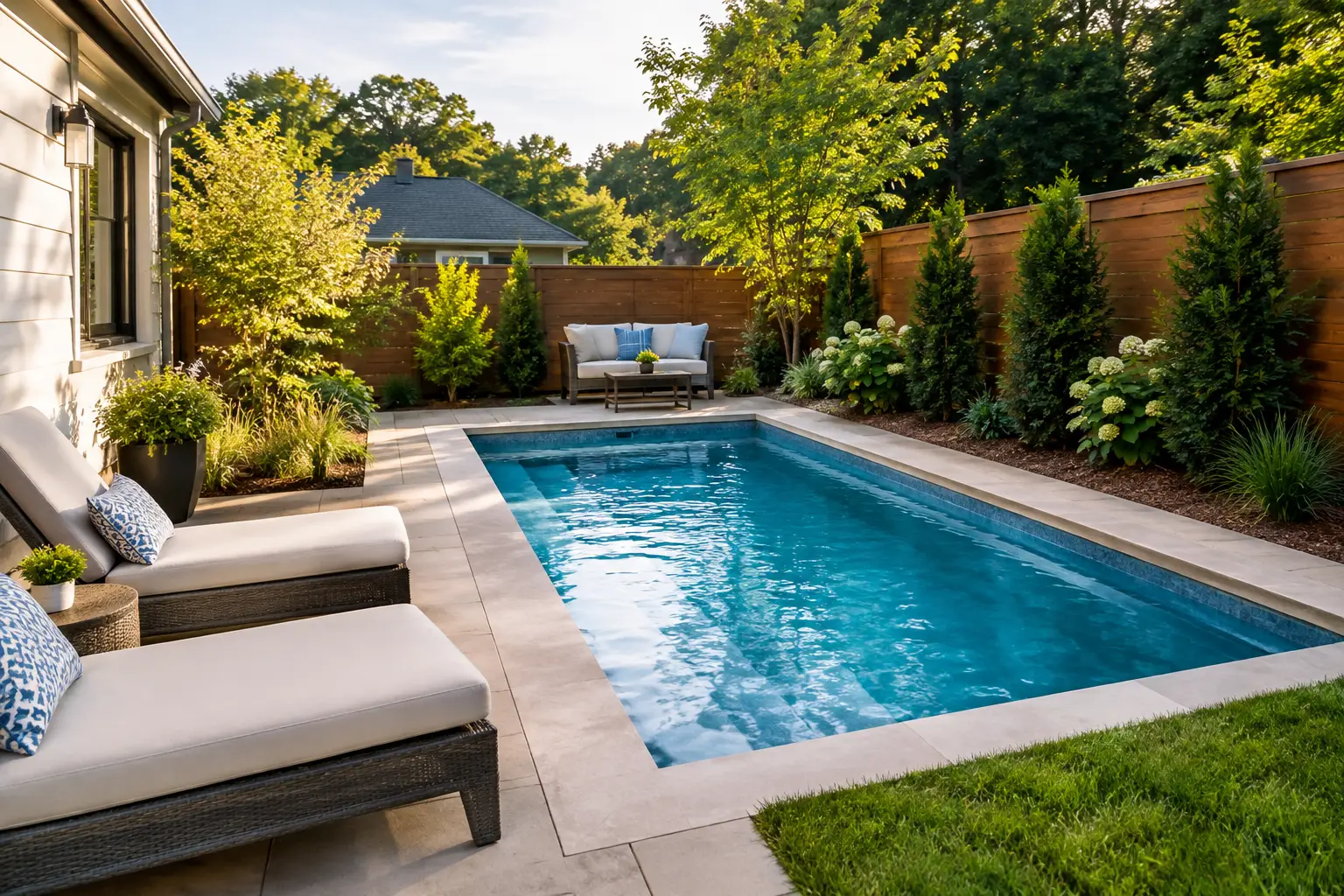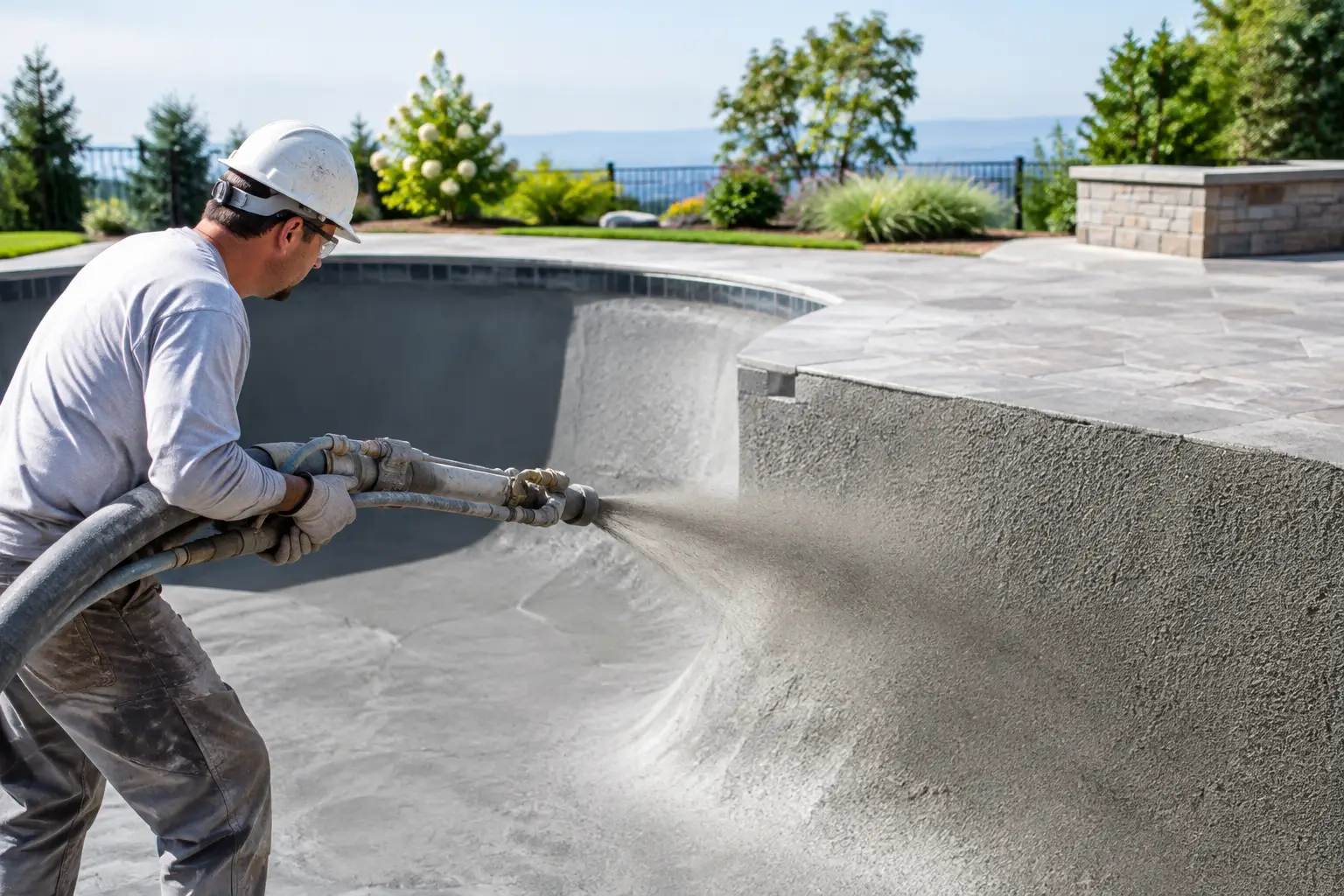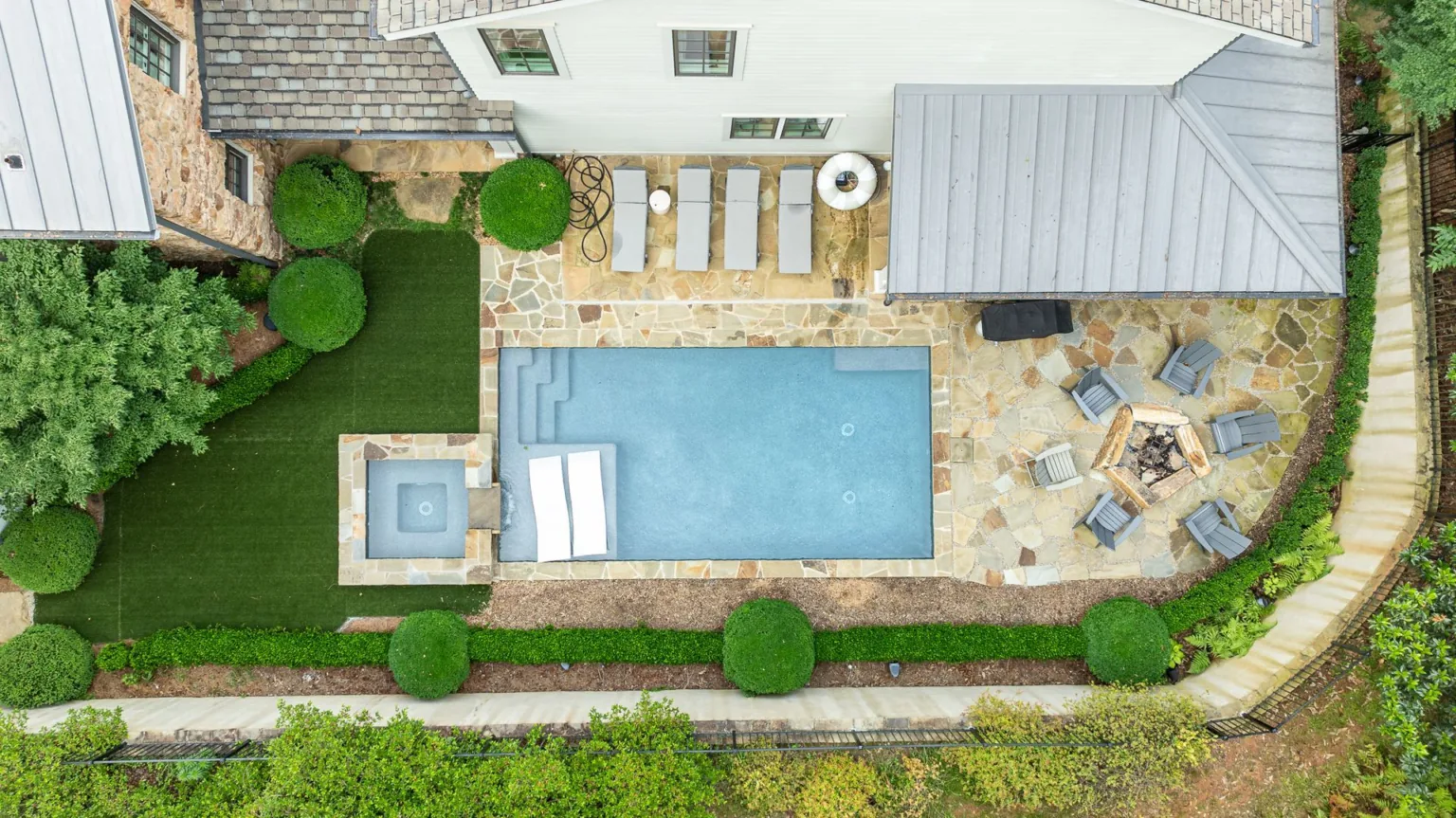

A gunite pool is an in-ground pool whose structural shell is made by spraying a dry mix of cement and sand through a hose at high pressure, with water added at the nozzle, over a framework of steel rebar. Gunite pools, often called concrete or shotcrete pools, are a type of concrete pool. “Gunite” names the specific method used to apply the concrete, while “concrete pool” is the broader category. So when one builder says gunite and another says concrete, they are usually describing the same kind of custom, reinforced pool.
Here is how gunite works, how it compares to other concrete methods, and the real benefits and trade-offs of choosing a gunite pool.
How gunite works
After the pool is excavated and the steel is tied, a crew sprays gunite over the rebar to form the floor and walls. The mix stays dry until it reaches the nozzle, where water is combined with it. The force of application packs the material tightly against the steel. The crew then shapes and smooths the shell by hand, forming steps, benches, tanning ledges, deep ends, and curves as they go.
Once the shell cures, it becomes the strong base for the finished interior surface, which may be plaster, pebble, or tile. The rebar acts like a skeleton, giving the shell strength and helping it resist soil pressure and movement. For a full walkthrough of each phase, see the gunite pool construction process, step by step.
Gunite vs. concrete: clearing up the terms
The wording causes a lot of confusion because gunite is a cement-based material, so people assume there is no difference at all. In practice, the terms break down like this:
- Gunite is dry-mix concrete sprayed through a hose, with water added at the nozzle.
- Shotcrete is wet, pre-mixed concrete pumped through a hose and sprayed. Read more in shotcrete pool construction explained.
- Poured or formed concrete is cast into forms. It is rarely used for custom residential pools because it does not handle curves and built-in features well.
- “Concrete pool” is a catch-all that can include any of the above.
That is why estimates can sound inconsistent even when builders are talking about similar pools. The more useful question is how the shell will be built, how it will be reinforced and cured, and how much design freedom is included. A quality shell depends on engineering, soil preparation, drainage planning, and workmanship, not just the name of the method.
Benefits of a gunite pool
Design freedom
The biggest reason homeowners choose gunite is customization. Because the shell is sprayed into place, the pool is not limited to a factory mold. It can be geometric or freeform, narrow or wide, shallow or deep, or built with multiple elevations. Gunite pools can include built-in spas, beach entries, spillovers, vanishing edges, sun shelves, underwater benches, swim-outs, and custom water features.
That flexibility helps with tricky lots too. A narrow side yard, a sloped property, or mature trees do not automatically rule out a pool. They just change the design conversation. A 3D custom pool design shows you how the pool will fit before construction starts.
Built around how you use the pool
A family with young children may want a wide tanning ledge and a large shallow area. A homeowner who swims for exercise may want a long rectangular layout. Someone who entertains may want bench seating and a raised spa. Gunite lets the design follow the way you actually plan to use the water, and it lets the pool serve different ages at once.
Placement matters as well. A pool that sits too close to the house can crowd the space around it, while one placed too far away can feel disconnected. Good design plans clear walking paths, space around the pool for chairs, and sightlines from inside the home.
Strength for Georgia conditions
A properly engineered and reinforced gunite shell is built to last. Northeast Georgia properties often come with rolling terrain, red clay soil, wooded lots, varied drainage patterns, and limited access. A good builder evaluates those conditions first, then plans excavation, structural support, and drainage to match. The preparation below grade matters as much as what you see at the waterline. Our post on gunite pool durability goes deeper on this.
A wide range of finishes
Gunite pools can be finished in plaster, pebble, quartz, and other interior surfaces. Some homeowners want classic bright blue water. Others prefer a darker, more natural tone. Waterline tile and coping add another layer of control so the pool fits the style of the house.
The trade-offs
Cost. A gunite pool usually costs more upfront than fiberglass or vinyl liner because it is custom-built on site with skilled labor. The final number depends on your property and design. Our Gunite Pool Cost in Georgia guide explains what drives it.
Build time. The shell is formed on site and then has to cure, so construction is more involved than setting a factory-made shell. Weather, access, and design complexity all affect the schedule.
Ongoing care. Like any pool, gunite needs regular water balancing, cleaning, and equipment care. Water chemistry is especially important with cement-based finishes, and the interior finish will eventually wear and need to be refinished, depending on the material and how well the water is balanced. That is normal ownership, not a sign of trouble, but it belongs in the decision.
Gunite compared with fiberglass and vinyl liner
The better question is not which pool type is best overall, but which one fits your yard, budget, and goals.
- Fiberglass pools are factory-made, delivered by truck, and set as a single shell. They install faster and have a smooth surface that needs less attention. The trade-off is that you choose from available shapes and sizes.
- Vinyl liner pools can cost less upfront and offer some design flexibility, but the liner is a wear item that will eventually need to be replaced.
- Gunite pools make the most sense when customization matters, the lot is challenging, or you want features that preformed shells cannot offer.
Is gunite a good fit for your backyard?
For many Georgia homes, yes. Sloped yards, varied lot shapes, and specific family needs often call for more than a one-size-fits-all pool. Before deciding, think about how you will use the pool five or ten years from now, not just next summer. Look at where water drains in your yard, how construction equipment will reach the build area, and how much upkeep you are comfortable with.
Bulldog Pool Builders designs and builds custom gunite pools across Northeast Georgia and Upstate South Carolina. If you are weighing your options, schedule a consultation or call (706) 705-7751, and we will look at your property and help you choose the right pool for it.