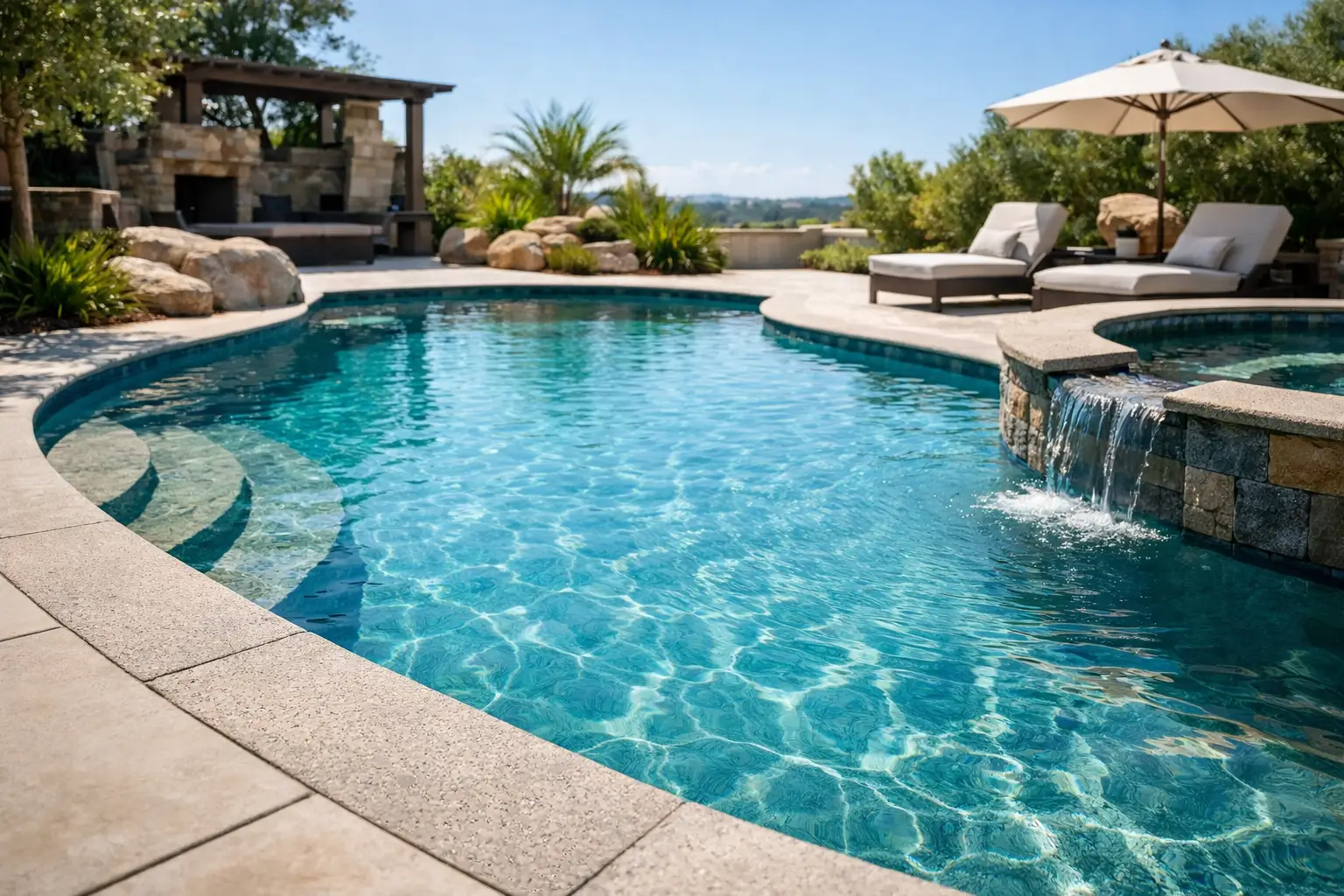
Yes. A gunite pool is one of the most durable pool types you can build. When it is properly designed, built on a well-prepared site, and cared for with the right finish and balanced water, a gunite pool can serve a Georgia home for decades. Gunite pools, often called concrete or shotcrete pools, have a reinforced concrete shell that is built for your site and designed to be a permanent part of the property.
That long life depends on construction quality. A gunite pool is not a prefabricated product. Its strength comes from the work beneath the surface: excavation, steel reinforcement, plumbing, concrete application, curing, drainage, and finish selection. Here is what makes a gunite pool last and what homeowners should understand before they build.
Why a gunite pool is built to last
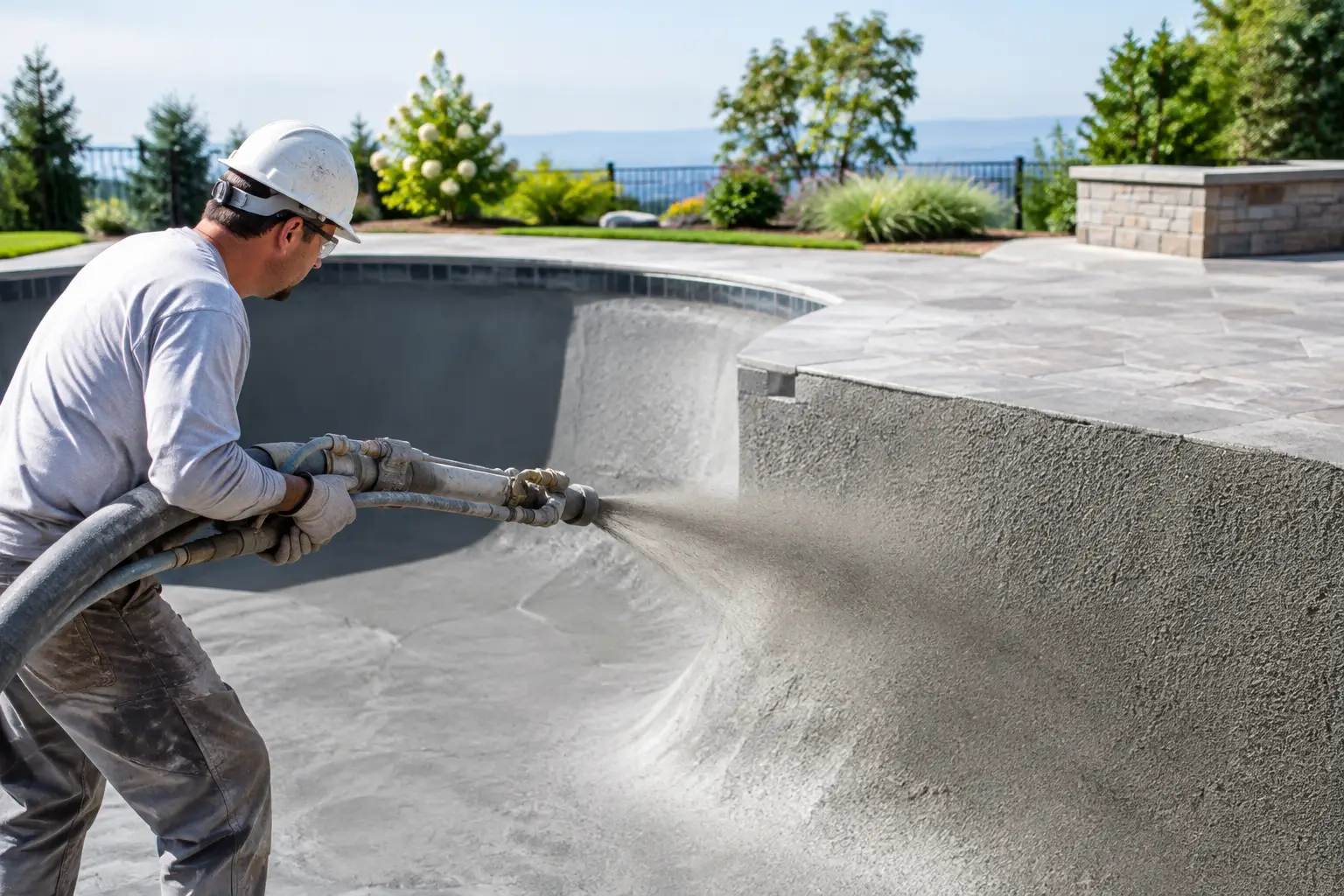
After the pool is excavated and shaped, crews install a network of steel rebar, then spray gunite over it to form the shell. Gunite is a dry concrete mix that is combined with water at the nozzle and packed tightly against the steel as it is applied. Once properly cured, the shell becomes a solid structure that handles daily use, changing water levels, and the pressure of the surrounding soil.
Because the shell is built in place, it can be shaped around a sloped yard, a tanning ledge, a spa, or a raised wall instead of forcing the yard into a standard mold. That flexibility has practical value: the structure is designed for your specific site and the loads it will face.
Durability does not mean a gunite pool will never need attention. It means the core structure is designed for a long service life. Like a home’s foundation, it performs best when the original construction accounts for site conditions and the owner keeps up with the surfaces and systems that protect it.
The shell lasts longer than the finish
One point often missed during pool research is the difference between the structural shell and the visible interior surface. The reinforced concrete shell can last for many decades. The plaster, pebble, or other interior finish will eventually wear and need to be refinished. How long a finish lasts depends on water chemistry, usage, finish type, color, and care. Pebble and other aggregate finishes generally hold up longer than standard plaster and have a more textured look, but they cost more at the start.
Refinishing the interior is a normal part of owning a concrete pool, not a sign the pool has failed. Think of it like repainting siding after years of weather. The structure stays; the surface that protects it is renewed. You can compare interior finishes on our pool features and finishes page.
Tile, coping, pumps, lights, heaters, and automation equipment also have their own life spans. A well-planned pool accounts for these from the start, including easy access to the equipment pad and materials that fit how the family plans to use the pool.
What determines whether a gunite pool stays durable
Site preparation and soil conditions
Northeast Georgia has beautiful rolling properties, but many yards also have red clay soil, slopes, drainage challenges, and varying groundwater. These do not rule out a gunite pool. They make careful engineering and site preparation essential.
The excavation must be properly prepared, and the design should account for the grade around the house. Water needs a controlled path away from the pool, and the area around the pool should slope away from the water. On some properties, extra structural planning or drainage systems are needed to manage the land correctly.
Drainage
Poor drainage causes problems around any outdoor structure. Water that collects along the pool’s edge or behind walls can contribute to soil movement and surface damage over time. A durable pool starts with a plan for where water goes during a hard Georgia rainstorm.
Steel, application, and curing
The shell depends on more than concrete. Rebar reinforces the whole structure, especially around steps, benches, deep ends, raised features, and changes in depth. The gunite has to be applied at the correct thickness and packed properly to create a consistent shell.
Curing matters just as much. Concrete develops strength over time, and keeping the shell properly moist during curing supports that strength, especially in summer heat. Rushing or cutting corners on shell work may not be obvious when the water first goes in, but it can affect long-term performance. Our guide to the gunite pool construction process walks through each of these steps.
Water chemistry and routine care
Water chemistry directly affects the interior finish and the equipment. Water that is consistently too acidic, too high in calcium, or poorly balanced can etch plaster, create scale, fade certain surfaces, and shorten the life of heaters, salt systems, and other components.
Routine testing, cleaning, and good circulation protect the investment. Modern equipment and automation make regular care far more manageable for busy homeowners. They do not remove the need for it, but they help keep the system running consistently. If you hire someone to care for the pool, choose a company that understands your specific finish and equipment. If you plan to do it yourself, make sure you get clear startup and care guidance when construction is complete.
Can gunite pools crack?
Concrete can develop cracks, and a reputable builder should be direct about that. Not every crack is a structural problem. Some minor surface cracking can occur as materials cure or as conditions around the pool change. What matters is whether a crack affects water retention, structural integrity, or the performance of the finish.
Proper steel reinforcement, a correctly applied shell, good drainage, and careful construction greatly reduce the risk of serious issues. The pool also needs to be designed with the ground around it in mind, including grading, nearby structures, and where runoff will go.
If you notice ongoing water loss, a crack that keeps growing, or loose tile or coping, have it evaluated promptly. Catching a problem early keeps a small fix from becoming a bigger one.
How gunite durability compares
A gunite pool is an excellent fit for homeowners who want design freedom and a long-term improvement to the property. It suits custom shapes, integrated spas, vanishing edges, beach entries, sun shelves, and water features.
The trade-offs are a larger upfront investment, a longer build than some other pool types, and ongoing care of the finish, equipment, and water balance. The final cost depends on your property and design; our Gunite Pool Cost in Georgia guide explains the factors. A fiberglass pool is another durable option with a factory-made shell and a smooth surface, but with less freedom of shape. For many homeowners, the ability to build a pool that fits the property is worth it.
Make durability part of the design conversation
The best time to protect a gunite pool’s lifespan is before construction begins. Tell your builder how you plan to use the pool, point out spots where water collects in the yard, and be clear about how much upkeep you are comfortable with. Ask how they handle site conditions, steel placement, plumbing pressure tests, curing, and drainage. Those answers tell you more about a pool’s future than any finish sample.
Bulldog Pool Builders designs and builds custom gunite pools with the same attention to what happens below grade as to the view from your back door. Schedule a consultation or call (706) 705-7751 to talk about your project.