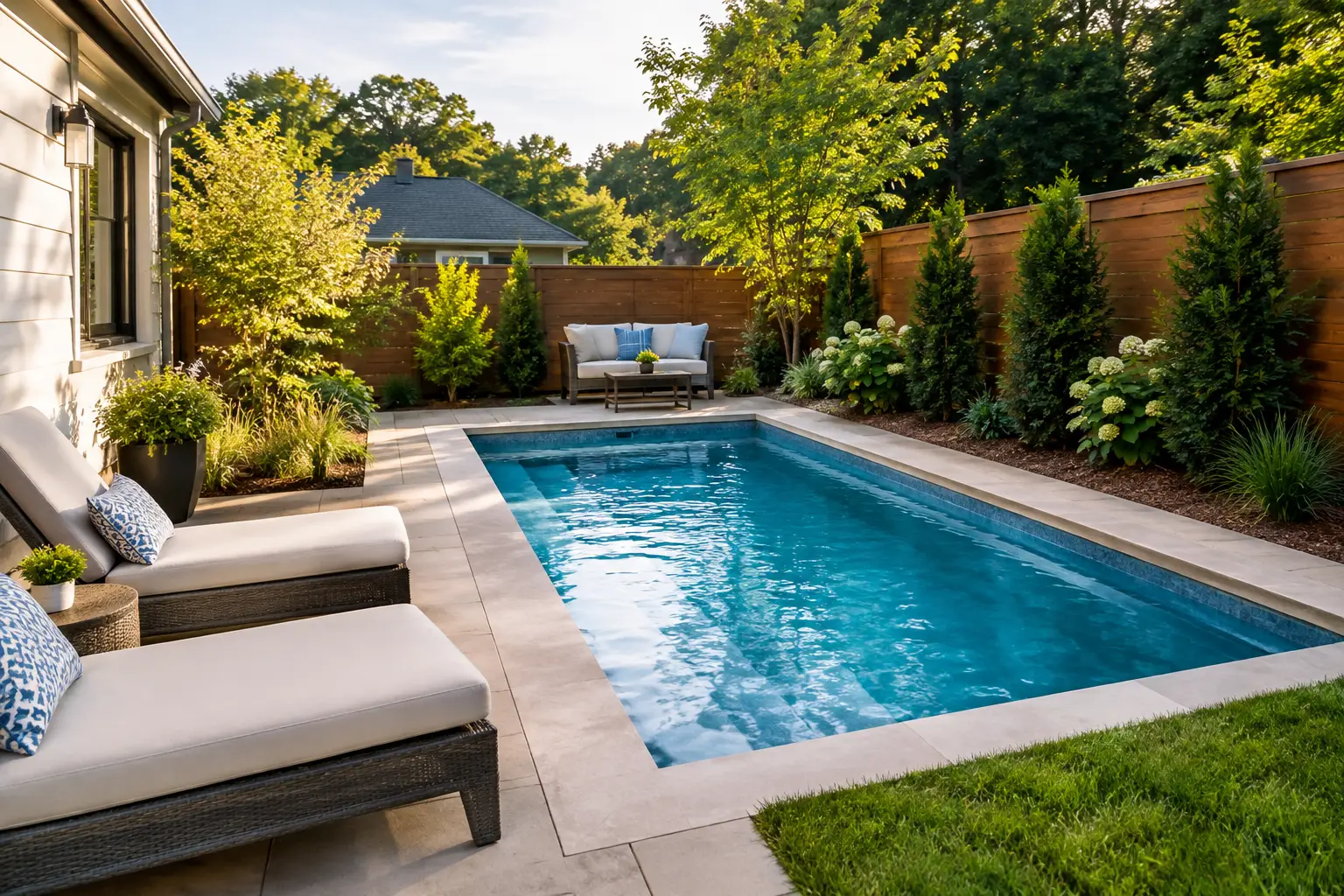
Yes, a small backyard can hold a pool that works well. The ideas that succeed in tight spaces share one trait: focus. A clean shape, a few features that each do a real job, and a layout that leaves room to move around the water will make a compact pool feel finished instead of crowded. This guide covers the shapes, features and site questions that matter most when square footage is limited.
Start with how you will actually use the pool
The biggest mistake in a compact yard is trying to fit in everything. Pick one main purpose and let it guide the design. That might be cooling off and lounging, family play, entertaining, exercise, or simply a strong visual feature you see from the house.
Then think about an ordinary weeknight, not just a big party. Will your family spend more time sitting in the water than swimming laps? Do you want room for two loungers more than extra pool length? Would a simpler shape leave more of the budget for lighting or a better interior finish? Honest answers to these questions narrow the options quickly.
Before settling on a shape, also look at where people will enter the yard, where they will sit, and what you want to see from inside the home. A pool should feel connected to the house, not pushed to the far edge of the property as an afterthought.
Shapes that make the most of limited space
A clean rectangle
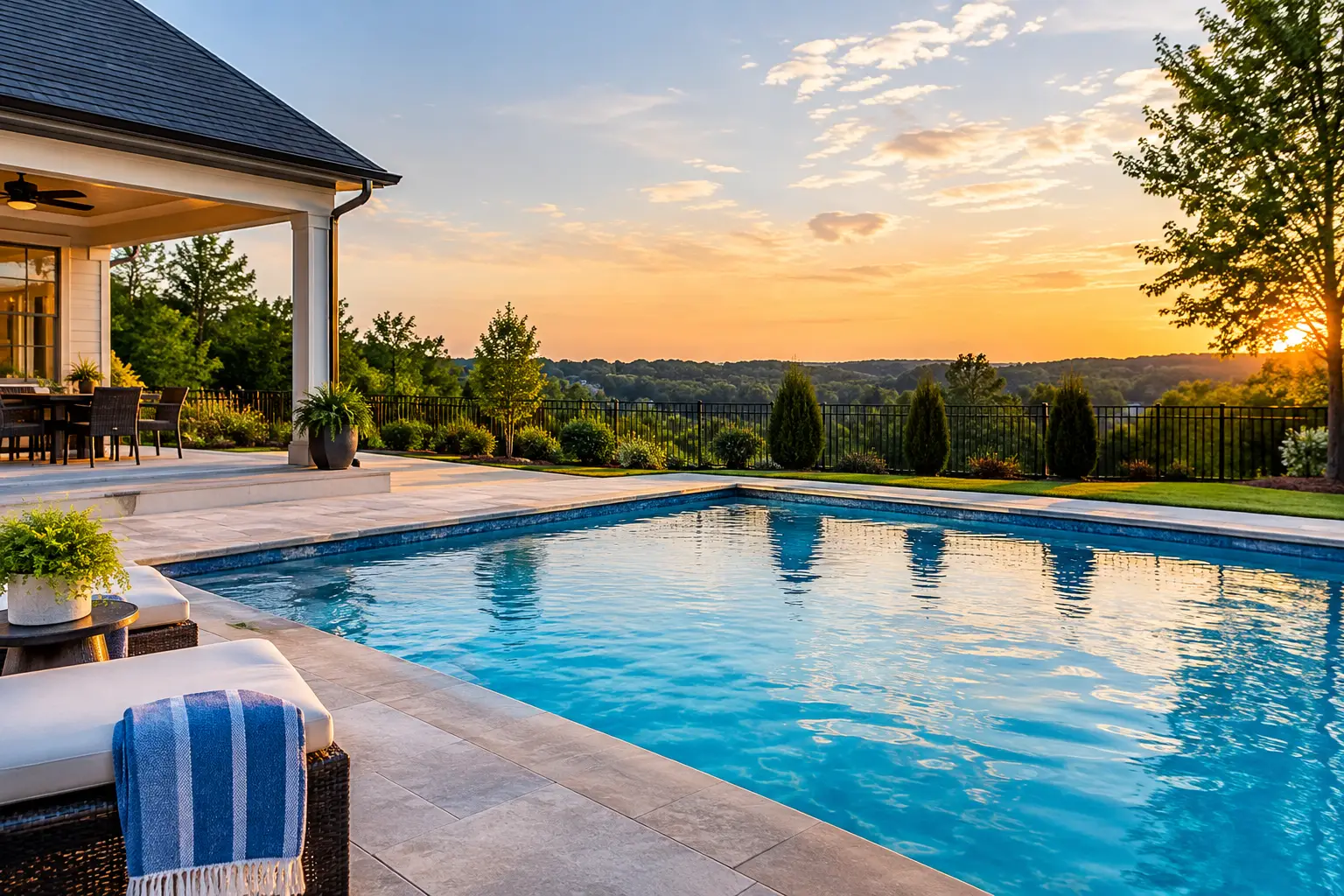
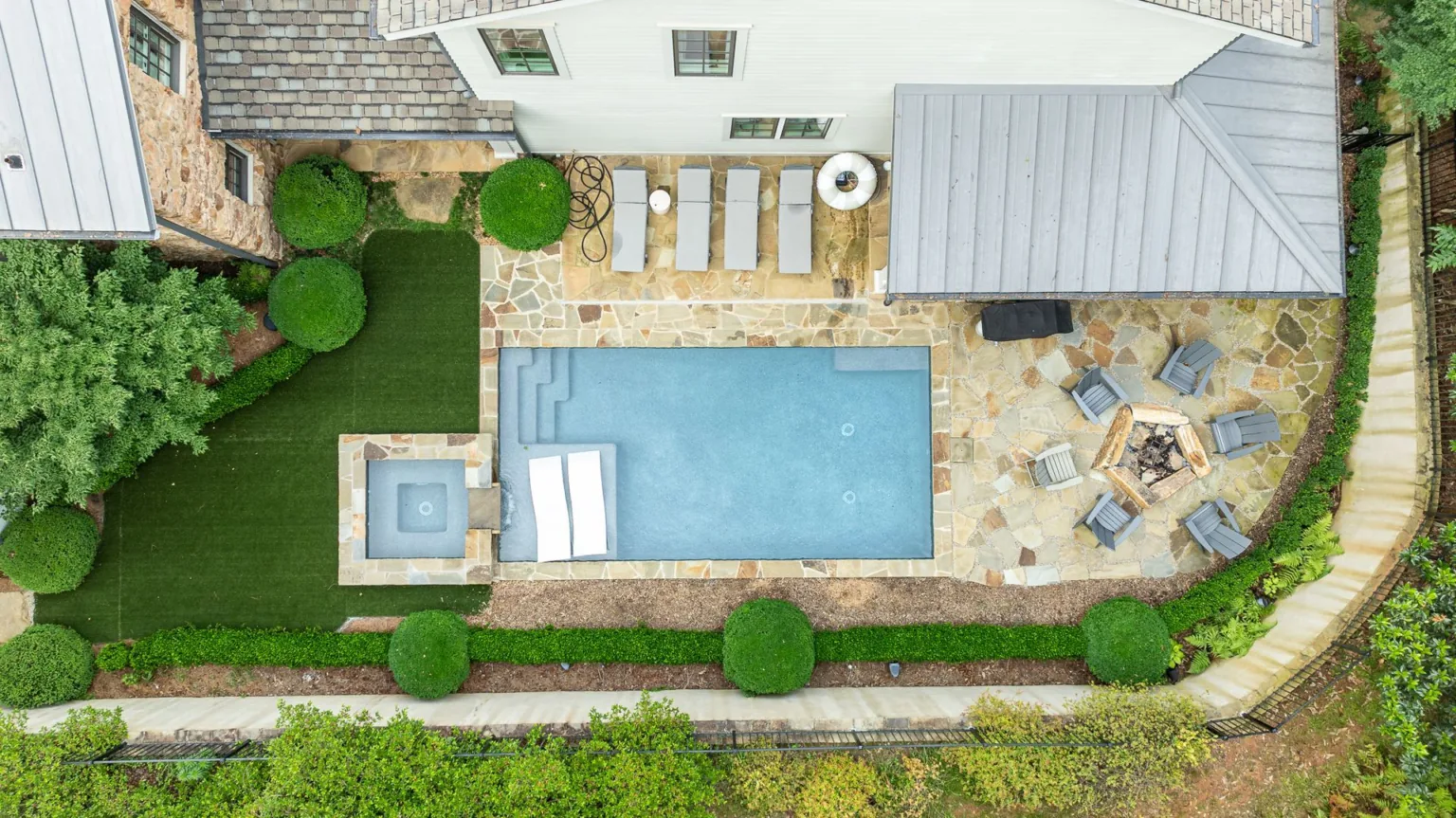
A rectangle is often the strongest choice for a smaller yard. It uses space efficiently, keeps construction lines simple, and is easy for the eye to read, which tends to make the yard feel larger. Curves can be attractive, but in a tight footprint they sometimes leave awkward leftover gaps that are too small to use. A rectangle also suits a narrow lot that calls for a long, linear layout.
A freeform shape where the site calls for it
Freeform pools make sense when mature trees, curved property lines or a sloped yard shape the buildable area. The curves can soften a compact space and create natural spots for steps and benches. The trade-off is that irregular shapes can eat up more of the surrounding area and make furniture placement less predictable.
An L-shape for two zones
When a yard naturally splits into two areas, an L-shaped pool can give one leg to swimming or play and the other to a social area with a tanning ledge or spa. It can make the pool feel planned rather than boxed in.
A cocktail or plunge-style pool
Not every household needs a full-size swimming pool. A cocktail pool, sometimes called a plunge-style pool, is built for cooling off, relaxing and conversation rather than laps. It fits narrow lots well and leaves room for features like benches or a ledge. Just be clear early on that it is not designed for active swimming games or lap swimming.
Features that earn their place
In a small pool, every feature should have a job. These tend to deliver the most value without expanding the footprint.
- A tanning ledge instead of a big shallow end. A well-planned ledge gives you a place for in-water loungers, a shallow spot for young kids under supervision, and somewhere for adults to sit partly in the water on hot Georgia afternoons. It often does more than a broad shallow section would. See our tanning ledge design ideas for layouts.
- Built-in benches. A bench along a deep-side wall keeps the open water clear, while wraparound seating makes a small pool feel more social. Either way, you add seating without adding space around the pool.
- Wide entry steps that double as seating. A broad first step is an easy place to sit and cool off. Our guide to pool entry designs compares the options.
- One well-placed water feature. A raised wall with a sheer descent or scupper adds sound, movement and a stronger architectural presence. It can also act as a privacy screen. One feature usually has more impact than several small ones competing in a tight space.
- Clean edge and finish details. Crisp coping lines, quality waterline tile and a well-chosen interior finish often do more for a compact pool than adding size. If the budget is limited, keep the shape simple and spend on finishes you see every day.
- Thoughtful pool lighting. Underwater lighting improves nighttime visibility and makes a small pool look sharp from inside the house.
Restraint matters. Multiple large water features, heavy rockwork or a detached spa can make a small yard feel busy unless the plan genuinely has room for them.
Leave room around the pool
A compact pool still needs usable space around it for walking, chairs and safety. The goal is to size that area for how you will actually use it, not to cover the whole yard. Plan space around the pool for a couple of loungers and a clear route back to the house. Too little room leaves nowhere to sit; too much hard surface can make a small yard feel hot and crowded.
Think about shade early, too. Georgia summer heat makes a shaded spot near the water valuable, but overhanging trees close to the pool add debris and cleanup. Position the pool with sun and existing trees in mind.
Plan for Northeast Georgia site conditions
A small yard leaves less room to adjust when a site issue appears, so it pays to identify these early:
- Setbacks and easements. Local rules control how close a pool can sit to property lines, easements and structures. In a tight yard these rules can set the maximum pool size. Our Georgia pool permits guide explains what to expect.
- Utilities and septic. Buried lines and septic fields can limit where the pool can go.
- Slope. Sloped lots are common in this region. A grade change can become an opportunity for a raised wall or a slightly elevated pool edge, but it has to be engineered correctly.
- Drainage. Red clay soil and heavy rain mean the area around the pool must slope away from the water and away from the home’s foundation.
- Construction access. Equipment and materials need a route into the backyard. A narrow side yard does not rule out a pool, but it can affect the construction method and which pool type is practical.
Choose the construction type for the design
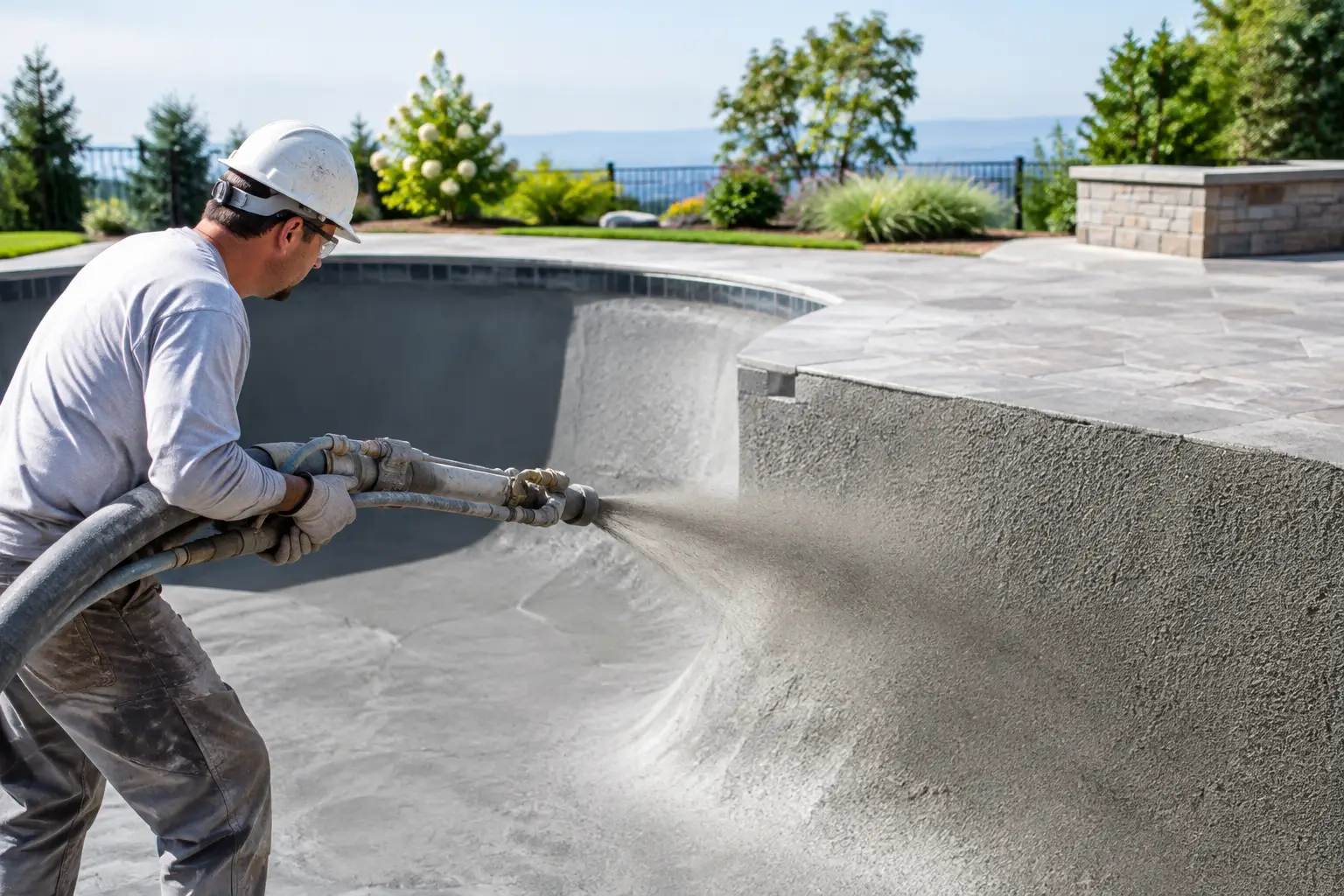
Gunite pools, often called concrete or shotcrete pools, offer the most freedom in a small yard. Because the shell is formed on site, it can match an exact footprint and include integrated benches, a tanning ledge or a raised wall. That makes gunite pool construction the usual choice when a compact design needs to respond closely to the house or a difficult lot. The process is more involved than installing a pre-made shell.
Fiberglass pools work well when an available shell matches your goals and the site has room for delivery. Shells are factory-made and arrive by truck, so access and lift space matter. The main limit is that dimensions are tied to existing models.
Vinyl liner pools are another practical option for homeowners balancing size, shape and budget. The right choice depends on how you will use the pool, what the site allows and how much customization the design needs.
On cost, there is no single number for a small pool. It depends on the property, the construction type and the features you choose. Our Gunite Pool Cost in Georgia guide walks through what drives price.
Small is a design condition, not a drawback
A compact yard simply asks for more discipline. Pick a clear purpose, use a shape that fits the space, choose features that work hard, and plan the site details before construction starts. Handled that way, a small pool can feel sharper and more inviting than a larger one that was never carefully thought through.
If you are working with a small or awkward backyard, we can look at the site and show you what fits with a 3D design before construction begins. Schedule a consultation or call (706) 705-7751.