
Pool construction financing lets you pay for a new pool over time instead of paying the full cost up front. Most homeowners use one of a few approaches: a loan secured by home equity, an unsecured personal loan, savings, or a combination. The right choice depends on your equity, credit, income and comfort with a monthly payment. Whatever route you take, the process works best when you start with a defined pool design and a clear proposal, then match the financing to that number. For the options Bulldog Pool Builders can point you to, visit our financing page.
This article explains how pool financing generally works and what to think through before you apply. It is general information, not financial advice, and any lender’s actual terms will be in its own loan documents.
Start With the Pool Plan, Not the Loan
A lender can tell you how much you can borrow. A pool builder can tell you what your property and goals actually require. Those are different conversations, and both matter.
Begin with a design consultation that covers how you want to use the pool, where it will sit relative to the house, what features you want and what your lot will need. Then separate must-haves from upgrades. A family focused on swimming may prioritize pool size, a tanning ledge and safety features. Others may care more about an attached spa or water features. There is no single right answer, but deciding early keeps the budget grounded.
A detailed proposal makes financing easier to evaluate. Instead of applying for a vague amount, you can compare loan options against a defined project cost plus a reasonable cushion. That helps you avoid borrowing too little and scrambling for funds near the end of construction. Our process page shows how design and proposal come before construction.
What the Budget Should Cover
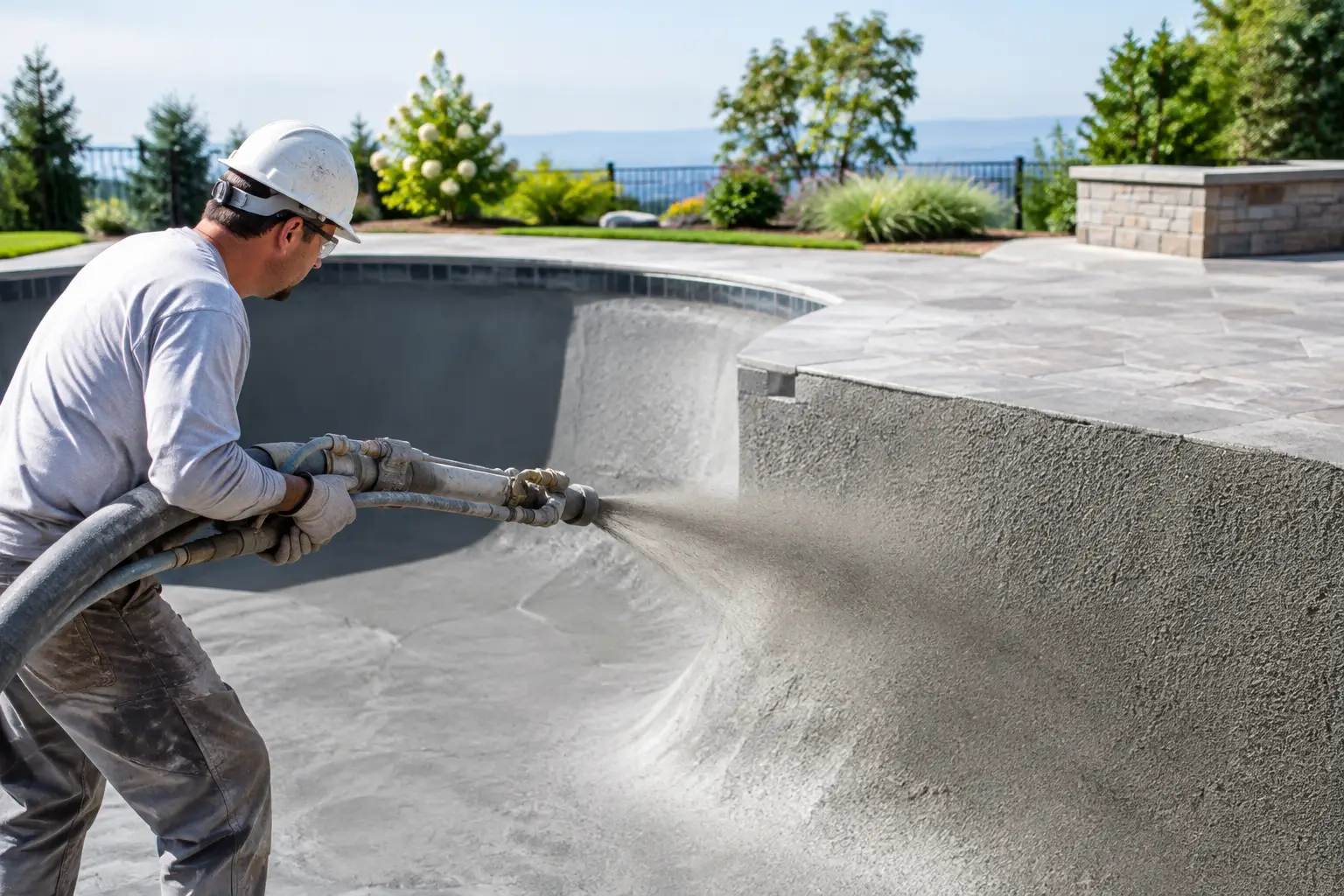
A pool budget is more than the price of the shell. For a new in-ground pool, the total can include design, engineering, permits, excavation, plumbing, electrical work, equipment, interior finish, coping, safety barriers and restoring access routes after construction. Whether you choose gunite, fiberglass or vinyl liner affects the number too. Gunite pools, often called concrete or shotcrete pools, are fully custom, so their cost depends heavily on the design. Our Gunite Pool Cost in Georgia guide explains what drives pricing.
Site conditions deserve extra attention. Sloped lots, rocky ground, red clay, limited equipment access and drainage needs can all affect construction requirements. A contingency gives you room to make good decisions if conditions below the surface differ from what was visible during planning.
Common Ways to Finance a Pool
Lenders set their own rates, fees, terms and approval requirements, and those change over time. Review actual loan documents carefully rather than comparing advertised numbers alone. In general, the options fall into a few categories.
Home equity loans and lines of credit
A home equity loan usually provides a lump sum repaid on a set schedule. A home equity line of credit, or HELOC, lets you draw funds up to an approved limit as you need them. Both use your home as collateral, so they tend to make sense when you have substantial equity and are comfortable with that arrangement.
A line of credit can be flexible when construction payments come due in phases. Some lines carry variable rates, which can change your payment over time, while a lump-sum equity loan may offer more predictable budgeting but less flexibility once the amount is set. Ask any lender how its product works on these points.
Unsecured personal loans
Personal loans do not use your home as collateral. They can be a practical choice if you want a simple, fixed payment or prefer not to borrow against your property. Approval and pricing usually depend heavily on credit, income, existing debt and the loan amount.
Because the lender takes on more risk without collateral, unsecured loans may cost more or have shorter repayment periods than equity-based products. For the right borrower, the simplicity and speed can still be worth it.
Cash and combined approaches
Paying from savings avoids interest and keeps you free of a loan payment. The trade-off is tying up money you may want for emergencies or other goals. Some homeowners combine savings with a smaller loan to balance the two.
If you plan to add something later, such as a spa or heater, design for it now. Plumbing, electrical capacity and equipment space can be planned during construction so a future addition does not mean undoing finished work. Phasing works when it is planned, not when it results from an incomplete budget.
Look Beyond the Monthly Payment
A low monthly payment can be appealing, but a longer repayment period can increase the total interest you pay. When comparing offers, look at:
- The annual percentage rate, not just the advertised interest rate
- The length of the loan
- Origination and closing fees
- Whether there is a prepayment penalty
- The total amount you will repay over the life of the loan
Also plan for the cost of owning a pool: utilities, chemicals, routine cleaning, insurance conversations and eventual equipment replacement. Equipment choices like variable-speed pumps affect long-term operating costs. These costs should not discourage a project you value, but they belong in a realistic household budget.
Avoid a plan that leaves no breathing room. If the preferred design stretches your budget too far, adjust the features, timing or payment structure before construction begins rather than after.
Read Proposals Carefully
A clear construction proposal should list the contracted work, allowances for selections, expected site work and how unknowns will be handled. Ask what is included and what could add cost. That conversation matters most for custom pools, where access, grading, existing utilities and local requirements can change the scope.
Be cautious with quotes that are dramatically lower than comparable proposals. A lower price may reflect lesser equipment, fewer included items, limited site preparation or assumptions that turn into change orders later. The goal is not to find the highest number, but to understand what each number buys. Our guide on how to choose a pool builder covers what to ask.
Timing Financing and Construction
Loan approval, design, permitting, material selection and construction scheduling all take time. Starting the financing conversation early gives you flexibility when it is time to approve a design and pick a construction window, and it keeps you from making a rushed decision.
You do not need financing finalized before your first meeting with a builder. A preliminary consultation can clarify the likely investment range and help you decide which financing options are worth exploring. Once you have a defined proposal, you can move forward with better information.
Next Steps
The most satisfying pool projects start with a design that fits the property, the family and the budget, then use financing with clear terms and enough margin to feel comfortable. To get a defined proposal you can take to a lender, schedule a consultation or call (706) 705-7751.