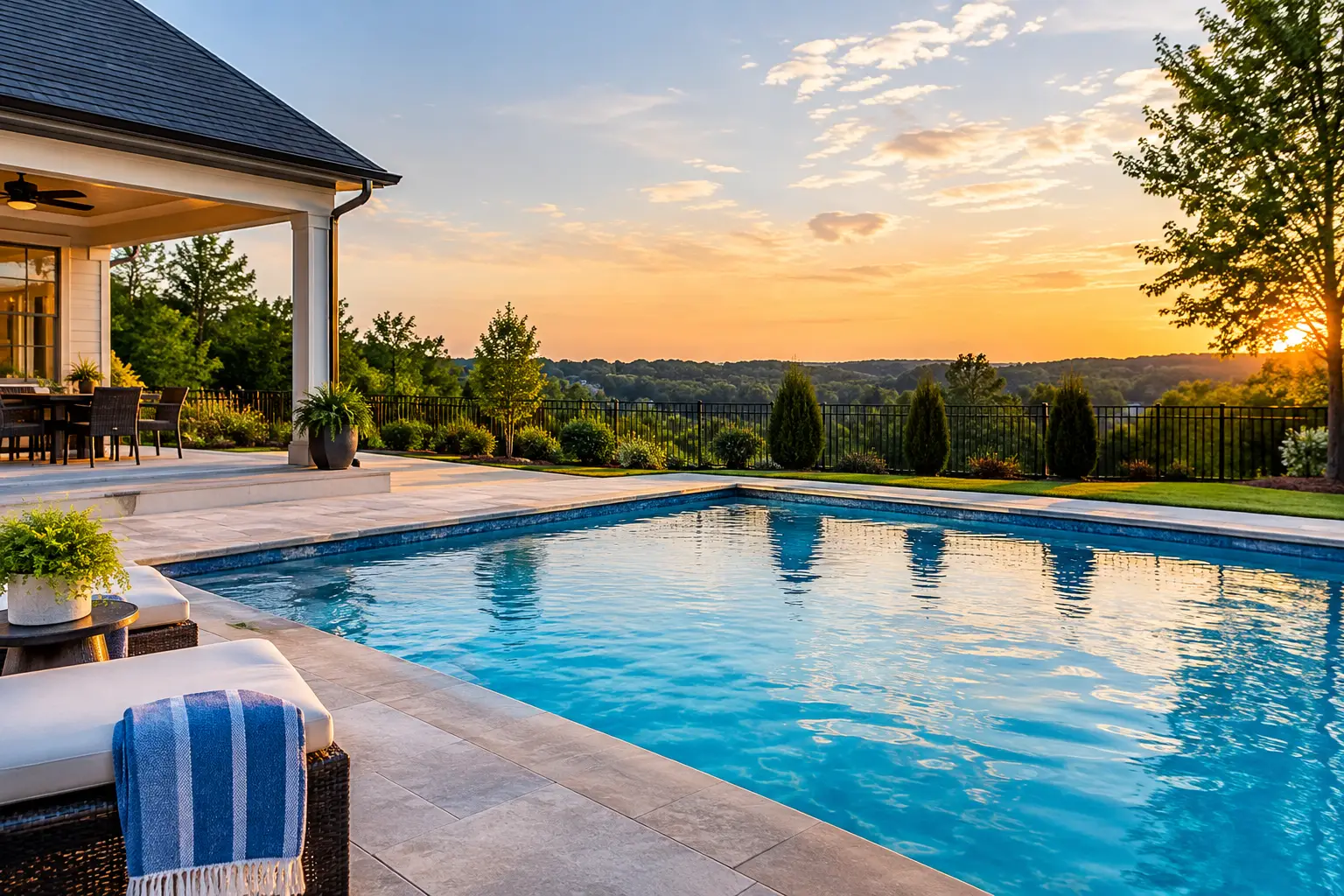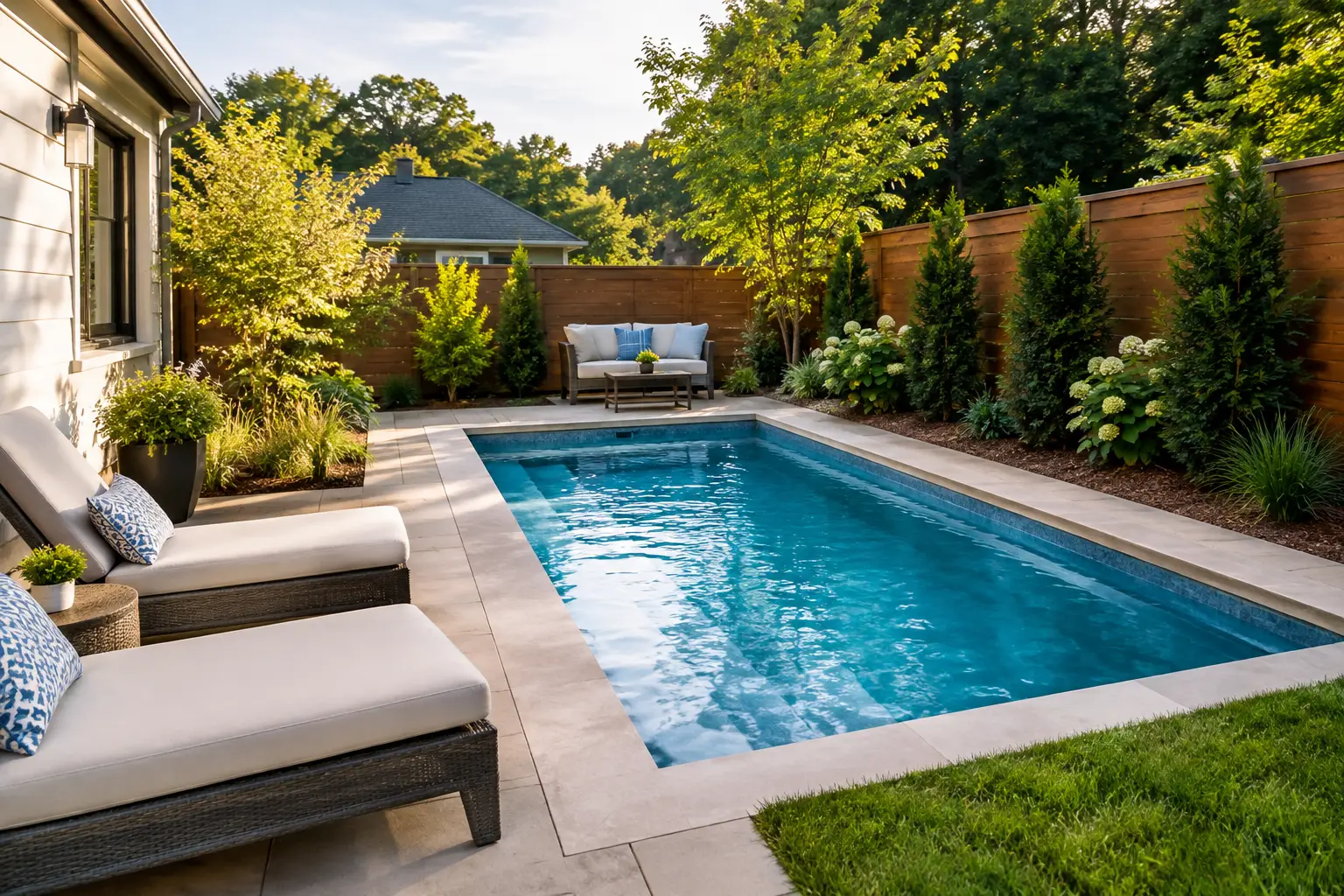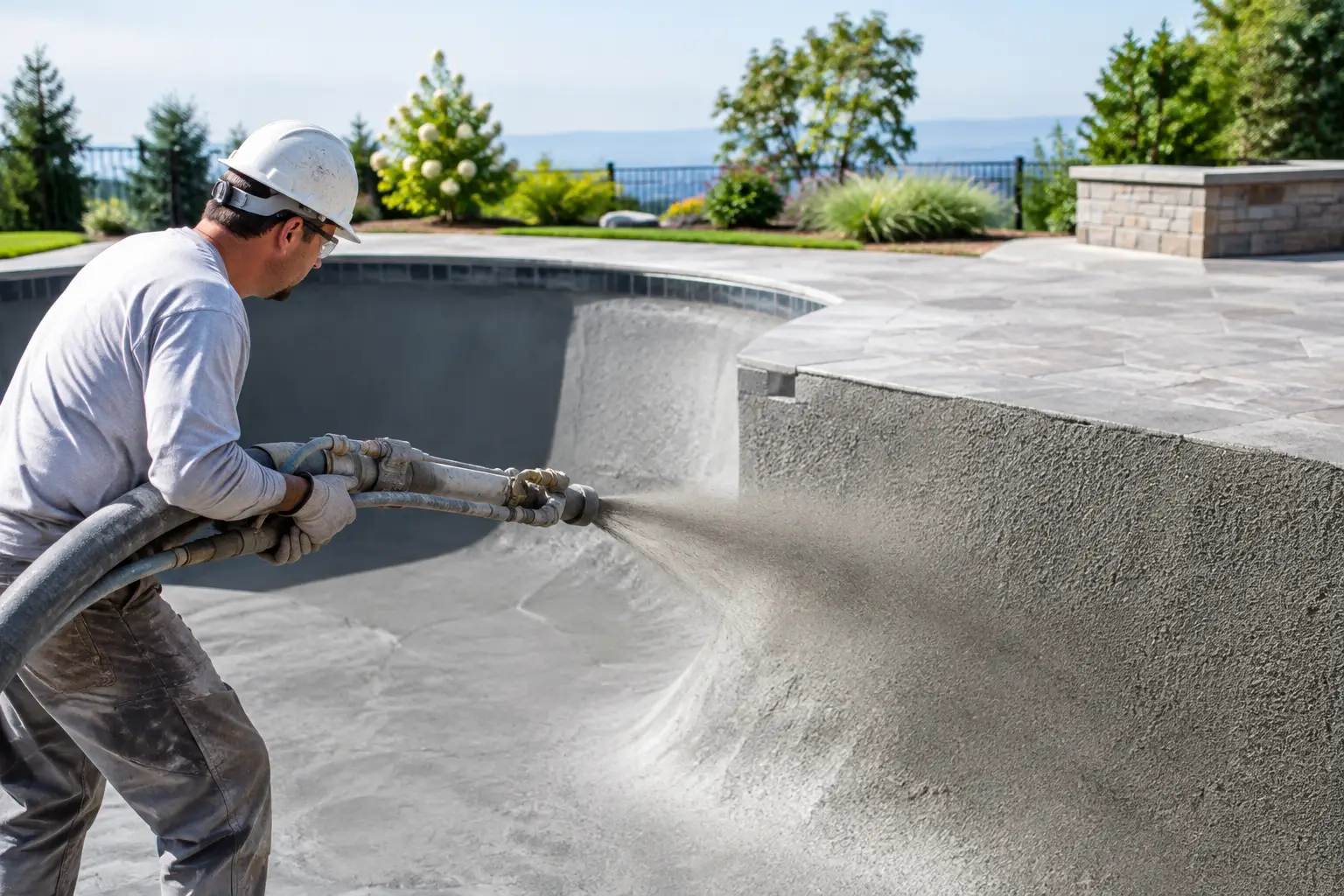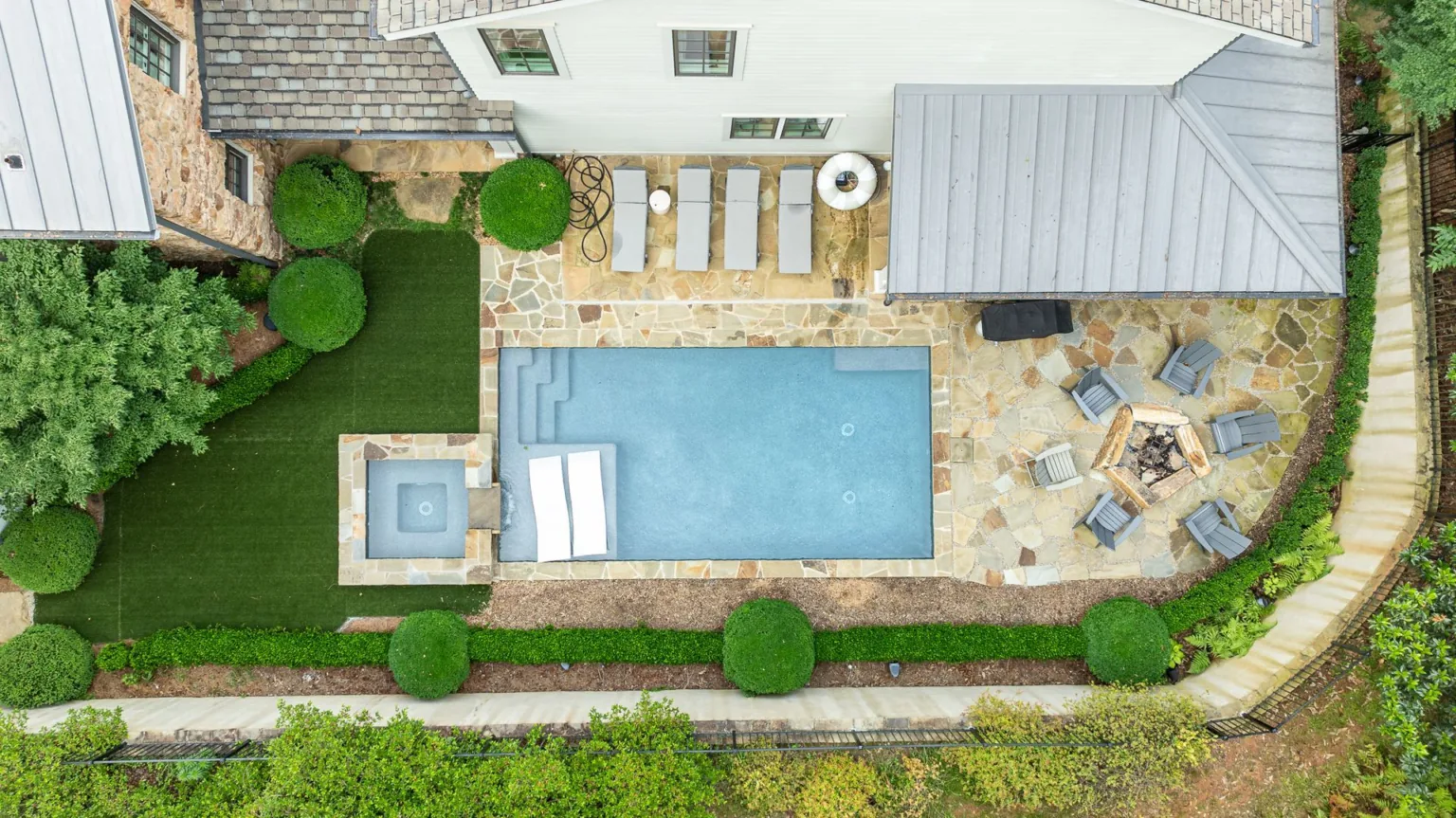
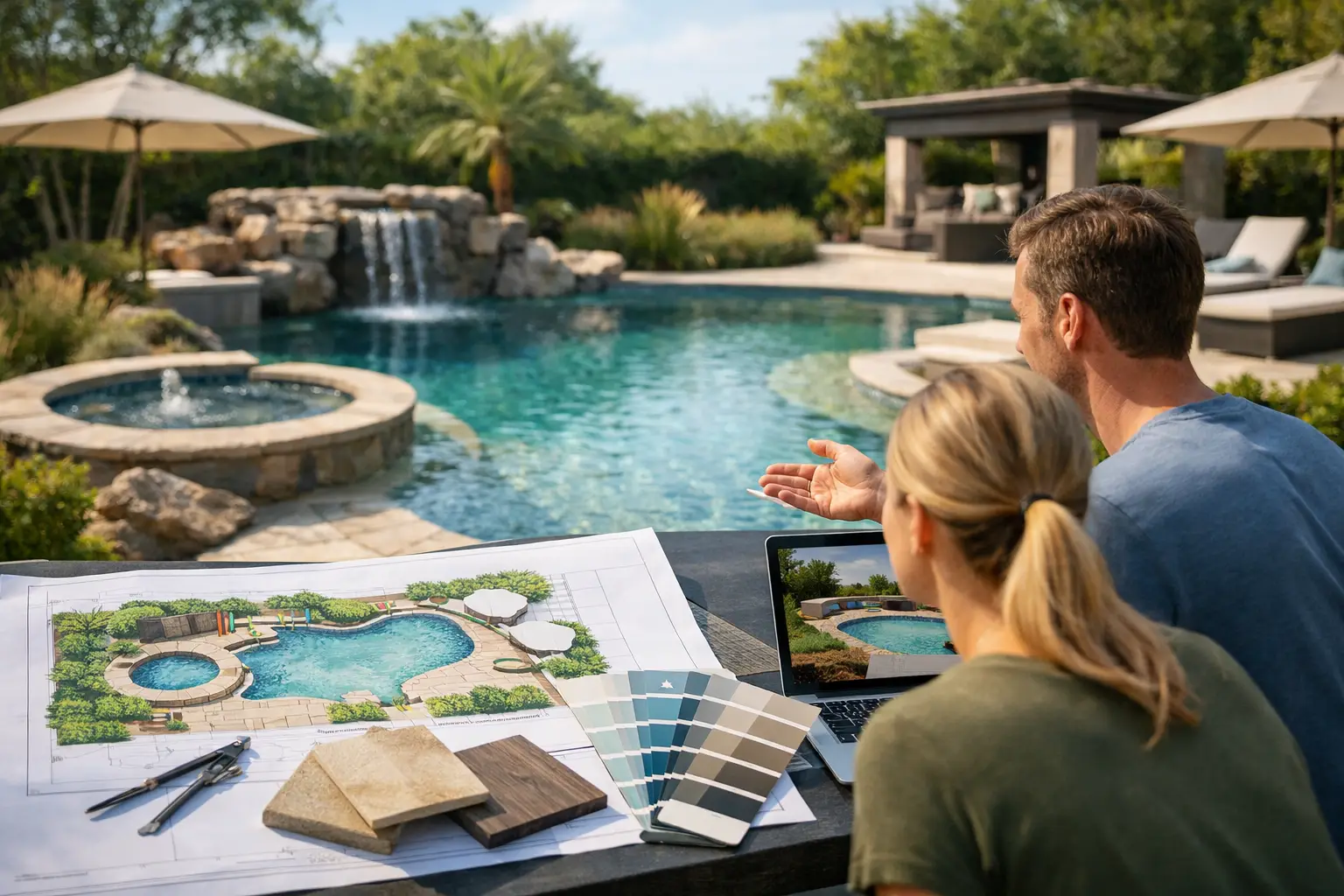
To plan a custom pool, start with how your family will use it, then study your yard, set a budget that covers the whole project, choose a construction method and design direction, and settle safety and permit questions before anything is built. A custom pool is designed for one property and one household, so the planning work is what makes it fit.
Here is how to work through each step, with notes on the Georgia conditions that shape a good design.
Start With How You Will Use the Pool
Before discussing shapes, finishes or water features, think about the people who will use the pool most.
- A family with young children may want a broad tanning ledge, a shallow play area and clear sightlines from the house.
- Homeowners who host often may want built-in benches, a spillover spa and room around the water for guests.
- If the pool is mainly for exercise, length and an unobstructed swim lane matter more than a freeform outline.
- If relaxation is the goal, a compact pool with comfortable seating in the water may be the right fit.
Then work through a few practical questions. Where will guests enter the yard? Where will towels and chairs go? Do you want sun most of the day, or shade in the afternoon? Will the pool be visible from the kitchen, living room or main bedroom?
It is easy to fall for a dramatic photo online. A good design turns your answers into a pool that works on an ordinary Saturday, not just in a picture.
Study Your Yard Before Choosing a Shape
Every property has opportunities and constraints. Grade changes, drainage paths, utility lines, septic systems, mature trees, easements and setbacks all affect where a pool can go and how much site work it needs.
Know your usable space
Start with the usable part of the yard, not the total lot size. Leave room for equipment access, code-required barriers and comfortable movement around the pool.
Work with slope and soil
Sloped lots and red clay soil are common in Northeast Georgia. A sloped yard may call for a raised pool wall, a stepped design or retaining work built as part of the pool structure. Clay holds water after heavy rain, so the area around the pool must be graded to drain away from the water and the house. See building a pool on a sloped yard.
Balance sun and shade
A pool in full sun stays warmer and feels more inviting during swim season. Shade from established trees cools the area but adds leaves and debris, and tree roots need consideration during excavation. The right placement balances sunlight, privacy, views and cleanup.
Match the Design to Your Home
Look at the architecture of your house. A clean-lined geometric pool often suits a contemporary home or one with strong straight lines. A freeform pool with natural stone coping can complement a more traditional home or a wooded lot. The goal is not to copy a trend. It is to design a pool that looks like it belongs with the house.
Size and depth
Bigger is not always better. A well-proportioned pool with room around it often serves a family better than a larger pool that takes over the yard. Depth works the same way. For casual recreation, a moderate depth profile may make more sense than a deep pool that adds cost without adding daily use. Our post on how deep a pool should be covers the options.
Features that earn their place
A tanning ledge is popular because it does several jobs: lounging, supervised play for young kids and a place to sit in the water. Built-in benches are practical for families who entertain. Water features add sound and movement, but they should match the style. A clean sheer descent suits a modern design, while a natural rock waterfall fits a freeform pool.
Lighting matters more than many homeowners expect. Underwater lights and step lights improve safety and make evening swims possible. The key with every feature is restraint. Too many competing features make a pool feel busy instead of polished.
Choose a Construction Method
Bulldog Pool Builders builds three types of pools, and each has trade-offs.
- Gunite pools, often called concrete or shotcrete pools, offer the most flexibility for custom shapes, depths, tanning ledges, attached spas and integrated water features. They are the usual choice for a fully custom design.
- Fiberglass pools use a factory-made shell with a smooth surface and a shorter installation phase. You design around available shapes and sizes.
- Vinyl liner pools offer flexible sizing and a soft finish at a lower starting cost, with the understanding that the liner will eventually need to be replaced.
For a closer comparison, see gunite vs. fiberglass pools.
Set a Realistic Budget
The pool shell is only part of the investment. A full budget includes excavation, drainage, steel and plumbing, equipment, electrical work, coping, interior finish, fencing required by code and permits. Rock, difficult access or extra grading can also affect cost.
Separate the must-haves from the upgrades. Proper drainage, safe entry, quality equipment and a sound structure are foundational. A water feature, attached spa or premium interior finish may be an upgrade, but it can make sense to include it during the original build if it fits your long-term plan.
Every property and design is different. Our Gunite Pool Cost in Georgia guide explains what drives the investment.
Plan for operating costs, too
Ownership includes more than construction. Ask about energy use, water care, cleaning options and equipment warranties. Variable-speed pumps, automation, LED lighting and efficient plumbing design can improve convenience and help manage ongoing costs. The cheapest equipment at installation is not always the best value over time.
Address Safety, Privacy and Permits Early
Safety should shape the plan from the start. Fencing and gate requirements, self-closing hardware, alarms, handrails, depth markings and slip-resistant surfaces may be required depending on the project and local rules. These are not decorative extras.
Privacy is worth deciding early, too. The orientation of the pool and seating can direct views away from neighboring windows. Equipment should be accessible for service while kept away from sitting areas and property lines to limit noise.
Permit requirements vary by county and city in Georgia and can affect setbacks, drainage, fencing and inspections. A builder should account for them before construction begins instead of forcing changes after plans are in motion.
Ask the Questions That Protect Your Investment
A custom pool is a construction project, not a catalog purchase. The builder you choose should walk the property, explain the construction process and identify site conditions. Before signing, ask:
- Who will manage the project, and how will communication work?
- How are changes handled?
- What is included in the scope of work, and what is not?
- What does the schedule look like after the site visit?
- Which equipment, finishes and warranties are included?
Give Yourself Room to Decide
The best time to plan a custom pool is before you feel rushed. Walk your yard at different times of day, gather examples of pools you like and talk through how your family uses outdoor space. A well-planned pool does not need every upgrade. It needs the right decisions in the right places.
Bulldog Pool Builders designs every custom pool in 3D before construction so you can see the layout before work begins. Schedule a consultation or call (706) 705-7751.