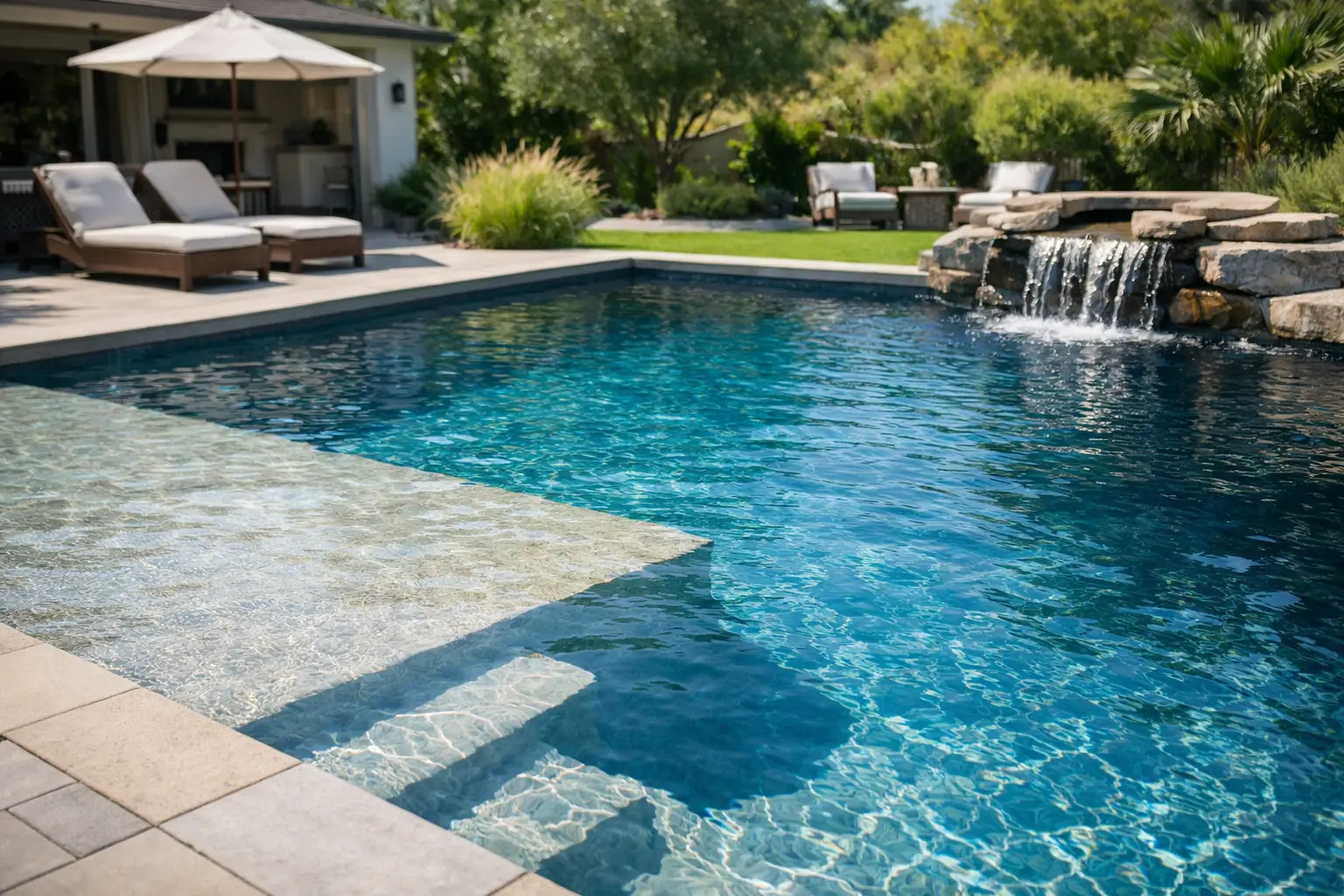
For most backyard pools, the right depth is a comfortable shallow end that most people can stand in, sloping gently to a moderately deeper area, rather than a very deep pool. A common starting point for a family recreation pool is a shallow end of roughly three to three and a half feet and a deeper area of about five to six feet. Lap pools often work best at a fairly consistent depth, and diving needs a purpose-built design that follows the diving equipment’s requirements and local rules. The best depth for you depends on who will use the pool, how they will use it and what your lot allows.
Depth for Everyday Family Use
A gradual slope from shallow to deeper water usually feels better than a sudden drop. It lets people move naturally from the steps toward deeper water and creates more usable space for games, floating and casual swimming. In many backyards, a pool that stays within comfortable standing depth for most of its area gets more day-to-day use than one with a large deep end.
There is no single depth that fits every household. A couple looking for a quiet place to cool off has different needs than a family with teenagers, frequent guests or young children learning to swim. Design around the people who will use the pool most.
Shallow water is often the most used water
Many homeowners assume deeper is better. In practice, the shallow and middle areas see the most activity. That is where parents stay close to younger swimmers, where guests stand and talk, and where kids play without constantly treading water.
A tanning ledge adds another useful level. It gives you a shallow place for in-water chairs, supervised little ones or adults who want to stay cool without swimming. Paired with a well-sized shallow end, it makes the whole pool more flexible. See our tanning ledge design ideas for layouts.
Depth for Children and Families
If young children are a big part of the decision, prioritize a generous shallow area over maximum depth. Shallow water is useful for supervised play, but no depth makes a pool child-safe. Active adult supervision, proper barriers, clear rules and swim lessons matter every time children are near the water.
For families with a wide age range, a gradual transition from shallow to deeper water is usually the most flexible layout. Younger children can stay near the steps, sun shelf or shallow end while stronger swimmers move farther out. A broad shallow zone also lets adults get in and stay involved instead of watching from the edge. Our guide to pool entry designs covers steps and benches that support this.
Think ahead, but do not design only for a future stage of life. A pool that works well for your family now will deliver more than one built around activities that may happen years from now.
Depth for Swimming Laps
A lap-focused pool does not need a dramatic deep end. Consistent depth is often more valuable than a steep slope, because swimmers can keep a steady rhythm without changing body position as they cross the pool. Many exercise pools are built around a depth of roughly four to five feet, which is generally enough for comfortable swimming while keeping excavation and water volume in check.
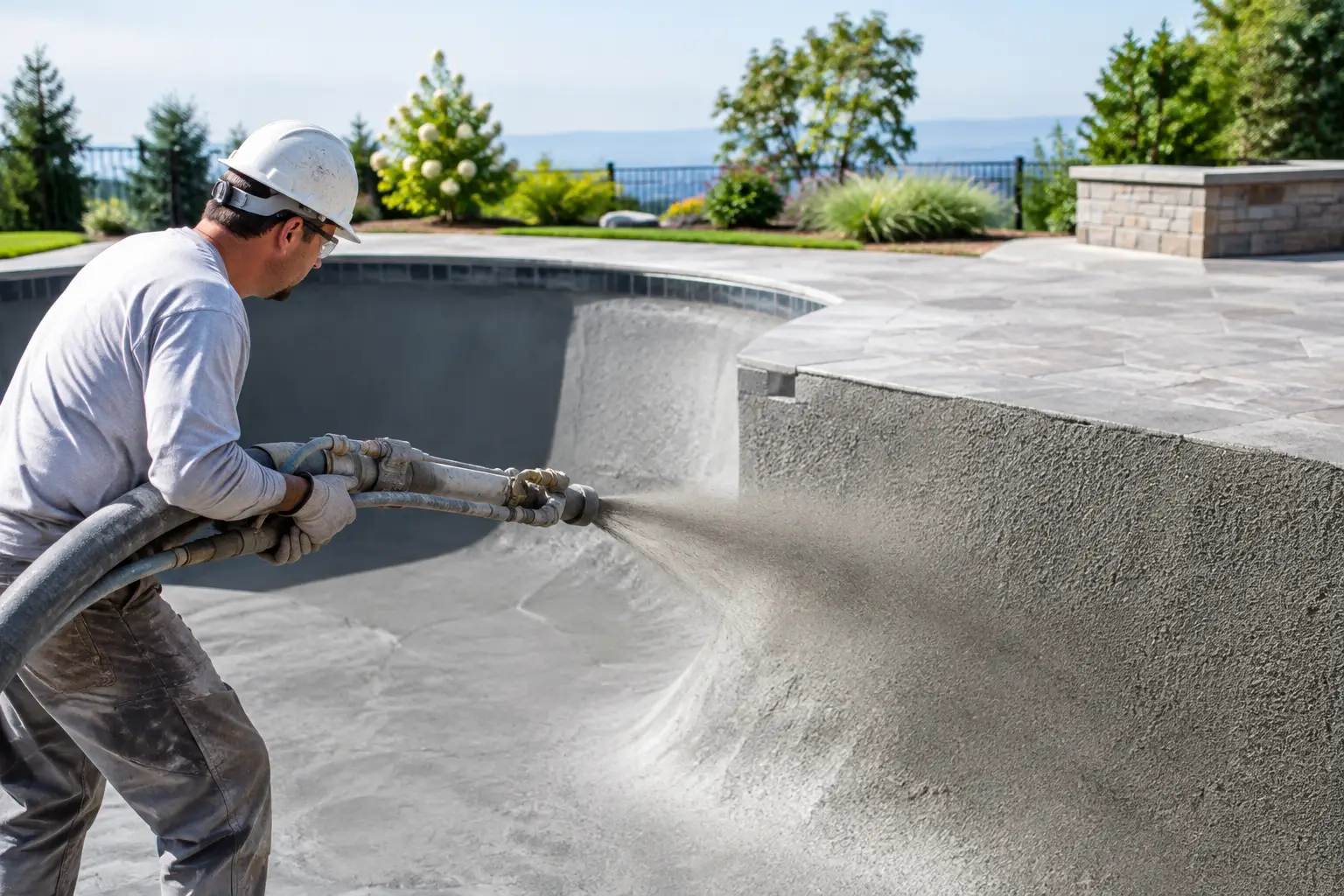
For lap swimming, length, width and a straight, uninterrupted swimming line usually matter more than depth. If your household wants both exercise and family play, a hybrid layout can work well: one section with consistent swimming depth, another with steps, a ledge or shallower gathering space. Custom gunite pools, often called concrete or shotcrete pools, are well suited to this because the shell can be shaped to any depth profile. Learn more on our gunite pool construction page.
Diving Requires More Than a Deep End
A diving board or diving rock changes the conversation. Safe diving depends on a properly designed diving area, which includes the right depth, width, length, floor slope and clearances around the board. A deep pocket by itself is not enough, and a deep end should never be assumed safe for diving just because it is deep.
Requirements for diving come from the diving equipment manufacturer, applicable safety standards and your local building department, and they can differ between jurisdictions. This is a place for precise planning by your builder, not guesswork from a blog post.
There is also a lifestyle trade-off. A diving area reduces the amount of stand-up water for casual use, increases excavation and adds to the overall scope. For some families, diving is central to the plan. For others, a jumping rock, raised spa or larger shallow area provides more everyday enjoyment.
Depth and Pool Type
Your construction type affects how much control you have over depth:
- Gunite pools are built on site, so the depth profile can be fully customized, including lap zones, ledges and diving areas.
- Fiberglass shells are made in a factory and delivered by truck, so depth is set by the model you choose. Many models are designed around family recreation depths. Compare options on our fiberglass pools page.
- Vinyl liner pools offer some flexibility in depth within the wall and floor systems available.
Depth Affects Construction and Site Planning
Additional depth affects more than the pool shell. Deeper excavation can mean more soil removal and hauling, added structural considerations and more water to heat, treat and circulate. Sloped lots, drainage challenges, buried rock, red clay, limited equipment access or a tight building area can make depth an even bigger factor.
Conditions vary widely across Northeast Georgia and Upstate South Carolina. A level lot with open access is very different from a sloped yard with hard ground below the surface. That is why depth should be decided alongside the overall site plan, not picked as a number from a brochure. Bigger shallow areas also tend to bring more people into the pool at once, so plan space around the pool for chairs, shade and supervision.
Choosing the Right Depth for Your Pool
Start with how you expect to use the pool most of the season:
- If you picture kids playing and guests standing in the water, favor a flexible shallow-to-middle depth design.
- If fitness is the priority, consider consistent depth and a longer swimming path.
- If diving is non-negotiable, plan a purpose-built diving area from the beginning.
Also think about how many people will be in the pool at once. A pool used by two adults can be designed differently from one that regularly hosts several families. More people generally means more value in broad, comfortable standing areas.
During design, Bulldog Pool Builders models the pool in 3D so you can see the depth profile, steps and ledges before construction. To talk through the right depth for your family and your lot, schedule a consultation or call (706) 705-7751.