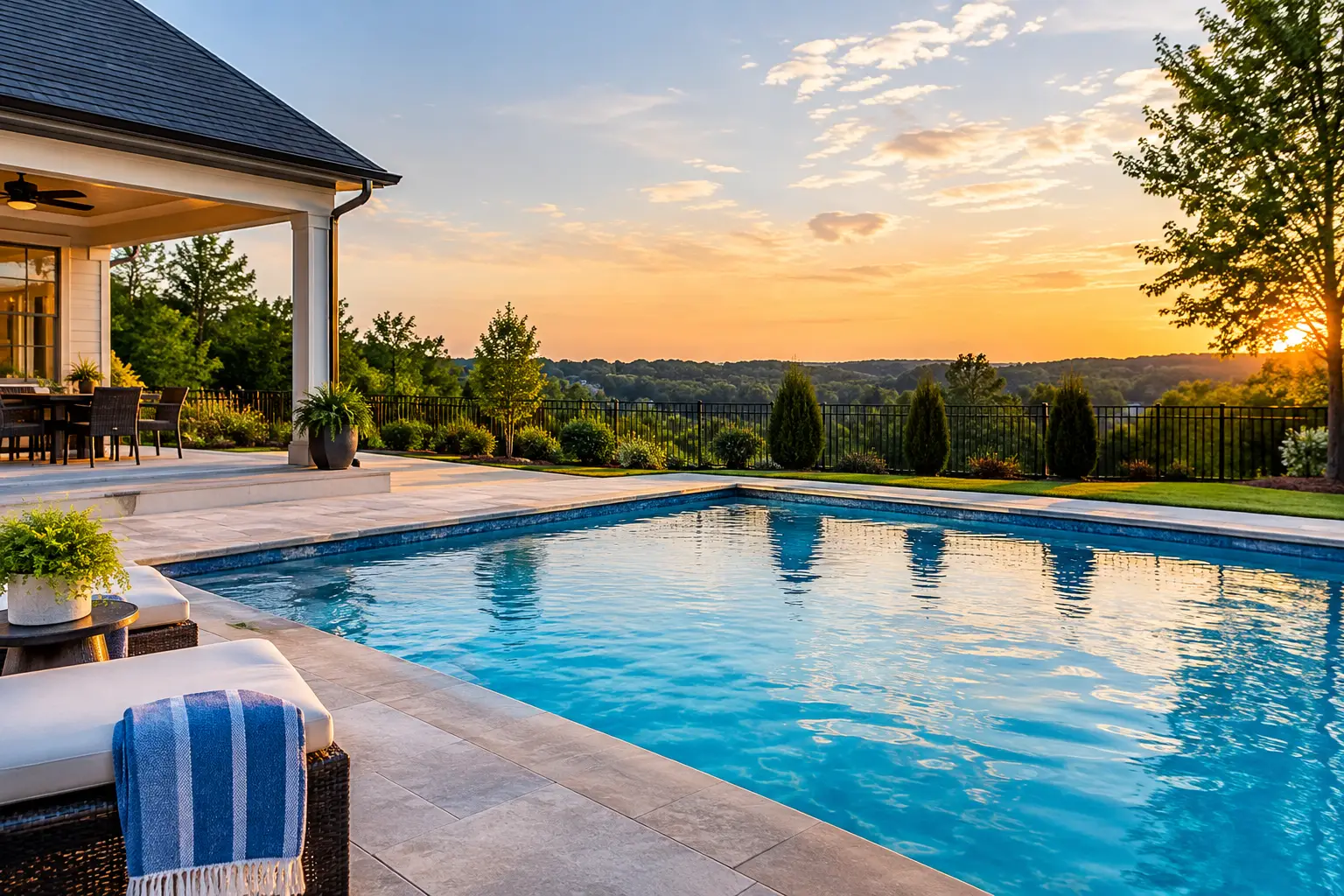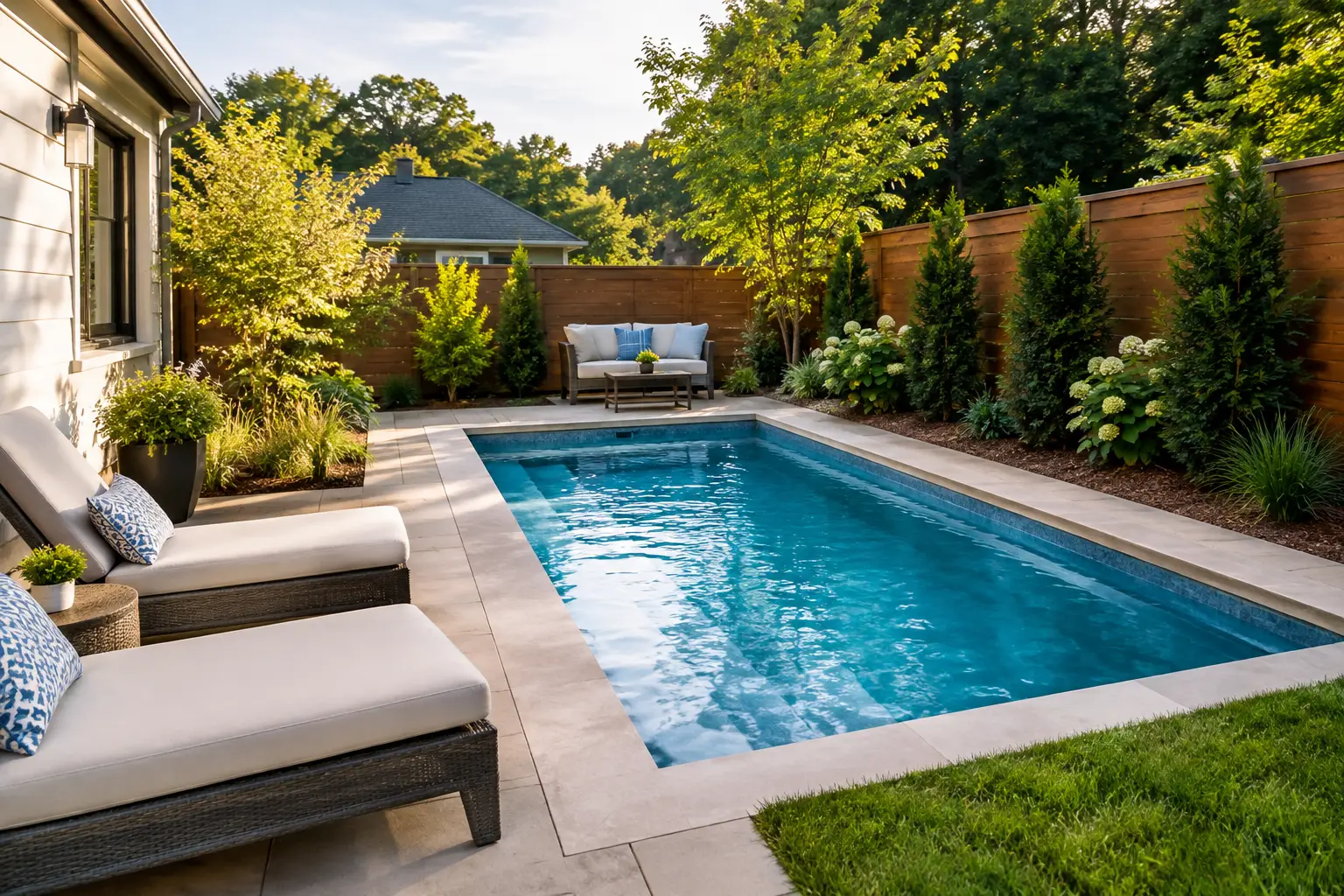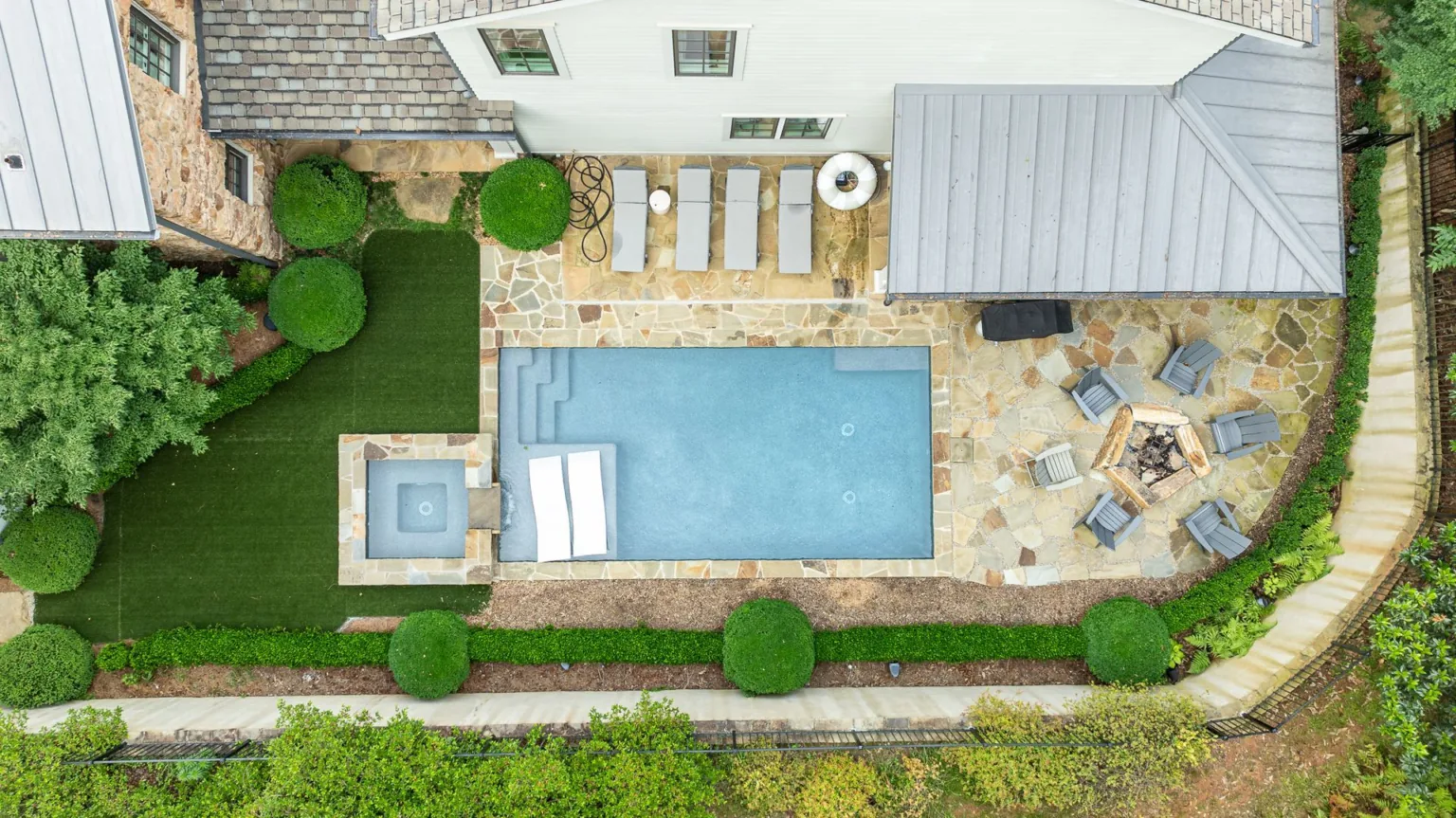

Gunite is usually the better fit when you want a pool shaped around your property, with custom depths, ledges, benches or an attached spa. Fiberglass is usually the better fit when a factory-made shell size suits your yard, delivery access is workable, and you want a smooth surface with a shorter installation phase. Neither is better for every home. The right choice depends on your lot, your design goals and how you plan to use the pool.
Bulldog Pool Builders builds both, so this comparison is about fit, not about selling one product. Below is how the two pool types differ and how to decide which one belongs in your backyard.
The Core Difference
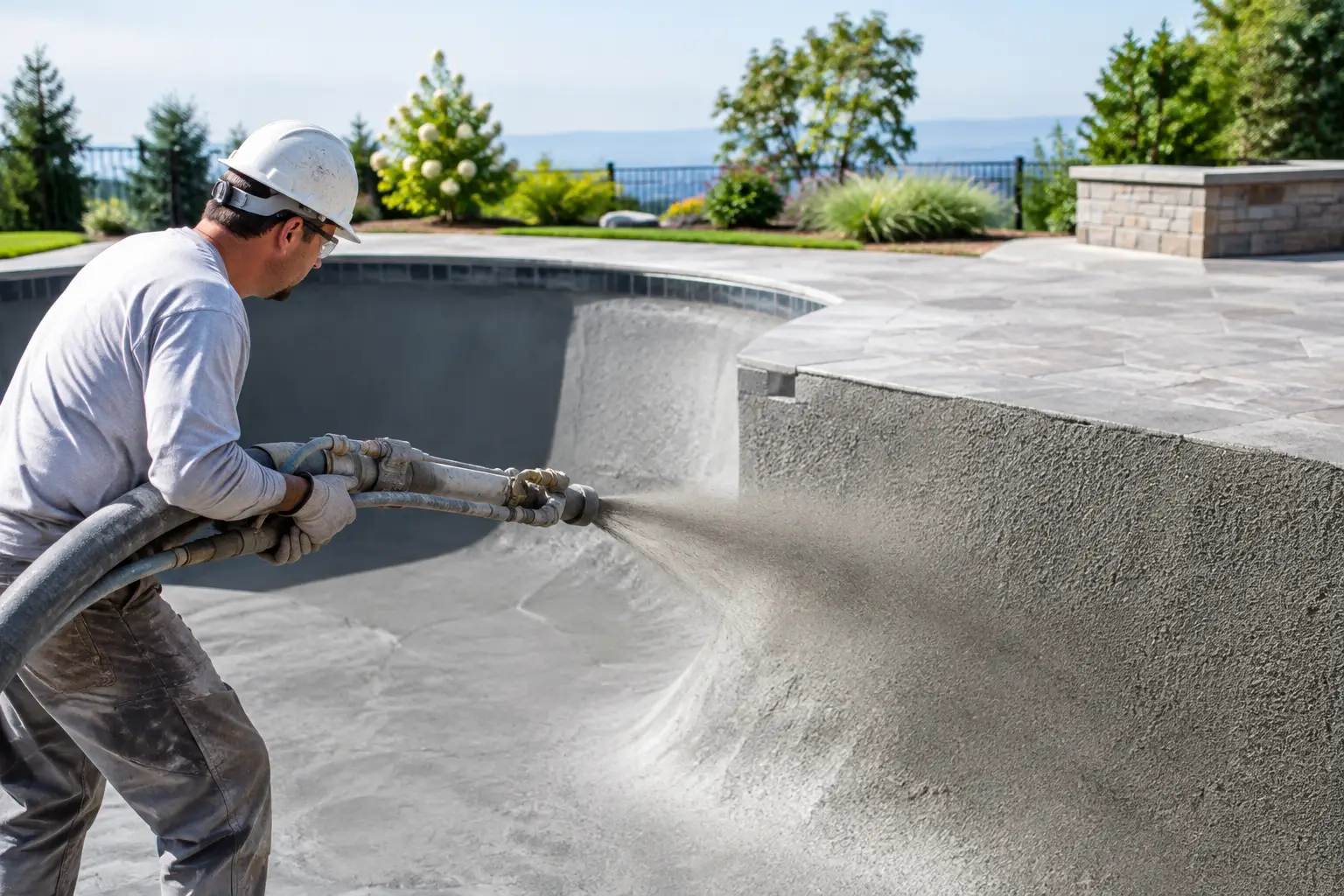
A gunite pool is built on site. Gunite pools, often called concrete or shotcrete pools, start with excavation, steel reinforcement and plumbing. The shell is then sprayed in place: with gunite, a dry concrete mix is combined with water at the nozzle. Once the shell cures, it gets tile, coping and an interior finish such as plaster or pebble.
A fiberglass pool is made in a factory as a one-piece shell. It is delivered by truck, lifted into a prepared excavation, leveled, plumbed and backfilled. Its interior is a smooth gel coat that is part of the shell itself.
That one difference, built in place versus made in a factory, drives nearly every other trade-off: shape, size, features, installation, surface feel and long-term care.
When Gunite Makes More Sense
Design freedom
Gunite is not limited to a catalog of shell sizes. The shape, length, width and depth profile are all drawn for your yard. Freeform curves, tanning ledges, beach entries, built-in benches, raised walls, attached spas and vanishing edges are all easier to build when the structure is formed on site.
That matters if your yard is narrow or oddly shaped, or if you care how the pool looks from inside the house. Sightlines from a covered porch, kitchen window or main bedroom can shape where the pool sits and what form it takes. With gunite, the pool can be designed to fit those views instead of the other way around.
Difficult sites
Many Northeast Georgia lots have slopes, mature trees, red clay soil and drainage paths that need to be respected. A custom gunite design can step with the grade, use a raised wall on the low side or fit an unusual footprint. Fiberglass can work on many of these sites too, but the fixed shell gives the design less room to adapt. Our guide to building a pool on a sloped yard covers this in more detail.
The trade-offs
Gunite construction involves more on-site steps: excavation, steel, plumbing, the shell, curing, tile, coping and the interior finish. That generally means a longer build and a higher upfront investment than a comparable fiberglass pool. The interior finish is also porous, so it relies on good water chemistry and regular brushing, and it will eventually need to be redone after many years of use. That is part of owning a concrete pool, and it should be factored in from the start.
For a closer look at how these pools go together, see the gunite pool construction process, step by step.
When Fiberglass Makes More Sense
A shorter installation phase
Because the shell arrives finished, the installation phase on your property is usually shorter than a gunite build, assuming site access is workable and the weather cooperates. Permits, excavation and site preparation still have to happen, but there is no shell to spray and cure on site.
A smooth, low-upkeep surface
Gel coat is smooth and nonporous. It feels gentle underfoot and gives algae less to cling to, which can mean less brushing and steadier water chemistry. Fiberglass still needs balanced water, filtration and regular cleaning, but many owners find day-to-day care simple.
Predictability
You know the exact shape and size before the project begins. Many shell designs include built-in steps, benches and tanning ledges. If a model fits your yard and your goals, fiberglass can be an efficient way to get a quality inground pool.
The trade-offs
The main limitation is customization. You choose from available shells, and you cannot stretch one side, deepen a corner or move a ledge. Shell width is also limited by what can be transported on the road, so very large pools are typically gunite.
Site Access Can Decide the Project
This point gets missed in a lot of online comparisons. A fiberglass shell has to travel from the road to the excavation, usually lifted by a crane. Tight side yards, overhead lines, mature trees, fences, steep driveways or utility conflicts can make delivery difficult. On some properties, access rules fiberglass out before the conversation ever gets to looks.
Gunite equipment and materials need a path into the yard as well, but a sprayed shell does not have to fit through the route as one piece. That is one reason a site visit matters more than a brochure. Bulldog walks the property before recommending a pool type.
Cost and Long-Term Ownership
Fiberglass often starts lower for a comparable size. Gunite often climbs higher because of customization, finish choices and more on-site labor. But the starting number only tells part of the story. Excavation conditions, access, drainage, electrical work, equipment and permits affect both pool types, and they can move the final number more than the shell itself.
Because every property and design is different, we do not publish price ranges here. Our Gunite Pool Cost in Georgia guide explains what drives the investment, and financing options are available.
Over the long run, think about care as well as price. Fiberglass tends to win on surface upkeep. Gunite offers more finish options, including tile and pebble interiors, with more routine surface care. Both can be strong assets to a home when they are well built and fit the property.
Gunite vs. Fiberglass in Georgia Backyards
Georgia conditions make practical planning more important. Summer heat, pollen, heavy rain, clay soil and a long swim season all affect how a pool is used and cared for.
- Clay soil and rain. Both pool types depend on proper excavation, backfill and drainage. Water around the pool should be directed away from the shell and the house.
- Slopes. Custom gunite designs adapt more easily to grade changes, though a fiberglass shell can be set on many sloped lots with the right site work.
- Local permits. Rules vary by county and city, and they apply to both pool types. See our overview of pool permits in Georgia.
How to Choose
Start with your non-negotiables. If you want a highly customized shape, a specific swim length, an attached spa or a luxury interior finish, gunite is probably the better fit. If a standard shell size works, you want a shorter installation phase and you prefer a smooth, low-upkeep surface, fiberglass may be the smarter route.
Then look at the lot. Access, slope, drainage, usable space and nearby structures can shift the recommendation quickly. A pool that looks ideal online may not be the right solution once the actual property is evaluated.
Finally, plan space around the pool for chairs, walking paths and the way people move from the house to the water. A pool should feel like it belongs on the property, not like it was dropped in.
If you want to compare gunite and fiberglass for your own yard, Bulldog Pool Builders can walk the site, explain the trade-offs and show you a 3D design before construction. Schedule a consultation or call (706) 705-7751.