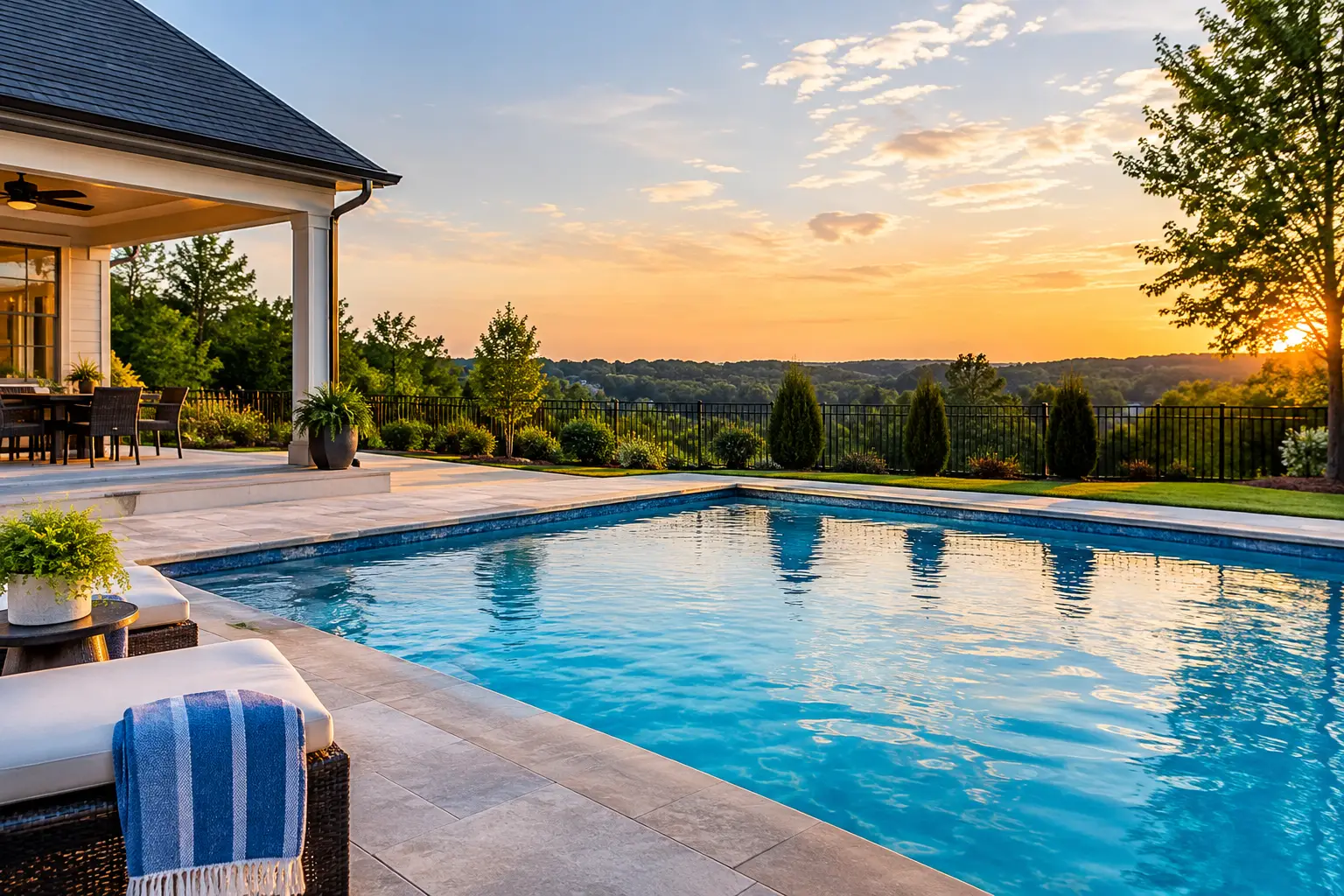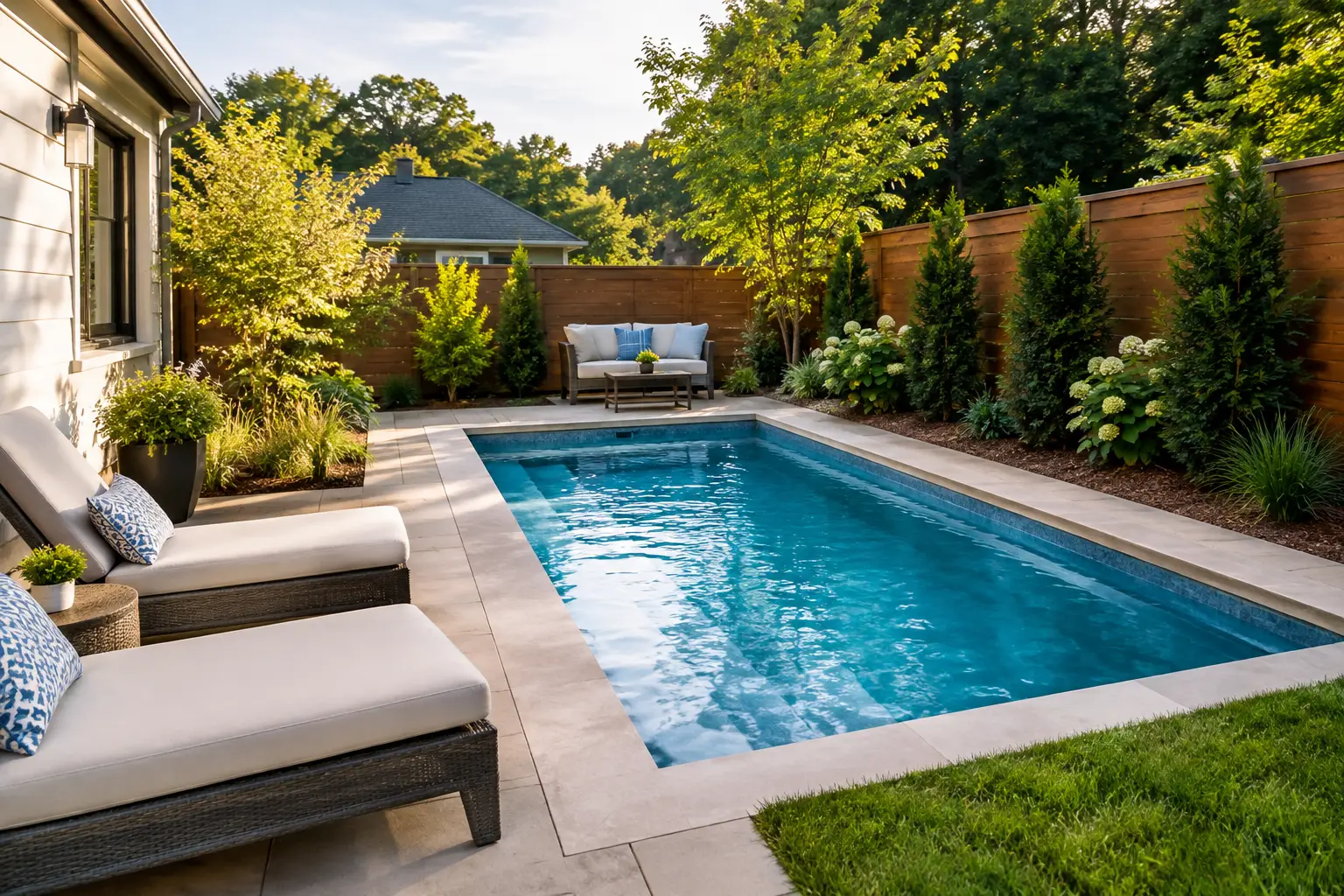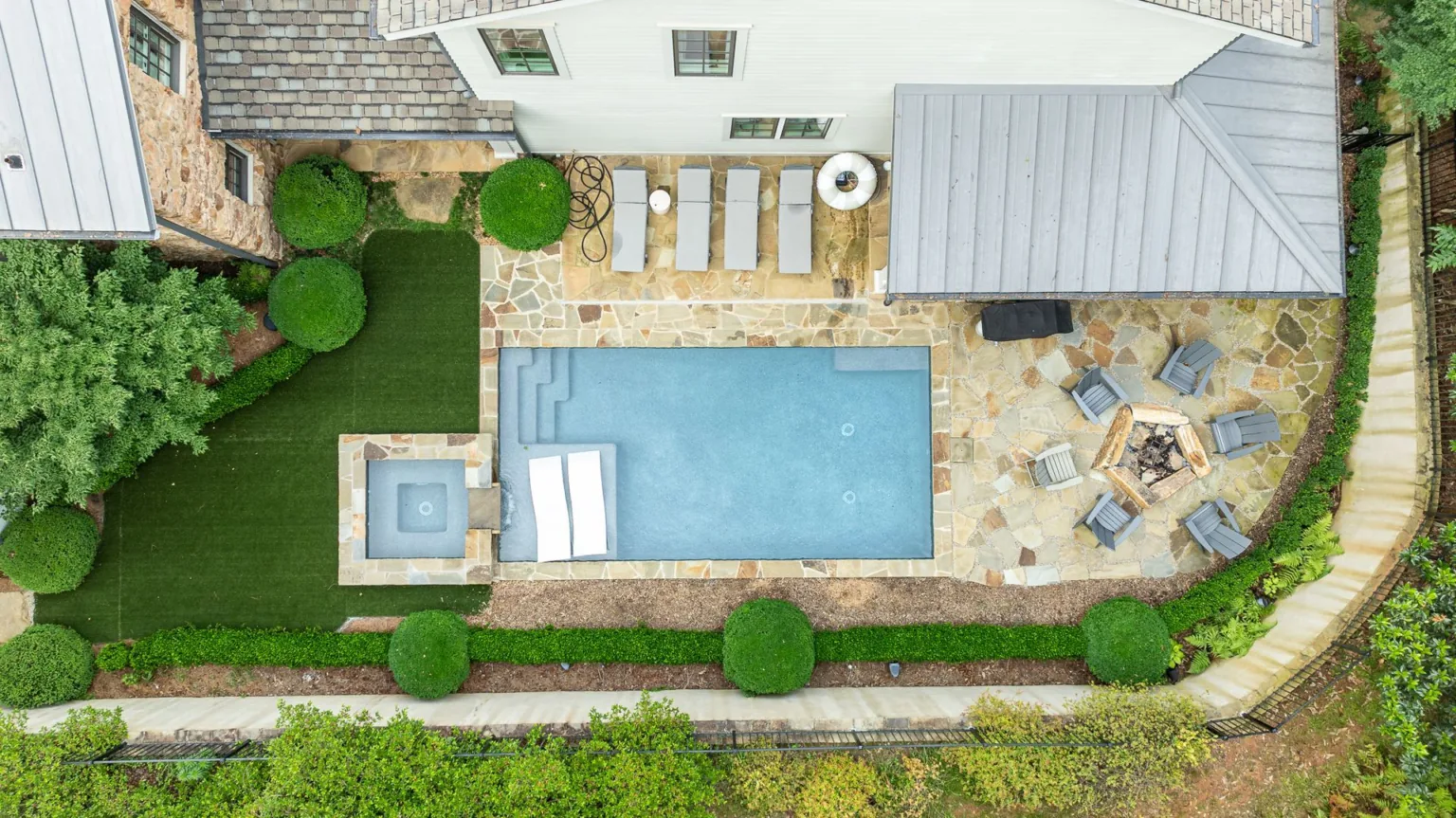
Fiberglass pools offer a smooth surface, easier routine care and an efficient installation. Their main drawbacks are limited shapes and sizes, delivery access requirements and less flexibility for highly custom designs. Whether fiberglass is worth it depends on your yard, your budget and what you want the pool to do.
For some families, fiberglass is the most direct path to a clean, polished pool. For others, the shape limits and delivery requirements make a gunite pool, often called a concrete or shotcrete pool, a better long-term fit. Here is where fiberglass shines and where it asks you to compromise.
Fiberglass Pool Pros and Cons at a Glance
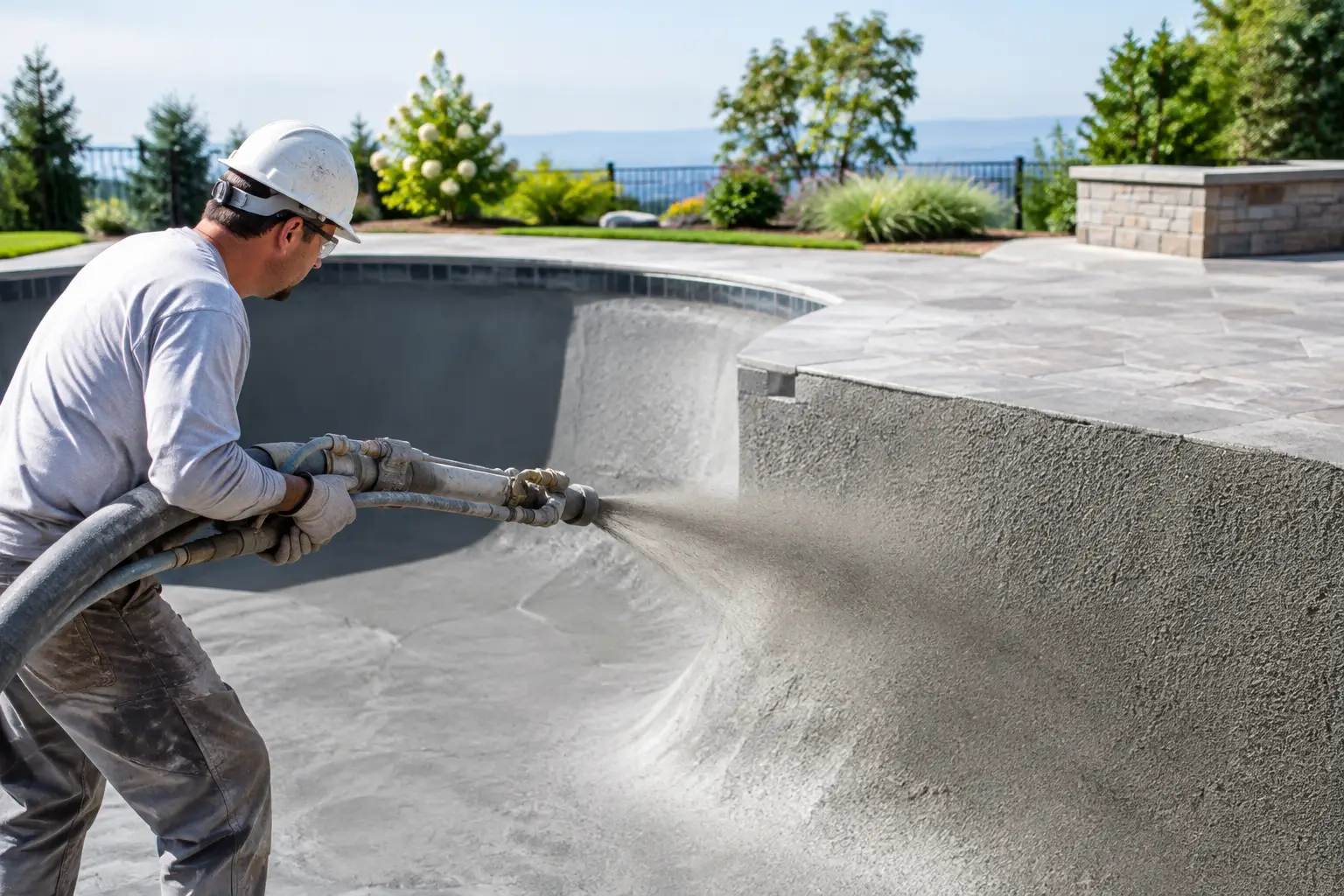
A fiberglass pool is a factory-made shell delivered to your property by truck and set into an excavated hole. Unlike a gunite pool, which is formed on site with steel and sprayed concrete, a fiberglass pool arrives in one piece. That changes the construction process, the interior finish and the options available.
Pros:
- Efficient installation once the site is ready
- Smooth, comfortable gelcoat surface
- Less brushing and fewer chemical corrections
- Predictable shape, steps and seating, known before construction
Cons:
- Shapes and sizes limited to available molds
- Width and length limited by what can travel by road
- Requires a clear delivery route and usually a crane
- Less suited to complex custom designs or difficult sites
The Advantages of Fiberglass Pools
A more straightforward installation
Because the shell is built before your project starts, the field work is usually simpler than building a pool from the ground up. There is no shell to form and cure on site. That often means less time with your yard torn up and a quicker path from excavation to swimming.
The schedule still depends on permits, weather, access, inspections and the work around the pool. Heavy Georgia rain and saturated clay can slow excavation for any pool type. We give each homeowner a schedule after a site visit, based on the actual property.
A smooth, comfortable surface
Fiberglass interiors are smooth to the touch, which is easier on feet and skin than rougher finishes. That matters when kids are climbing in and out all summer.
Easier routine care
The nonporous gelcoat gives algae fewer places to take hold. In practice, that usually means less brushing and fewer chemical corrections than more porous finishes. Fiberglass is not care-free. You still need to balance water chemistry, run the filtration and keep the pool clean. But day-to-day upkeep is often lighter, which is a real advantage for busy households.
Predictability
The shell is made in a controlled factory setting, so the shape, steps, benches and interior finish are known up front. That makes planning easier and reduces surprises during the build.
Long-term durability
With good installation and regular care, fiberglass holds up well to family use. The gelcoat does not need the periodic re-coating cycle associated with plaster finishes, which can lower long-term ownership costs.
Where Fiberglass Pools Fall Short
Limited design freedom
The biggest trade-off is shape. Fiberglass pools come in preset models. Many look great, but you are choosing from a catalog rather than designing a pool from scratch. If you want a pool that follows an unusual property line, a very specific tanning ledge layout or a shape built around a view or a large tree, fiberglass can feel restrictive. See are fiberglass pools customizable for what you can still change.
Size limits
The shell has to travel by road and fit into the backyard, so there are practical limits on width and length. If you want a very large pool, gunite is usually the better route.
Delivery and access
This is easy to overlook until it becomes a problem. A shell may look perfect on paper and still be hard or impossible to get into place. Tight neighborhoods, mature trees, fences, overhead lines and narrow side yards can all complicate delivery. A crane is often needed, which adds planning and cost.
Damage is not impossible
Fiberglass is durable, but no pool material is immune to damage. If a shell is scratched, cracked or stressed by poor installation, fixing it can take specialized work to restore the appearance. That is not a deal breaker, but it is part of the full picture, and it is one more reason installation quality matters.
Cost: What to Really Expect
Fiberglass is often seen as a cost-effective inground option, but there is no simple answer. The shell is only part of the price. Excavation, base preparation, plumbing, equipment, electrical work, coping, safety barriers, permits, drainage and site conditions all affect the total. Grading problems or difficult access can raise it quickly.
When comparing, think about the total cost of the pool you actually need on your property, plus long-term upkeep. A pool that fits your yard and your routine will deliver more satisfaction than one squeezed into a layout that does not work. For the factors that drive pool pricing, see our Gunite Pool Cost in Georgia guide.
Installation Quality Decides How It Performs
A fiberglass pool is only as good as the work behind it. The base must be level and compacted. The shell must be set level in every direction. Backfill has to be placed carefully while water is added in stages to balance pressure on both sides of the shell. Drainage around the pool must move water away from the shell and the house. Shortcuts at any of these steps can cause settling or shifting later, regardless of the shell’s quality. Our fiberglass pool installation process post walks through each step.
Is a Fiberglass Pool Right for Your Backyard?
Fiberglass is often a strong choice if you want:
- A streamlined build with fewer on-site variables
- A smooth interior and easier routine care
- A practical, attractive family pool
- A shell model that already matches what you want
Another pool type may serve you better if:
- Your plans depend on a custom shape or an oversized pool
- Your yard has a difficult access route
- You want unusual geometry, a vanishing edge or a pool built into a steep slope
For many homeowners in Northeast Georgia and Upstate South Carolina, the decision comes down to priorities. If simplicity and easier upkeep matter most, fiberglass deserves a serious look. If custom design is driving the project, gunite may be the better fit. Our gunite vs. fiberglass comparison lays out the differences side by side.
Decide Before Excavation Starts
The best pool decisions happen early. Look honestly at your property, how you want to use the pool and whether a shell fits that plan. If fiberglass lines up with your goals, it is an efficient option with plenty of upside. If it does not, that is useful to know before you commit.
We install fiberglass pools and build gunite and vinyl liner pools, so we can recommend what fits your yard rather than a single product. Schedule a consultation or call (706) 705-7751 to talk it through.