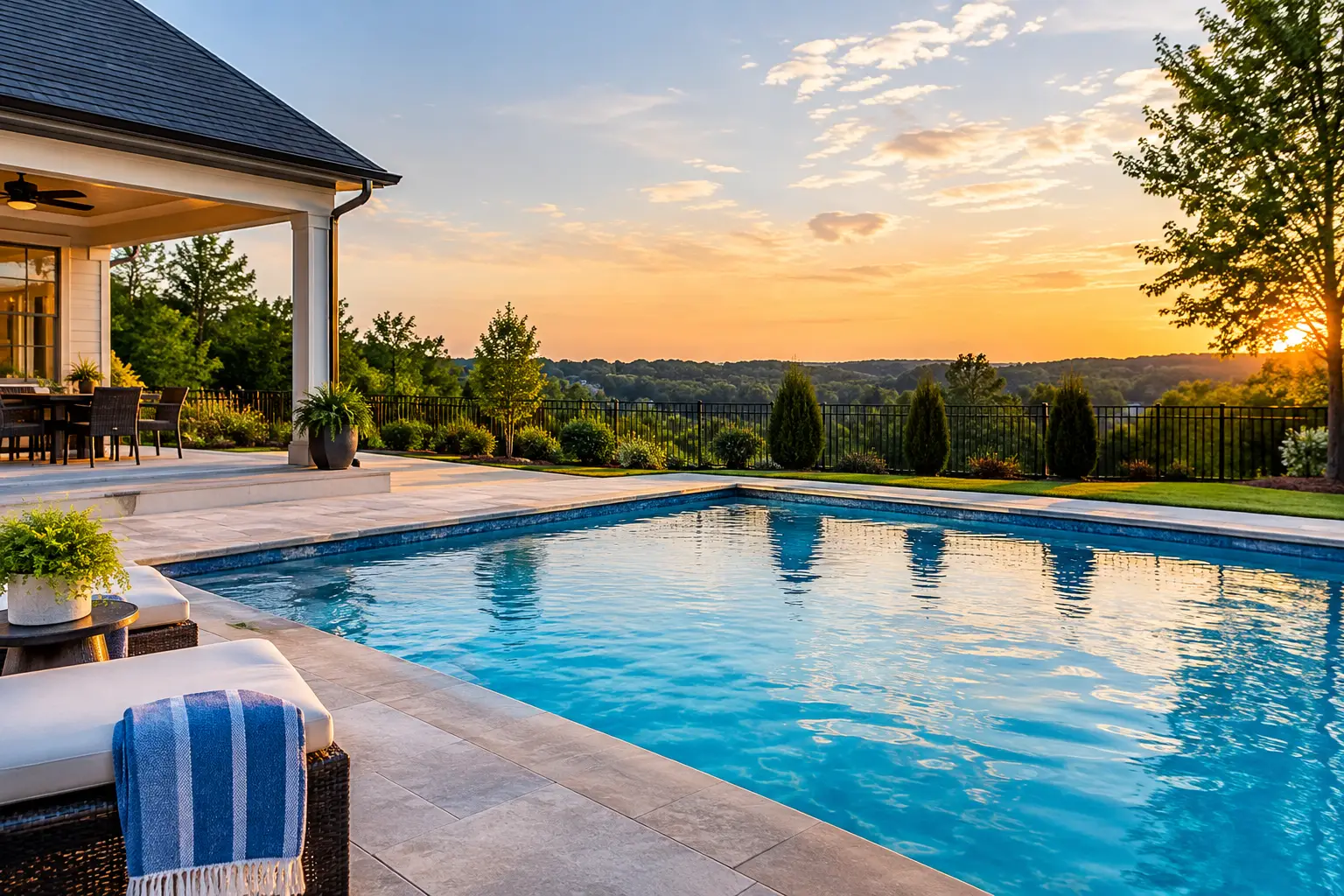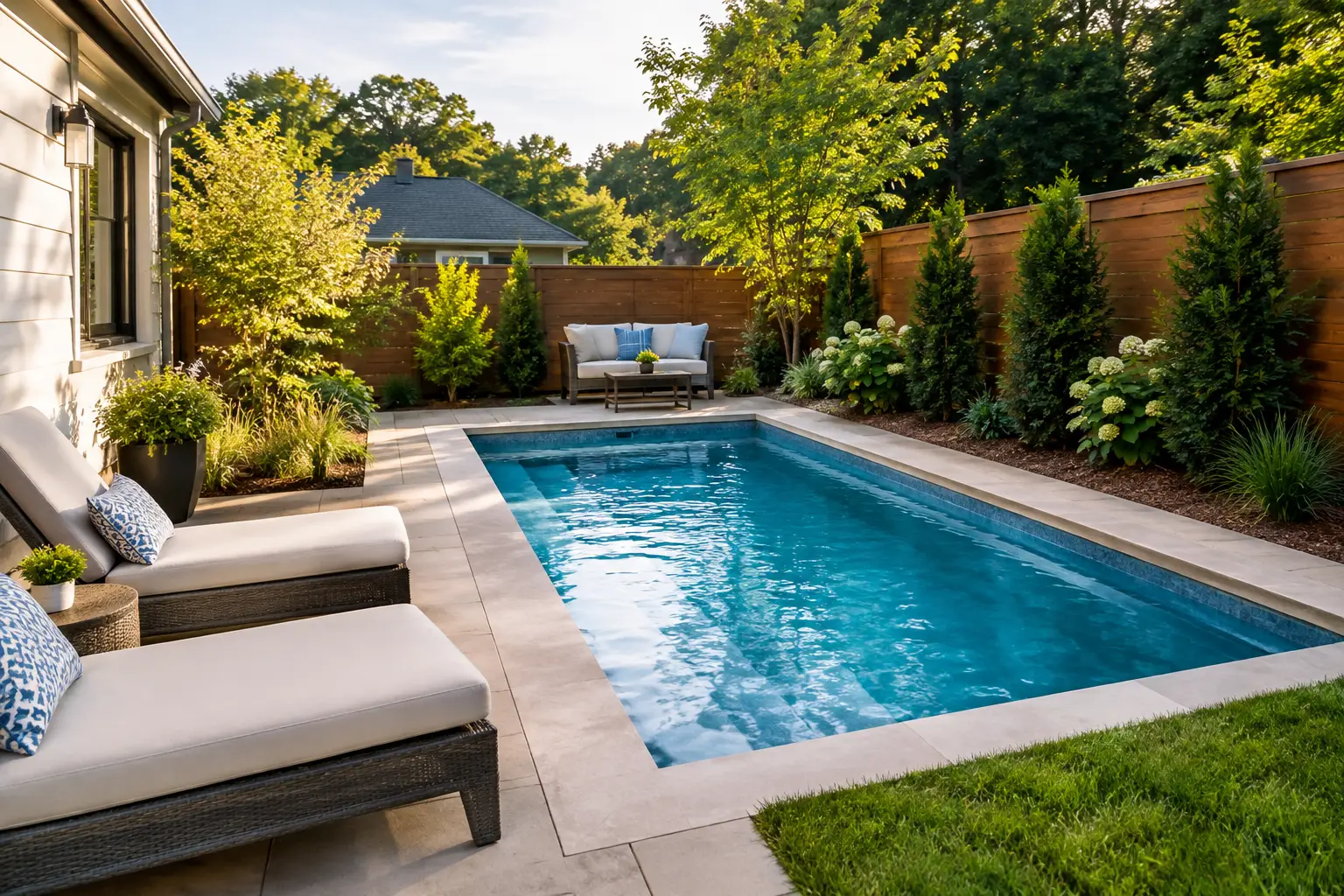
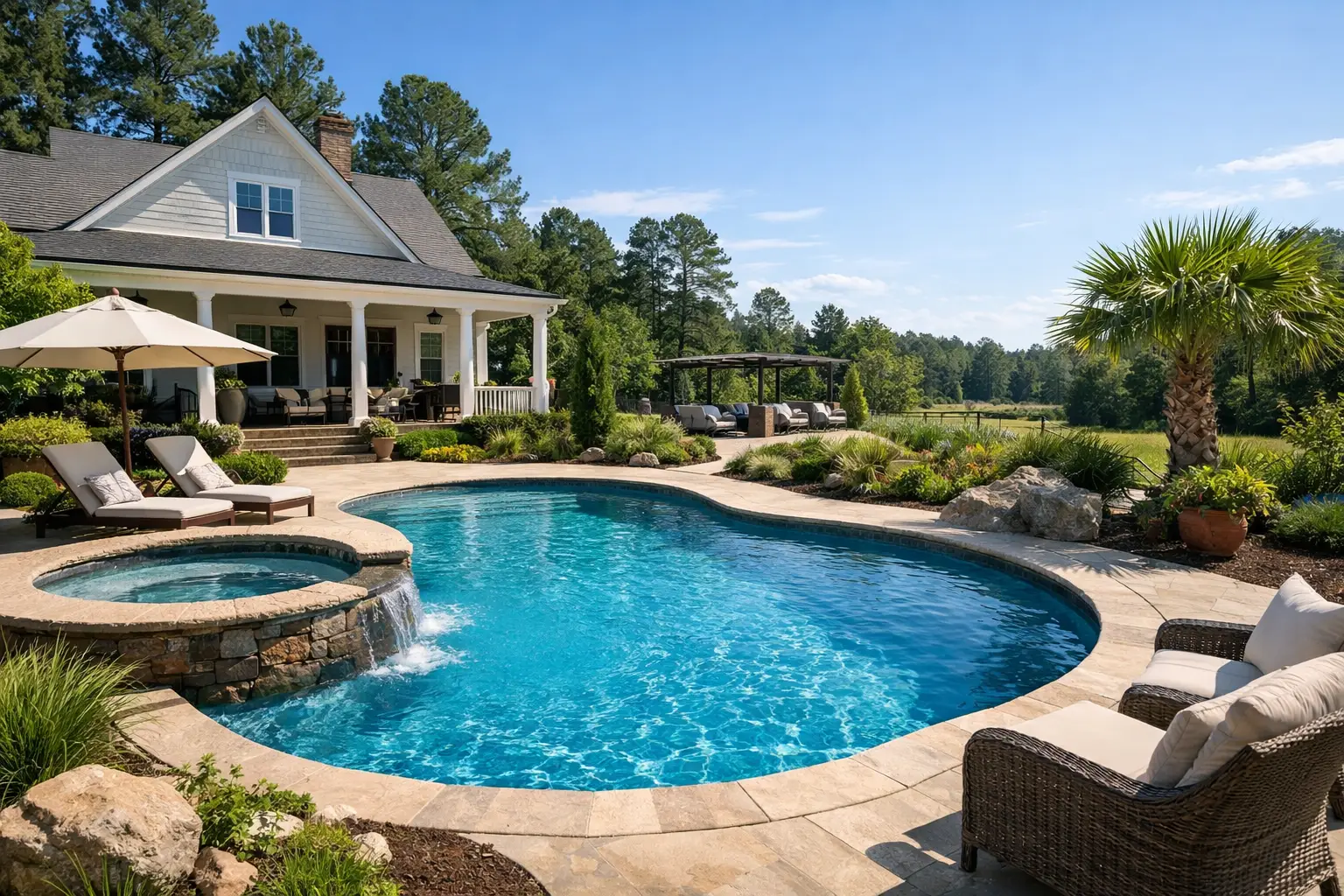
A fiberglass pool is a good buy for a Georgia home when the shell fits the way your family will use it, your yard has room to deliver and set it, and the full project price, not just the shell price, fits your budget. This guide walks through the decisions that matter, in the order you should make them.
What a Fiberglass Pool Is, and Why People Choose It
A fiberglass pool is a one-piece shell made in a factory, trucked to your home and lifted into a prepared excavation. Because the shell is built before digging starts, installation can move efficiently once permits, weather and site conditions line up.
Homeowners usually choose fiberglass for three reasons:
- A smooth, finished surface. The gelcoat interior is comfortable on bare feet and gentle on swimmers.
- Easier routine care. The nonporous surface gives algae fewer places to take hold, which usually means less brushing and fewer chemical corrections. It does not mean no care. Every pool still needs water testing, cleaning and equipment checks.
- A predictable result. The shape, steps, benches and depth are set at the factory, so you know exactly what you are getting before construction starts.
Know the Main Trade-Off: Design Flexibility
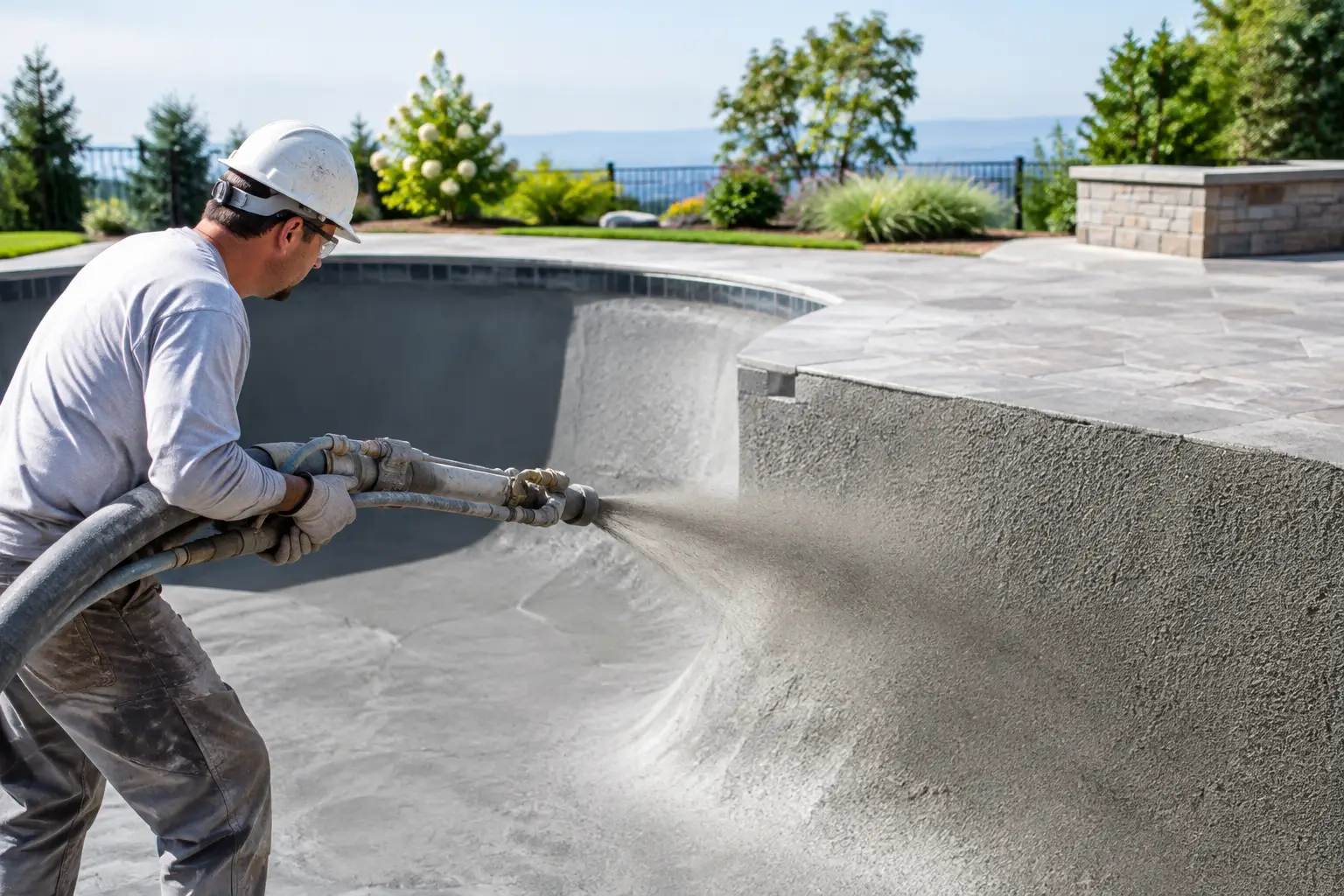
Fiberglass shells come in a growing range of shapes, sizes, colors, ledges, benches and step layouts. But they are not formed to any outline you can imagine. If your plans call for an unusual shape, a very large pool or a layout tailored around difficult site features, a gunite pool, often called a concrete or shotcrete pool, gives you more freedom.
That does not make fiberglass a lesser choice. It is a different construction method. A well-installed fiberglass pool is a durable, polished inground pool. Its value comes from efficiency and easy ownership, not unlimited customization. For a direct comparison, see gunite vs. fiberglass pools.
Start With How Your Family Will Use the Pool
The right pool is not always the biggest shell that fits. Think about who will use it most:
- Young children: broad entry steps, a shallow lounging area and open room to play.
- Entertaining: a tanning ledge, bench seating and a layout that keeps guests near the house.
- Exercise: a long, clean swim lane, with steps that do not eat into the main swimming area.
- Relaxing: a compact design with a generous ledge and spa-style seating can offer more than a large pool that overwhelms the yard.
Think past the first summer. Will teenagers use it in a few years? Do you host often? Those answers should guide the shape and placement.
Choose a Size, Shape and Depth That Fit
Shells range from compact plunge-style layouts to long rectangles and freeform family pools. Rectangles suit clean, modern homes and lap swimming. Freeform shapes feel more relaxed and natural.
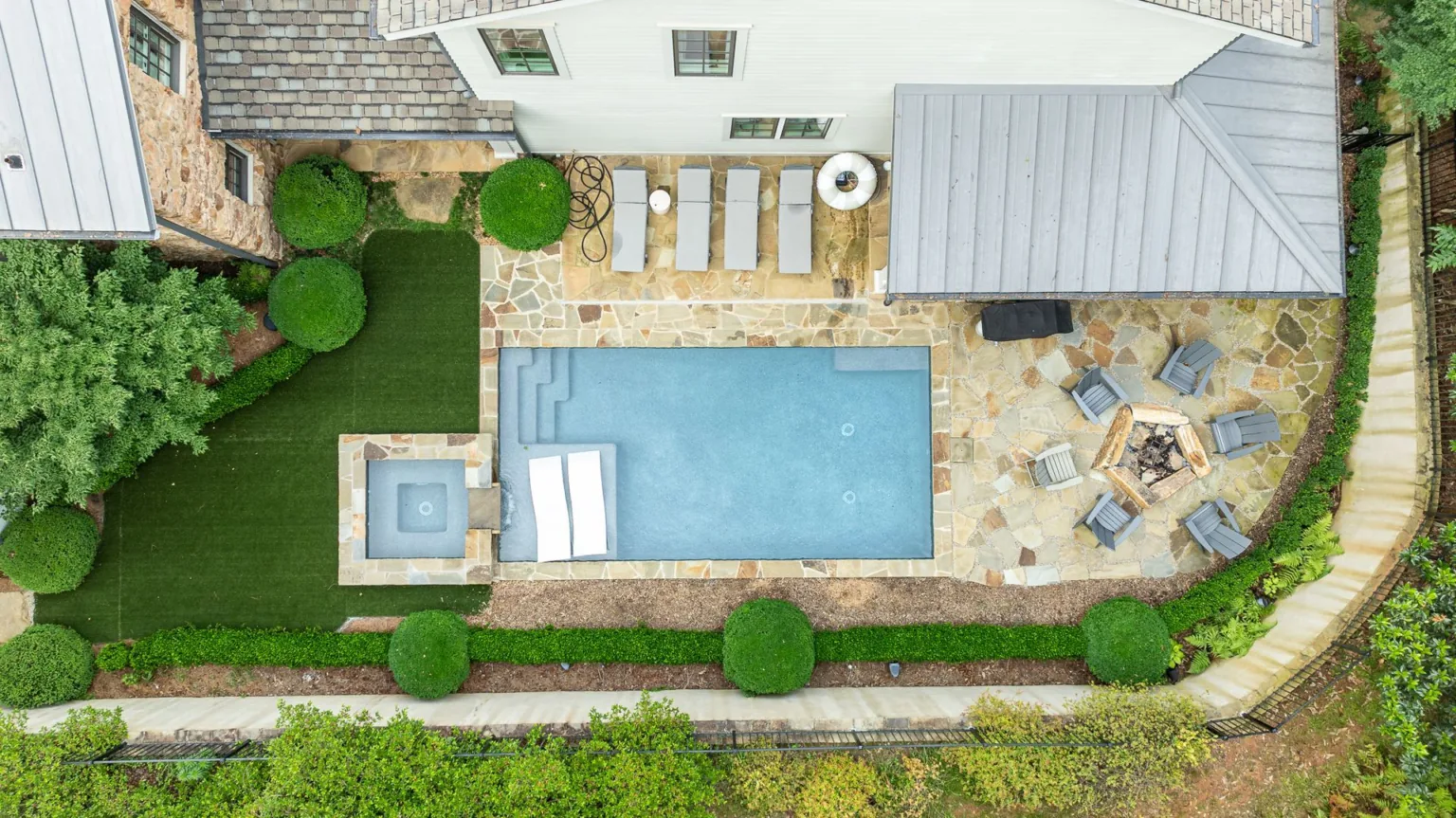
Look closely at interior features. Entry steps should be easy to use without taking too much swim space. A tanning ledge works well for families with small children and for people who like to lounge in shallow water. Built-in benches give guests a place to sit, though they reduce open play area. Finish color, waterline tile and coping also change the look of a shell more than most people expect.
Deeper is not automatically better. Many families get more daily use from a depth profile that supports games, floating and easy conversation. Talk about how you will actually use the pool, not what sounds good in a brochure.
Evaluate the Yard, Not Just the Pool
Open lawn is only part of the picture. Your builder needs to account for setbacks, easements, utility lines, septic systems, grading, drainage paths, trees and access for both excavation equipment and the shell.
Access deserves special attention with fiberglass. The shell has to reach the house on a truck and be lifted into the hole by a crane. A narrow side yard, overhead power lines, mature trees or a steep approach can affect whether a particular shell can be delivered safely. A good builder checks this before you fall for a model that is hard to install.
Georgia site conditions matter, too. Red clay, buried rock, sloped lots and heavy rain all affect excavation and how the pool performs long term. The area around the pool must slope away from the water and the house, and sloped properties may need extra grading and drainage work. See our guide to pool drainage planning.
Plan space around the pool for chairs, towels and safe walking. A pool with only a narrow edge around it works, but it feels cramped when people arrive.
Build a Realistic Budget
The shell price is not the project price. A complete fiberglass project typically includes:
- Excavation and hauling
- Base preparation, setting and leveling the shell
- Plumbing, equipment and electrical work
- Backfill and coping
- Required safety barriers and permits
- Startup and cleanup
The final number depends on access, soil, slope, drainage and utility challenges. Features add value when they match how you live. Lighting, automation, heating, salt systems, water features and an attached spa can all improve the pool, but each adds upfront cost and some ongoing operating cost. A heater extends the swim season, for example, but should be sized to the pool and your expectations.
Do not compare proposals on starting price alone. Ask what is included, what is excluded and which site conditions could add cost. We do not publish set prices because every property is different. Our Gunite Pool Cost in Georgia guide explains the factors that drive pool pricing.
Ask About Equipment, Care and Safety
Ask your builder to explain the recommended circulation schedule, filtration system, sanitation options and water-testing routine. Equipment should be sized correctly and placed where it is easy to reach for service without being loud or in the way.
Build safety in from the start: fencing, gates, alarms, covers, lighting and slip-resistant surfaces. Barrier and permit rules vary by county and city, so your builder should know the local requirements and handle the paperwork and inspections.
Plan for the Installation Itself
Fiberglass installation is often faster than building a site-formed pool, but speed should never replace preparation. The shell must sit on a properly leveled base, be checked for level throughout, and be backfilled carefully while water is added in stages. Rain, saturated clay or rock can change the schedule. We give you a schedule after a site visit and keep you updated if conditions change. Our step-by-step fiberglass pool installation process post covers each phase.
Choose a Builder Who Looks at the Whole Site
Installing a fiberglass pool is not just a delivery and a hole. It takes accurate layout, careful base preparation, precise shell placement, plumbing, electrical coordination and controlled backfill. During your consultation, talk through site constraints, timing, budget and priorities. A capable builder will tell you directly what works, what needs adjusting and when another pool type would serve you better.
When Fiberglass Makes the Most Sense
Fiberglass is a strong choice if you want a clean, attractive inground pool, a smooth surface, easier routine care and a straightforward build, and your yard allows delivery. It may not be the best route if you want a one-of-a-kind shape, a very large pool or a design that has to solve a difficult site problem.
If you are weighing fiberglass for your Northeast Georgia or Upstate South Carolina home, we can help you pick a shell that fits your yard and your family. Visit our fiberglass pools page, schedule a consultation or call (706) 705-7751.