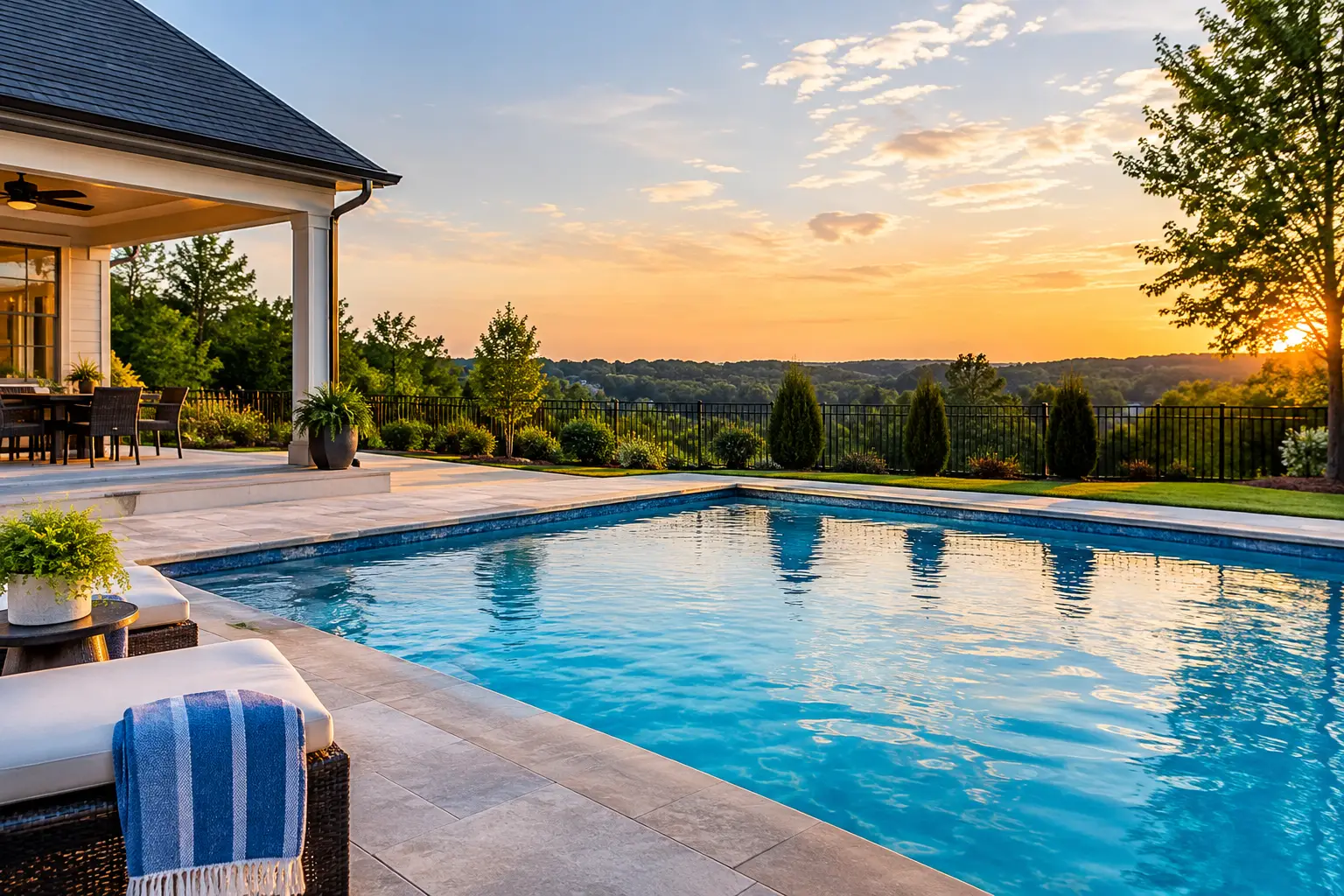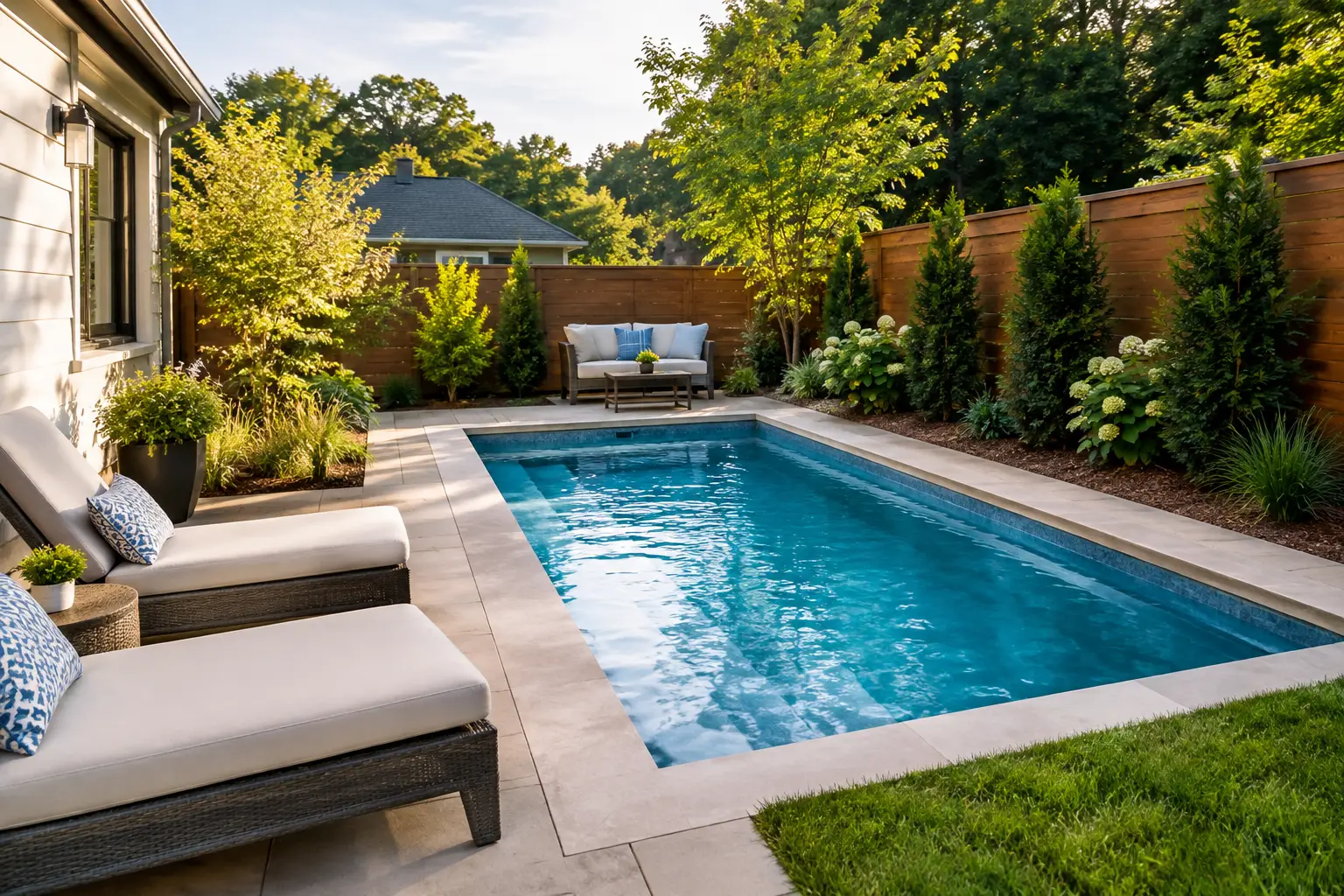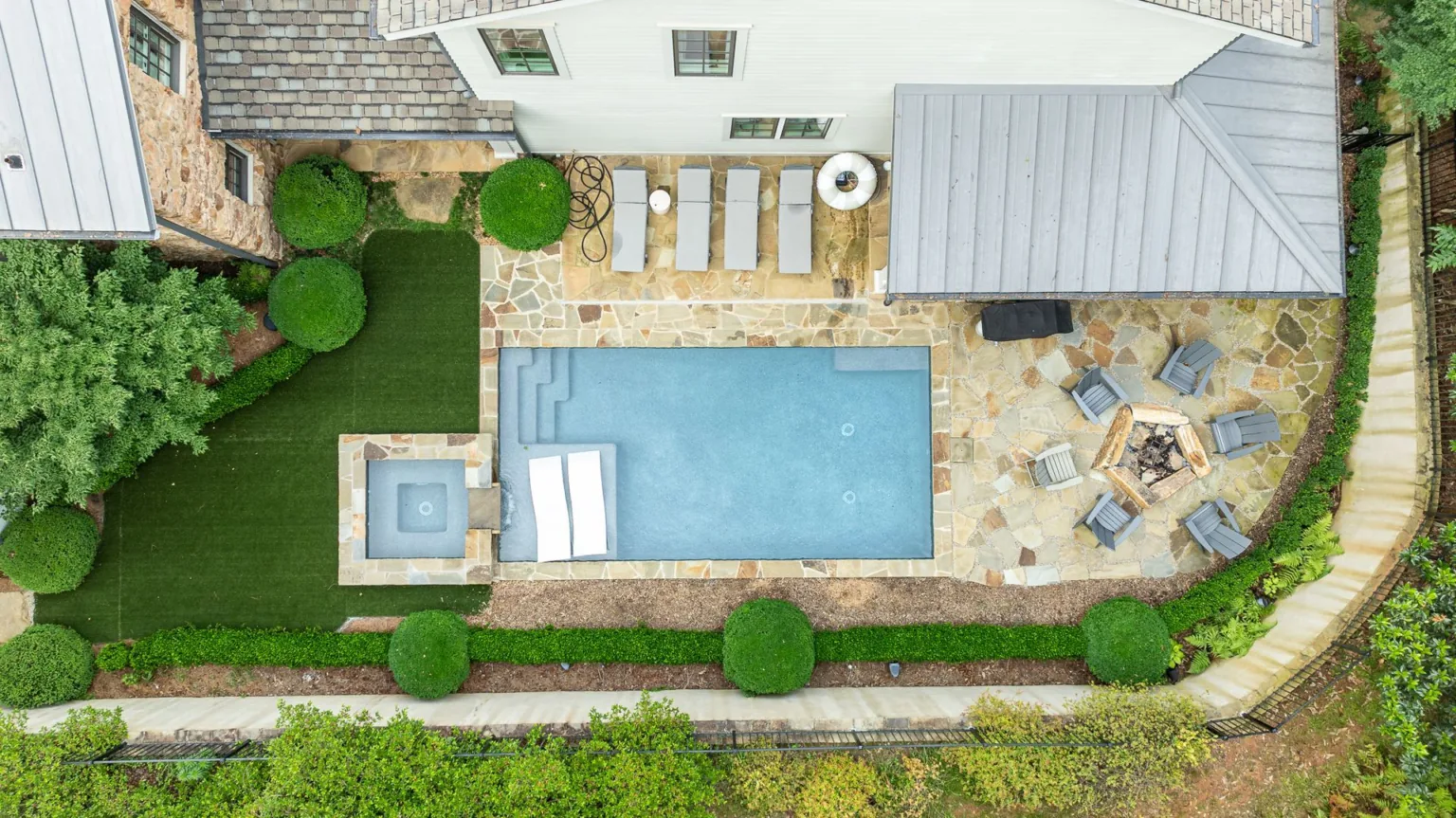
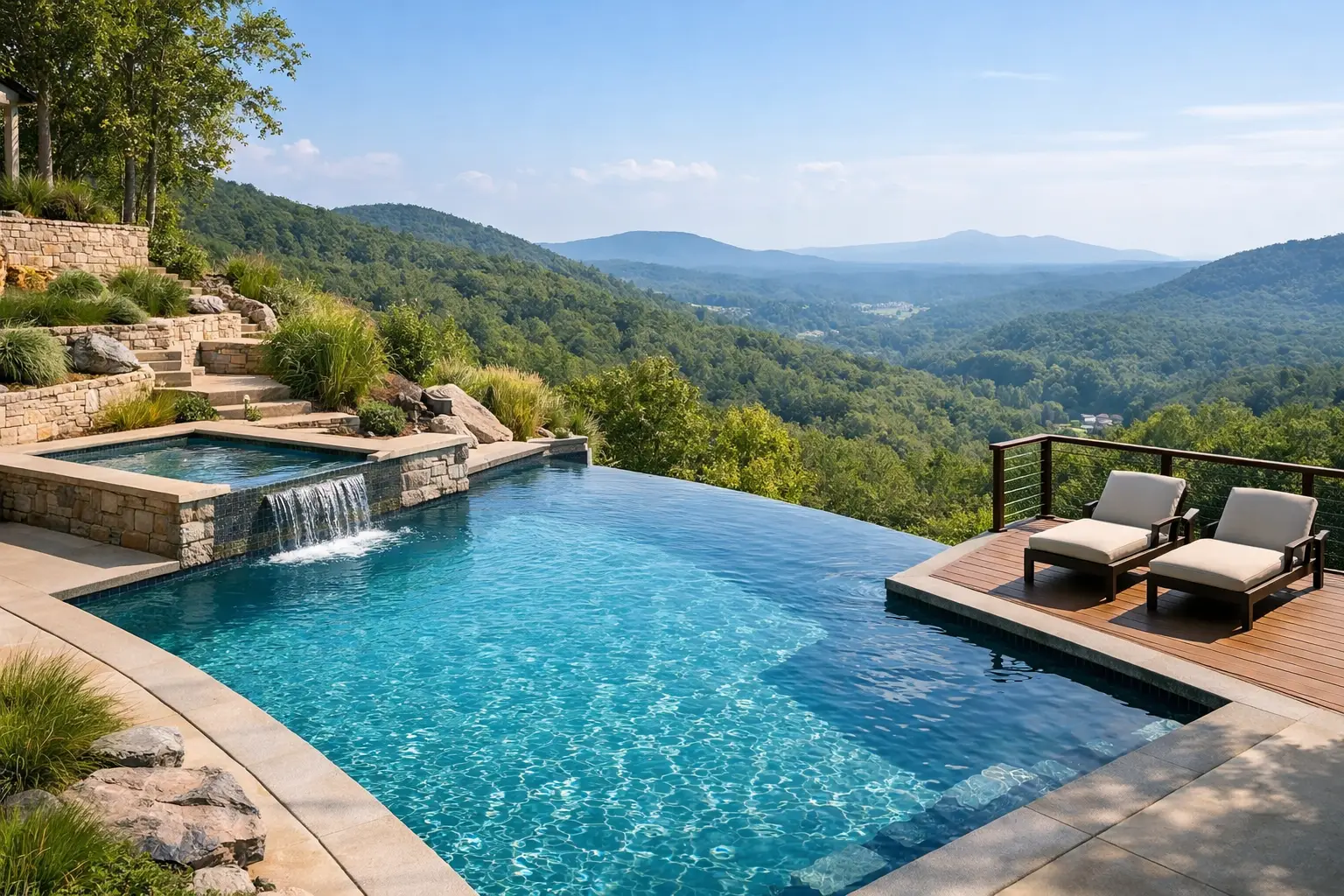
Yes, you can build a pool on a sloped or hillside yard. It takes more planning than a level lot, because excavation, structural support, drainage and equipment access all have to be worked out before digging begins. When they are, the slope can become an asset, giving the pool a better view and a setting that looks built into the land rather than forced onto it.
Many Northeast Georgia and Upstate South Carolina properties fall away from the house toward a wooded edge or a creek. That grade is not a reason to give up on a pool. It is a design condition that needs to be handled correctly from the first site visit.
Start With the Slope, Not the Pool Shape
The first question is not whether you want a freeform pool, a geometric design, a tanning ledge or a spa. It is what the property can support. A qualified builder looks at the direction and steepness of the slope, existing drainage paths, soil, access for equipment and how the pool will relate to the house.
A modest grade may only need careful grading and some extra excavation on the high side. A steeper slope can call for structural fill, a raised or exposed pool wall on the low side, or a shell engineered to handle changing soil pressure. There is no universal answer, because every hillside has its own mix of elevation, soil and water movement.
The goal is not to flatten the yard. It is to set the pool at the right elevation and let the remaining grade work for you.
Survey, Soil and Utility Checks
Before construction, a sloped project may need a property survey, utility locates and, depending on the site, a closer look at soil or structural conditions. Northeast Georgia has a wide mix of red clay, buried rock and terrain where water behaves differently after a heavy storm. Assumptions made on a quick walk-through can become costly changes once excavation starts.
Identify easements, septic components, buried lines and setback requirements early. Permit requirements vary by county and city, and some sloped sites need engineering as part of the review. Our post on pool permits in Georgia covers what to expect.
How to Position the Pool on a Slope
There are two extremes, and the right answer is usually between them. Setting the whole pool at the house elevation can require a lot of fill and structural support on the low side. Setting it at the bottom of the yard creates a long walk from the back door and can turn the pool into the lowest point where runoff collects.
A common starting point is to run the long side of the pool along the contour of the slope rather than straight downhill. That usually reduces excavation and fill. The shallow end often sits on the higher ground closer to the house, with the deep end toward the lower side.
There are trade-offs. A pool that follows the contour may not line up neatly with the architecture of the house. On some lots, a straight house-to-pool alignment is worth the extra earthwork. The right choice depends on how much slope you have, construction access, drainage patterns and how you plan to use the pool.
Keep the walk from the house in mind. A pool set so you reach it in a few easy steps gets used more than one that requires a hike, and it makes it easier to keep an eye on kids from the house.
Why Gunite Often Fits a Hillside Best
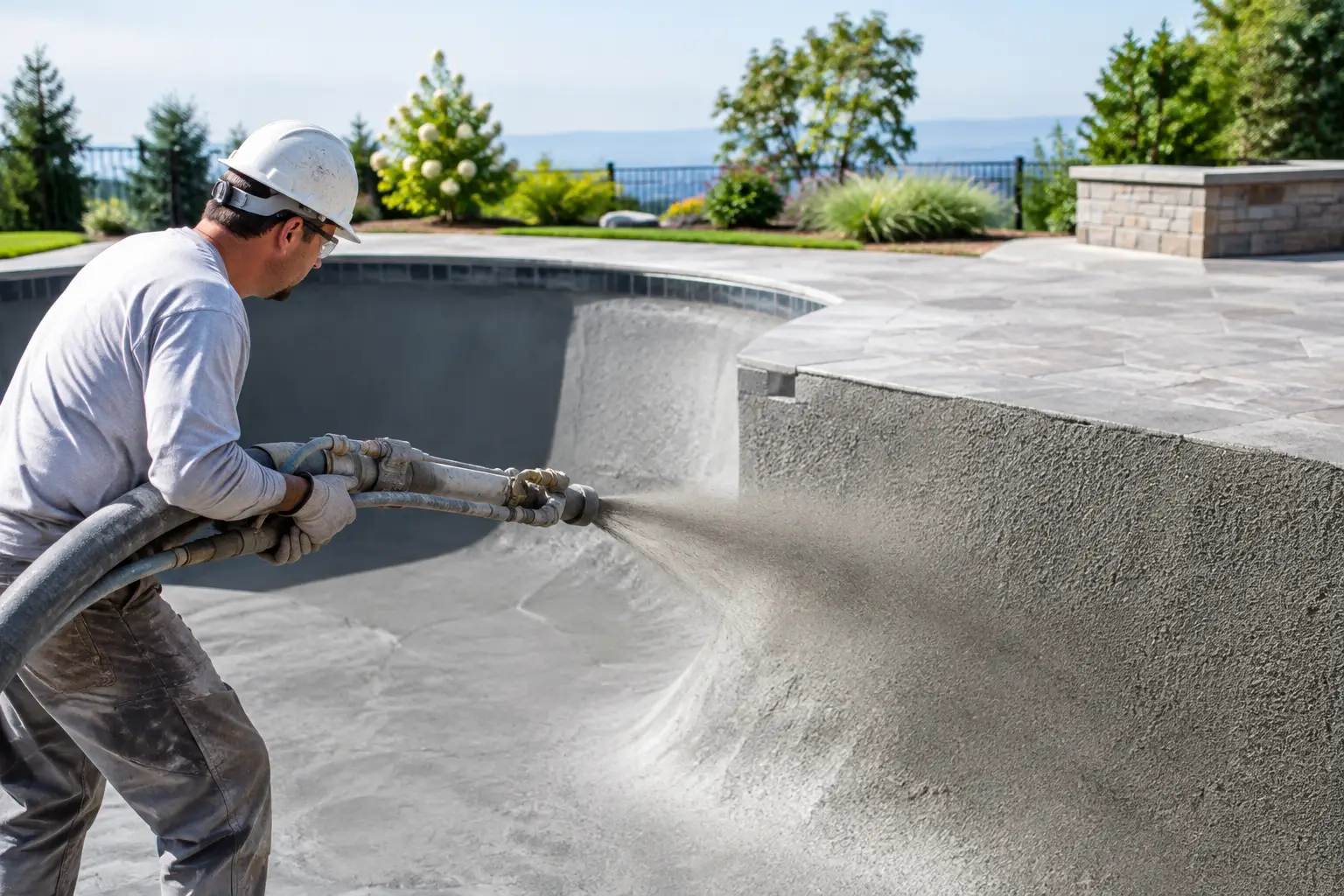
Gunite pools, often called concrete or shotcrete pools, are a strong fit for challenging slopes. The shell is formed on site with steel reinforcement and sprayed concrete, so the shape, depth and elevation can be designed around the hillside instead of forcing the site into a standard footprint. That flexibility helps when the goal is to preserve a view, avoid a large tree or fit the pool between the house and a property line. Learn more on our gunite pool construction page.
A gunite pool on a slope can also take advantage of the grade with a raised or exposed wall on the low side. See our post on raised beam pools. A vanishing edge can look striking when the pool faces a wooded view, but it adds a catch basin, extra plumbing and structural planning. It is a premium choice, not a requirement for a good sloped-yard pool.
Fiberglass and vinyl liner pools can work on some sloped lots, but the site has to cooperate. A fiberglass shell needs a clear delivery route and crane access into the backyard, and the excavation must still be properly supported and drained.
Grading and Drainage Make or Break a Hillside Pool
Water is the main force working against any sloped project. Rain moves downhill, and the pool and the house should never become its destination. On a hillside, drainage is part of the structure, not an add-on.
A sound plan catches runoff above the pool before it arrives and routes it around the pool area to a safe outlet. Depending on the site, that can include grading, swales, catch basins, area drains and buried pipe. Downspouts should be checked so roof water does not pour onto the area around the pool.
The surfaces around the pool need careful elevations, too. If they pitch toward the water, storms carry mulch, dirt and debris into the pool. If they pitch toward the house, the risk is more serious. Our full guide to pool drainage planning covers the details.
Retaining Walls Are Structural
Many hillside sites need retaining walls to hold soil and create level ground around the pool. A wall should never be chosen for looks alone. Height, soil pressure, footing, drainage behind the wall and any load from the pool all matter, and taller walls may need engineering and a permit.
Water pressure behind a wall is one of the most common causes of wall problems. Drainage stone, collection pipe and a controlled outlet behind the wall are essential, not optional. Make sure your plan identifies who is designing and building any wall the pool depends on.
Plan Access and Equipment Early
Excavators, concrete trucks and material deliveries need a workable route into the yard. Tight side yards, wooded lots and steep approaches affect the construction plan and the price. Raise access early so it shapes the design rather than surprising you later.
Pool equipment needs a stable, accessible spot. Pumps, filters, heaters and controls should be placed with noise, drainage and service access in mind. Too far from the pool adds plumbing runs. Placed where runoff collects, the equipment pad becomes a recurring headache.
Leave room around the pool for chairs and walking. Narrow edges are tempting on a slope because they cut earthwork, but they make the pool feel cramped once people arrive.
What Drives the Cost on a Sloped Site
A hillside pool generally costs more than a similar pool on a level, open lot. The slope itself is not the only reason. Excavation depth, rock removal, hauling soil in or out, structural support, drainage, extra concrete and difficult access all play a part.
That does not mean every slope needs the most expensive solution. Shifting the pool, simplifying the layout or working with the natural contours can protect the budget. Compare proposals on what they include. A lower bid that leaves out drainage, structural support or site restoration is not necessarily the better value. Ask for a clear discussion of allowances and unknowns, such as rock, hidden utilities and unsuitable soil. For more on pricing factors, see our Gunite Pool Cost in Georgia guide.
Build for the Long Term
A well-built hillside pool should look as solid years from now as it does the day it is filled. That depends on compaction, structural support and water management. Plant exposed slopes with ground cover that holds soil, keep mulch and loose stone where it cannot wash into the pool, and avoid overwatering near walls or on steep grades.
If your backyard slopes and you are wondering what is possible, the best next step is a site-specific conversation. Schedule a consultation or call (706) 705-7751, and we will walk the property with you before anything is drawn.