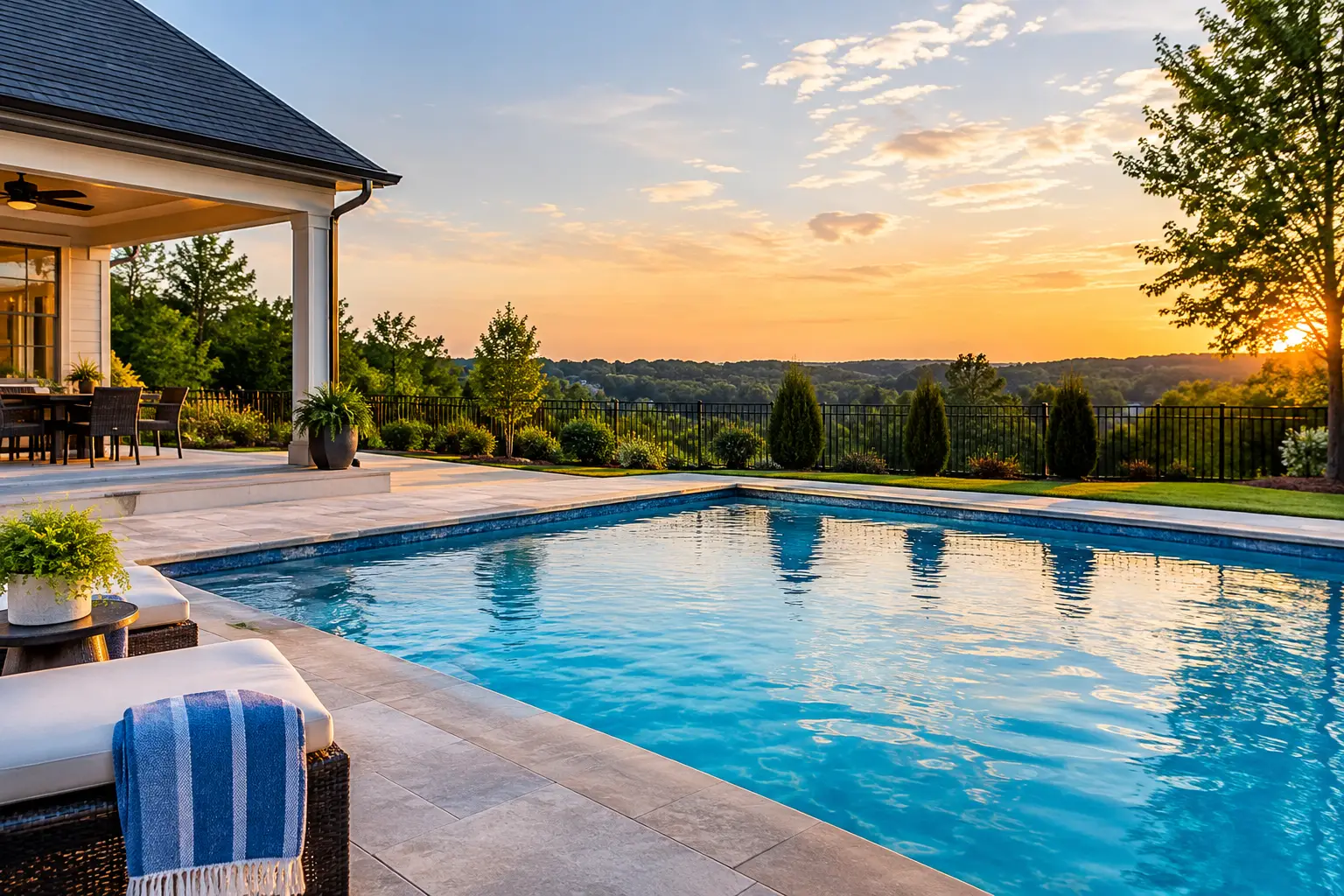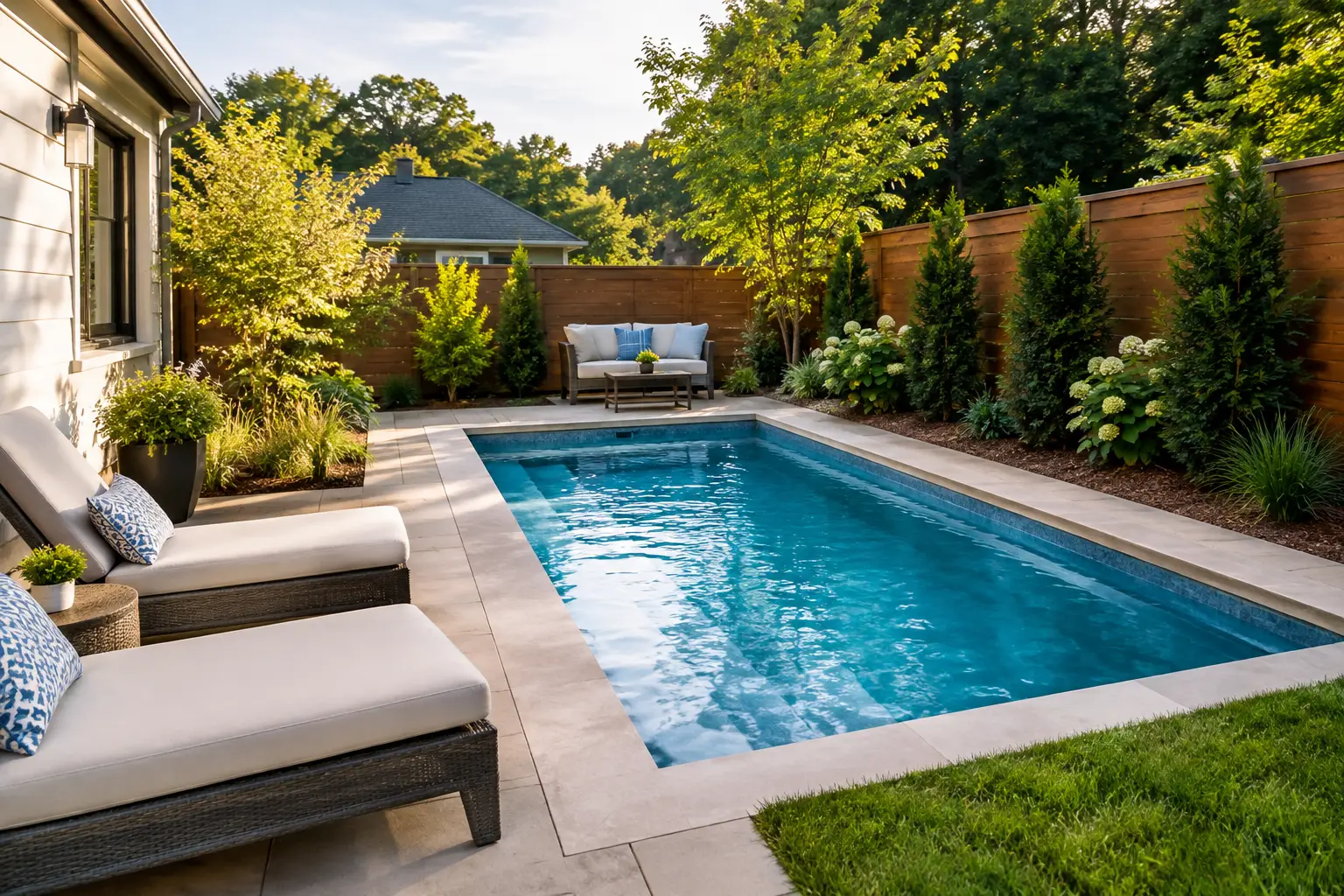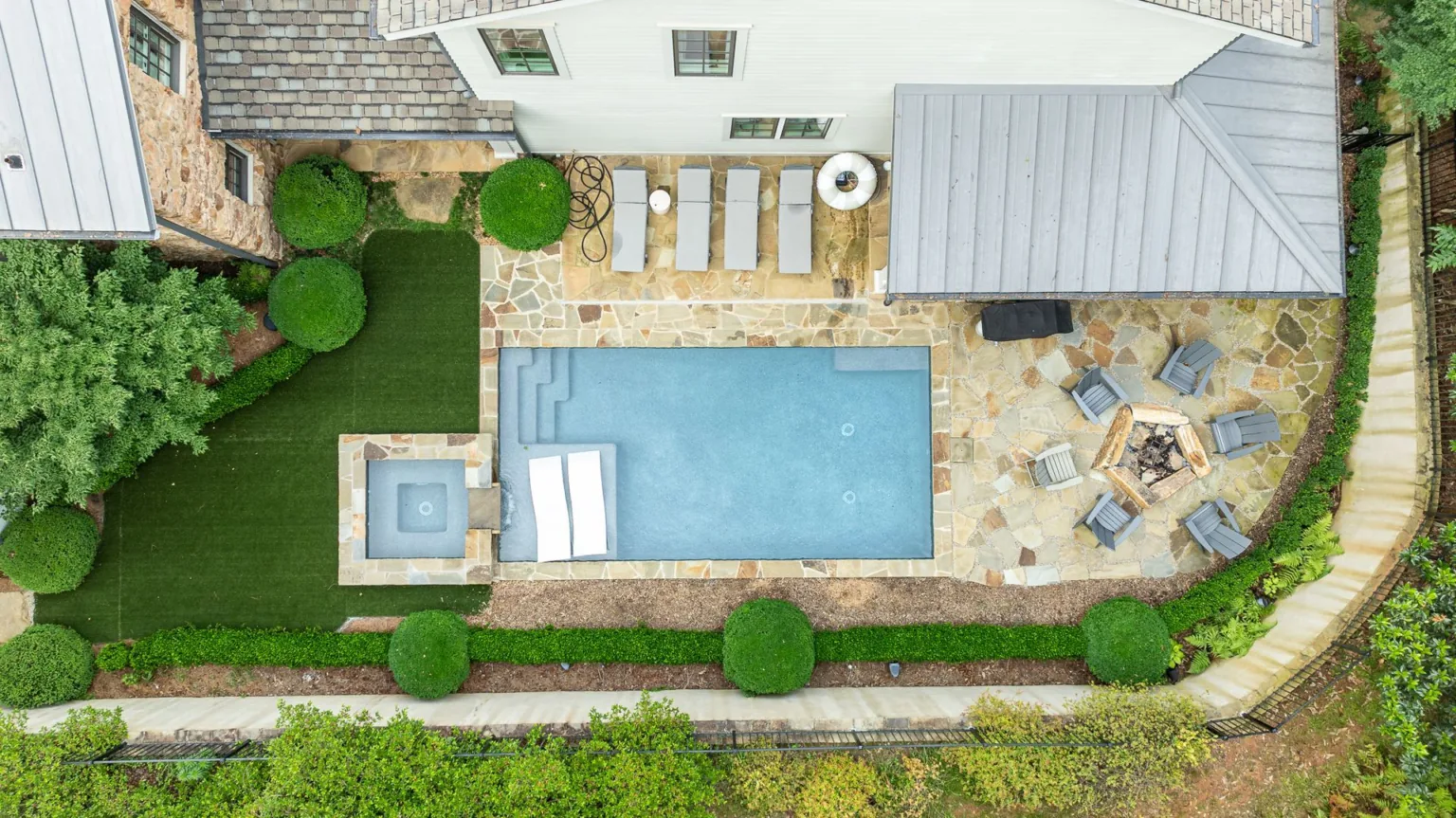
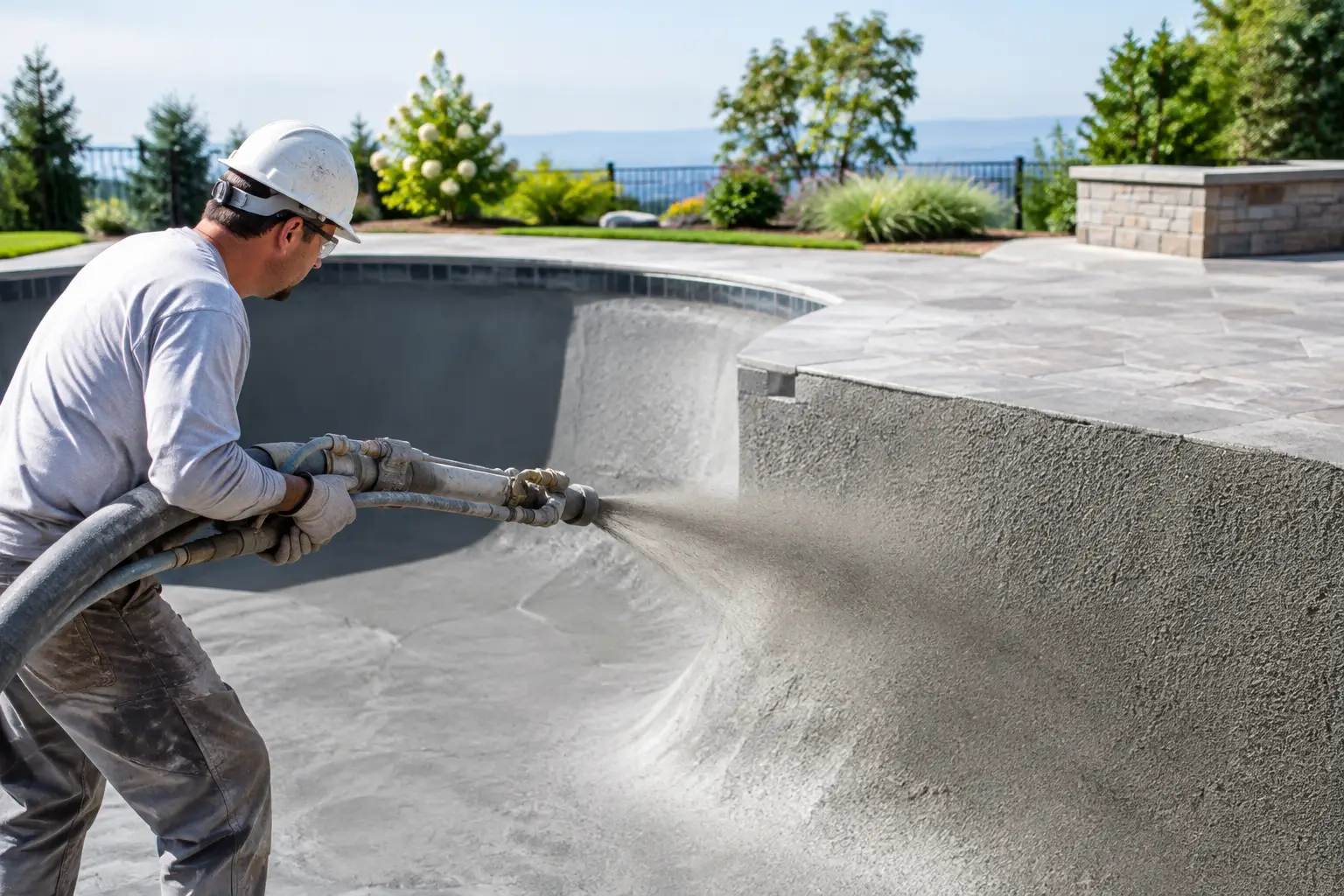
Shotcrete pool construction is the process of spraying wet, pre-mixed concrete at high velocity over a reinforced steel framework to form the structural shell of a custom pool. The shell is built on site and shaped by hand, which is why shotcrete pools can take almost any shape, depth, or built-in feature. Shotcrete is a close cousin of gunite, and gunite pools are often called concrete or shotcrete pools because both methods produce the same kind of strong, custom concrete shell.
Here is how shotcrete differs from gunite, how the shell is built, what makes it strong, and what to ask a builder before you commit.
Shotcrete vs. gunite: what is the difference?
Both are pneumatic concrete methods, meaning the concrete is shot through a hose onto steel reinforcement. The difference is when the water is added.
- Shotcrete is a wet-mix process. The concrete is batched with water before it reaches the job site, then pumped through a hose and sprayed by a trained nozzleman.
- Gunite is a dry-mix process. Dry cement and sand travel through the hose, and water is combined with the mix at the nozzle.
Both methods can create excellent pool shells when an experienced crew handles them, and many people use the terms interchangeably. The more important question is not which word appears on the proposal. It is whether the builder has a proven process for reinforcing, applying, and curing the shell. For a fuller comparison, see what a gunite pool is and how it compares to concrete.
How a shotcrete pool is built
1. Design and site planning
Every good pool starts with the lot, not just the wish list. The builder studies access, grading, drainage, utilities, setbacks, and how the pool will relate to the house. In Northeast Georgia, conditions change a lot from one property to the next. A design that looks great on paper may need adjusting once slope, drainage flow, and finished elevations are considered. Bulldog uses 3D pool design so you can see the layout in real scale before construction begins.
2. Layout and excavation
The pool is staked out and dug to its planned depth and profile, allowing for the finished water level, drainage, and equipment access. Excavation is rarely just digging a hole. A sloped yard, hard clay, rock, or a tight access point can change the approach.
3. Steel reinforcement and plumbing
Rebar is tied into a three-dimensional cage that follows the exact shape of the pool, including steps, benches, and deep-end transitions. This is the structural backbone of the shell. Plumbing for drains, returns, skimmers, water features, and spa jets is installed and pressure-tested before any concrete is sprayed. It is not the flashy part of the job, but it is where craftsmanship shows.
4. Applying the shell
When the shotcrete crew arrives, they work in a deliberate sequence. Floors and walls are built to the specified thickness, corners and transitions are shaped, and details like steps, benches, and tanning ledges are formed directly into the shell. The crew then cuts and trims the fresh surface to its final profile. That handwork is what gives custom concrete pools a level of flexibility that preformed pools cannot match.
5. Curing
Fresh shotcrete needs time and moisture to gain strength. The builder may keep the shell damp with regular watering or use another approved curing approach based on the weather. Georgia summer heat, dry air, and wind can pull moisture from the surface too fast, so the shell has to be managed carefully after it is shot. Curing is part of building a strong structure, not dead time.
6. Tile, coping, and interior finish
Once the shell has cured, waterline tile and coping are installed, the equipment is connected, and the interior finish is applied. Plaster and pebble finishes are common choices.
What makes a shotcrete shell strong
The strength comes from the concrete, the steel, and the application working together. As the wet concrete is projected onto the reinforcement, it compacts as it lands. When the mix, nozzle distance, angle, and technique are managed correctly, the result is a dense shell that supports the weight of the water and resists movement over time.
There are no shortcuts. A thicker shell does not make up for poor steel placement, bad soil preparation, or improper curing. An attractive interior finish cannot hide a structural problem underneath. Quality construction is a chain of decisions, and each link matters.
Why homeowners choose shotcrete
Design freedom. You are not picking from a short list of factory shapes. A shotcrete pool can be a clean geometric layout for a modern home, a freeform shape for a large yard, or a design that combines a pool, spa, sun shelf, and raised wall. Vanishing edges, built-in seating, beach entries, and custom depths are all possible because the shell is formed on site.
A fit for difficult lots. A narrow side yard, an elevation change, or an unusual lot line may call for a pool shape that works with the property instead of forcing the property to fit a standard mold.
Long-term strength. A properly built concrete shell is made to last, which suits homeowners planning to stay put and use the pool for many seasons.
The trade-offs
Shotcrete is not the right answer for every budget or schedule. A custom concrete build involves more planning, more field work, and more finish decisions than a fiberglass pool, which is factory-made and delivered by truck. Weather, inspections, material lead times, and design complexity all affect the schedule, and rain in Georgia can slow excavation and concrete work.
Cost depends on the shape, size, access, engineering, features, finishes, and site conditions. A flat, open lot is a different project than a sloped yard that needs extra structural and drainage planning. For a closer look, read our Gunite Pool Cost in Georgia guide.
Planning details that affect the finished pool
Drainage. Rainwater should be directed away from the pool and the house. The area around the pool should slope away from the water so runoff does not collect along the edge. On sloped properties, the design may need additional structural planning.
Access. Excavation equipment, concrete trucks, and crews need a workable route to the backyard. Tight entries require careful logistics, and a site evaluation identifies them before work begins.
Finish choices. Waterline tile, coping, interior finish, and equipment location should be chosen together before the shell is applied, so you are not making compromises later.
Questions to ask your pool builder
- How do you handle rock, groundwater, or poor soil during excavation?
- How is the steel reinforcement designed and inspected?
- Do you pressure-test plumbing before the shell is applied?
- Do you use shotcrete or gunite, and why?
- How do you manage curing in hot or dry weather?
- How will you communicate if site conditions change?
Local experience helps. Familiarity with Georgia clay, sloped lots, heavy rain, and county permit requirements leads to better recommendations before work begins.
Build the shell around how you want to use your pool
A shotcrete or gunite shell gives you the freedom to build a pool around your home instead of forcing your home to fit the pool. The best design starts with how you want to use the water, then builds every detail around that goal. Learn more about our gunite pool construction service, or schedule a consultation or call (706) 705-7751 to talk through your project.