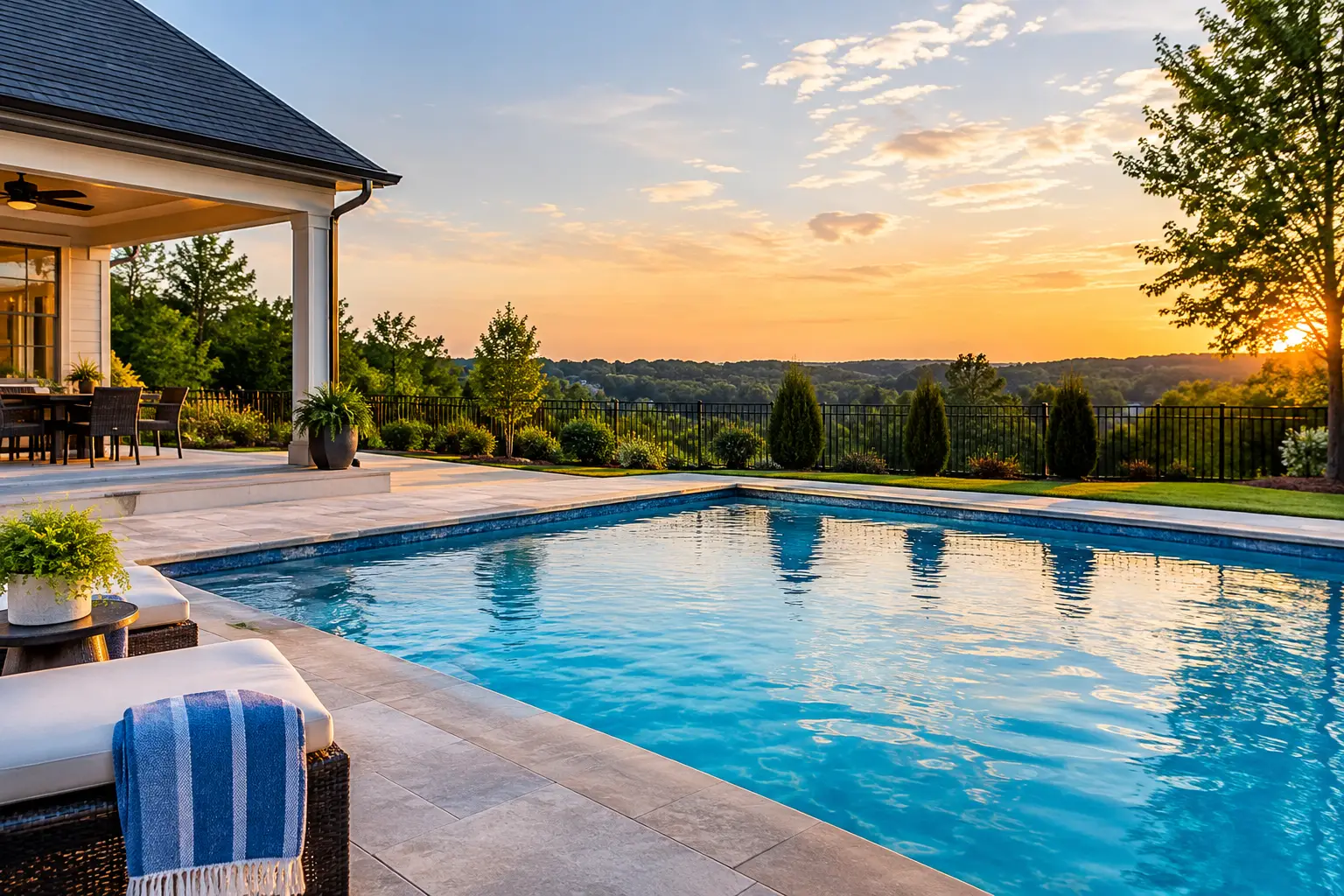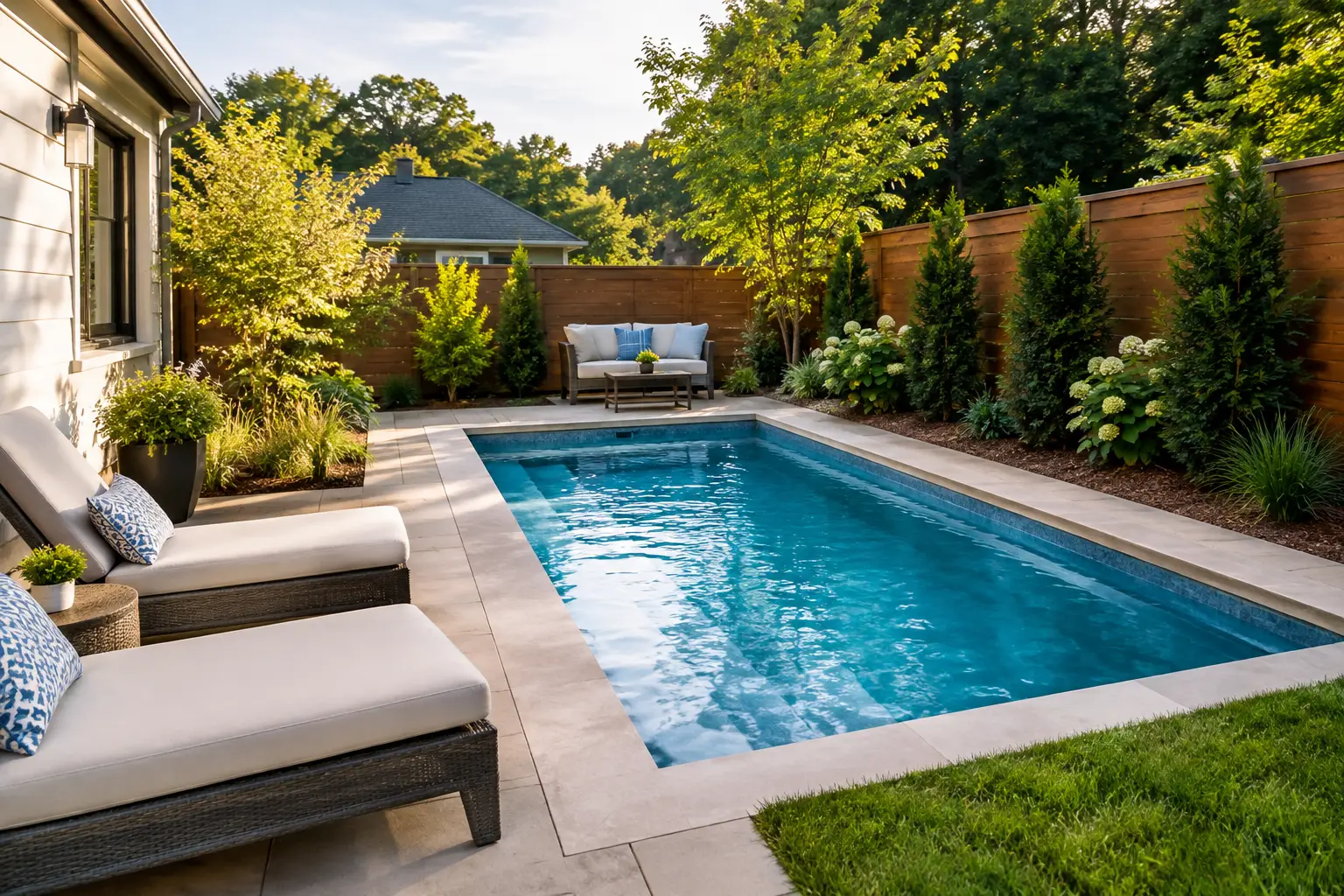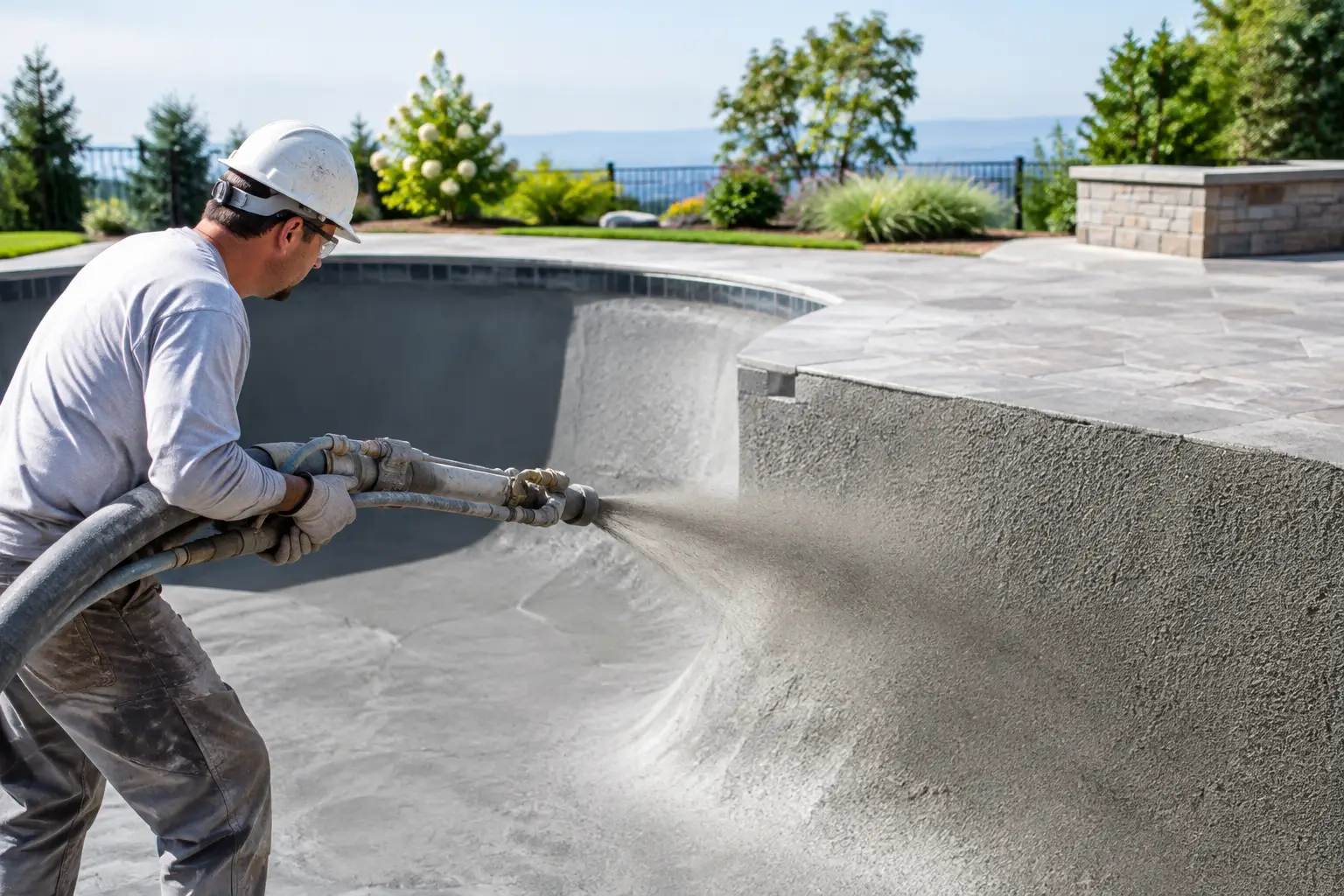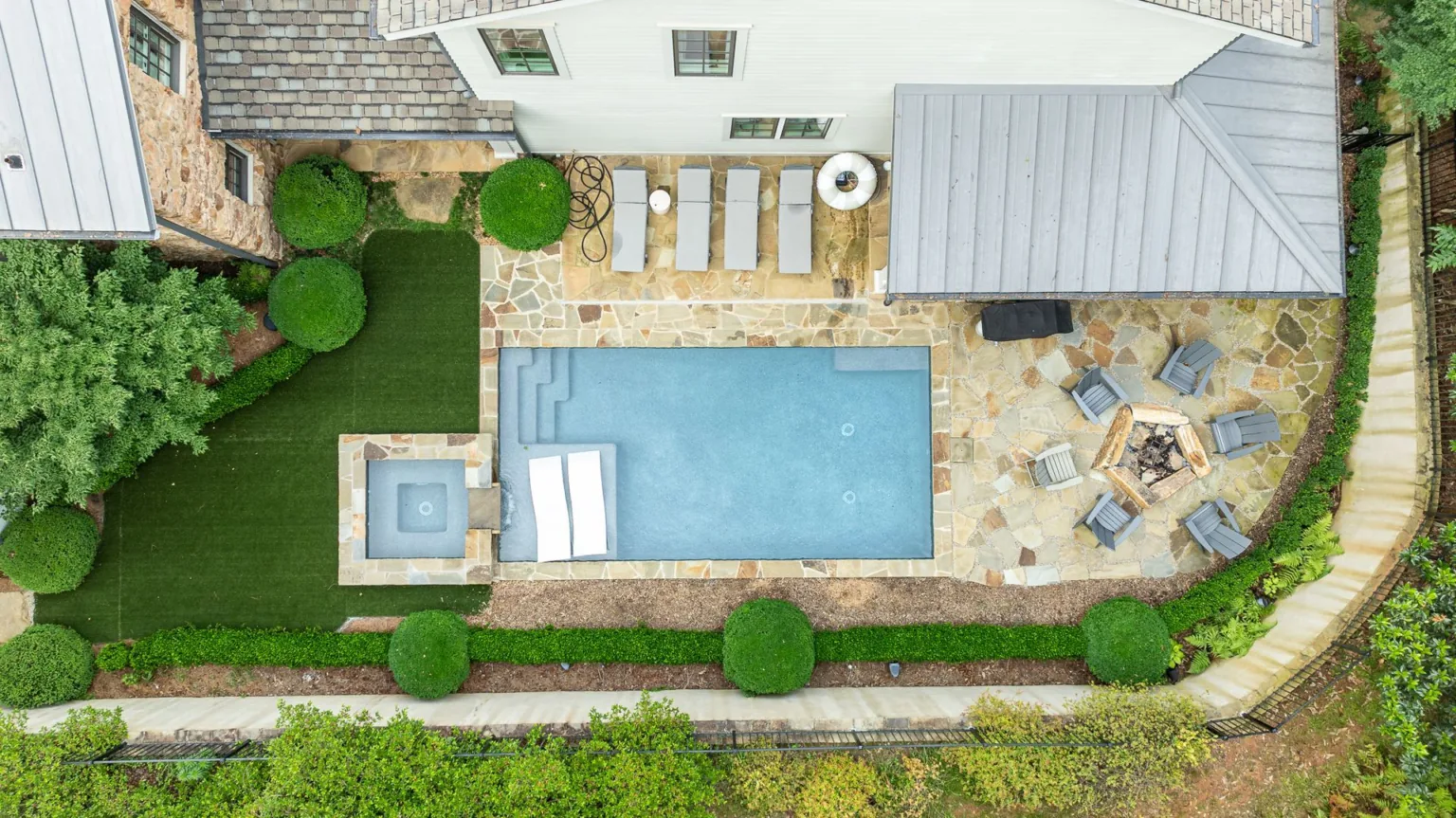

To prepare your yard for pool construction, confirm your property lines and setbacks, plan a clear access route for equipment, deal with drainage and grade, locate utilities, decide which trees stay, and clear the work area before the crew arrives. Most of these steps happen before excavation, and handling them early prevents delays and surprise costs.
For Georgia homeowners, preparation also means accounting for red clay soil, rolling lots, heavy rain and local permit rules. Here is a step-by-step look at what to do.
Start With How the Finished Pool Will Be Used
Before moving a fence or removing a shrub, decide what the pool needs to do. Will children need a clear route from the house to the water? Do you want room for chairs and a table near the pool? Is privacy from neighbors a priority? These answers affect pool placement, the size of the surrounding area, drainage, access and utility planning.
Watch sun, shade and sightlines
Observe your yard at different times of day. Full sun makes swimming more comfortable and means fewer leaves in the water, but a fully exposed pool area can feel hot in a Georgia summer. Existing shade near a sitting area may be worth keeping, if the tree is healthy and outside the construction zone.
Consider the view from inside your home, too. A well-placed pool can become a focal point from the kitchen or living room, while equipment and neighboring windows may need to be screened.
Confirm Property Lines, Easements and Setbacks
A pool cannot go wherever open grass happens to be. Property lines, utility easements, septic components, zoning setbacks and neighborhood rules all limit the buildable area.
- Find your survey. Share it with your builder early. If it is outdated or unclear, you may need a new one before the design is finalized.
- Do not trust the fence. Fences are often installed inside or outside the actual property line.
- Check easements. Utility providers may need access to parts of your property, and permanent structures generally cannot be built there.
- Know the setback rules. They vary by county and city and may apply to the waterline, the pool wall, the equipment pad or the area around the pool.
- Review HOA rules. If you have an HOA, start its approval process before construction is scheduled.
- Locate septic components. Identify the tank and drain field before choosing a pool location. Construction traffic can damage them, and local rules may restrict how close a pool can be.
For more on local rules, see pool permits in Georgia.
Plan Construction Access
Excavators, skid steers, dump trucks, concrete equipment and materials all need a practical way into the backyard. Access planning is often the first real test of whether a design can be built efficiently.
Walk the likely route from the street to the pool site. Measure side-yard gates, note tight turns and look for overhead lines. Identify fences, irrigation heads, plantings or structures that may need protection or temporary removal. A narrow route does not automatically stop a project, but it can affect equipment choices, labor and cost. For a fiberglass pool, the route also has to accommodate shell delivery.
Talk with your builder about:
- Which fence panels may need to come down
- Where excavated soil will be staged
- Where trucks can park
- How driveways, curbs and existing walkways will be protected
Address Drainage and Grade Early
Water has to go somewhere. If your yard already collects runoff near the house, the pool project is the time to address it instead of building around it.
The area around the pool must be graded so surface water moves away from the pool and the house toward an approved drainage path. A pool changes how rainfall travels across a yard because it replaces grass with water, coping and hard surfaces. Downspouts, swales, French drains and catch basins may all be part of the final plan, depending on the property.
Northeast Georgia yards often combine slopes with compact red clay. Clay holds water after heavy rain, and slopes send runoff quickly toward the lowest point. A sound pool design accounts for both. See pool drainage planning for Georgia yards and building a pool on a sloped yard.
One important tip: do not regrade the yard yourself before the design is final. Removing soil or filling low spots without a plan can create new drainage problems and complicate the layout. Let the pool design set the earthwork.
Locate Utilities and Plan New Ones
Before any digging, underground utilities must be identified. That includes electrical service, gas, water, sewer, communications cables, irrigation piping and low-voltage lighting. Public lines are marked by the locating service, while private lines on your property may need separate locating.
Pool construction also requires new utilities. Equipment needs electrical service, and a gas heater needs a gas line. Water access and equipment placement should be planned as part of the design.
Choose an equipment location that is accessible for service but away from where people will sit, especially on smaller lots or near bedrooms. Screening can help with looks, but it should not block airflow or service access.
If you have sprinklers, an invisible pet fence or other buried features, tell your builder before digging starts. Mark known irrigation valves and the controller location. Expect portions of an irrigation system to be rerouted after construction.
Make Smart Decisions About Trees
Mature trees make a yard feel established, but they are one of the biggest site-planning variables. Large roots can interfere with excavation. Leaves, pine needles, acorns and seed pods increase cleaning. Some trees drop branches during storms or create too much shade.
Not every tree near the pool has to go. Healthy trees can provide privacy and welcome shade around the edges. The right call depends on species, condition, root zone and distance from the excavation. Removing a problem tree before excavation is generally easier than working around it later. After construction, low-litter plants are the practical choice near the water.
Prepare for Construction
Pool construction is active, noisy work. There will be deliveries, excavation, crews coming and going and temporary changes to how you use your yard. A few steps make it easier:
- Move furniture, grills, playsets, planters and stored items well away from the work area and access route.
- Point out any plantings or features you want protected during the pre-construction walk-through.
- Keep children and pets away from the work zone at all times.
- Make sure workers can get through gates that are normally locked.
- Let nearby neighbors know when construction will start, and mention shared drives or tight street parking to your builder.
- Know who your point of contact is and how updates will be shared.
Expect some wear on grass along the access route and staging area. The construction path, soil staging and utility trenches can affect more of the yard than the finished pool occupies. Ask your builder what will be restored at the end of the project and what you will handle afterward.
Know What Affects the Schedule
Permits, inspections, utility marking, HOA review, weather and site conditions all influence when work can start and how it progresses. Heavy rain can pause excavation, especially in clay. Bulldog provides a schedule after a site visit, once those factors are known. You can read more about our process. If you are aiming for a particular swim season, start planning well ahead.
A well-prepared yard gives your builder room to do quality work and gives you fewer decisions under pressure. Bulldog Pool Builders can walk your property, flag access and drainage issues and show you a 3D design before construction. Schedule a consultation or call (706) 705-7751.