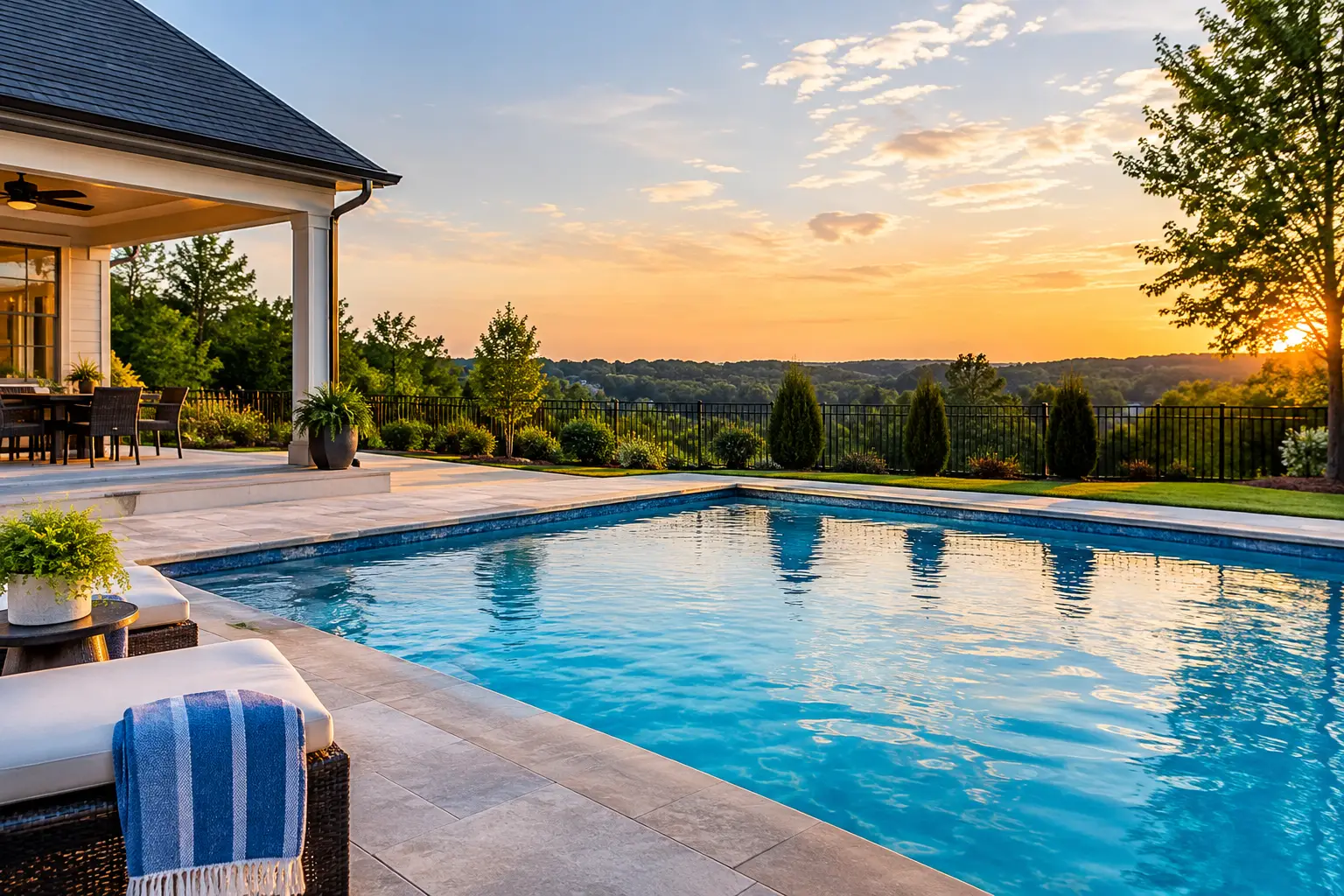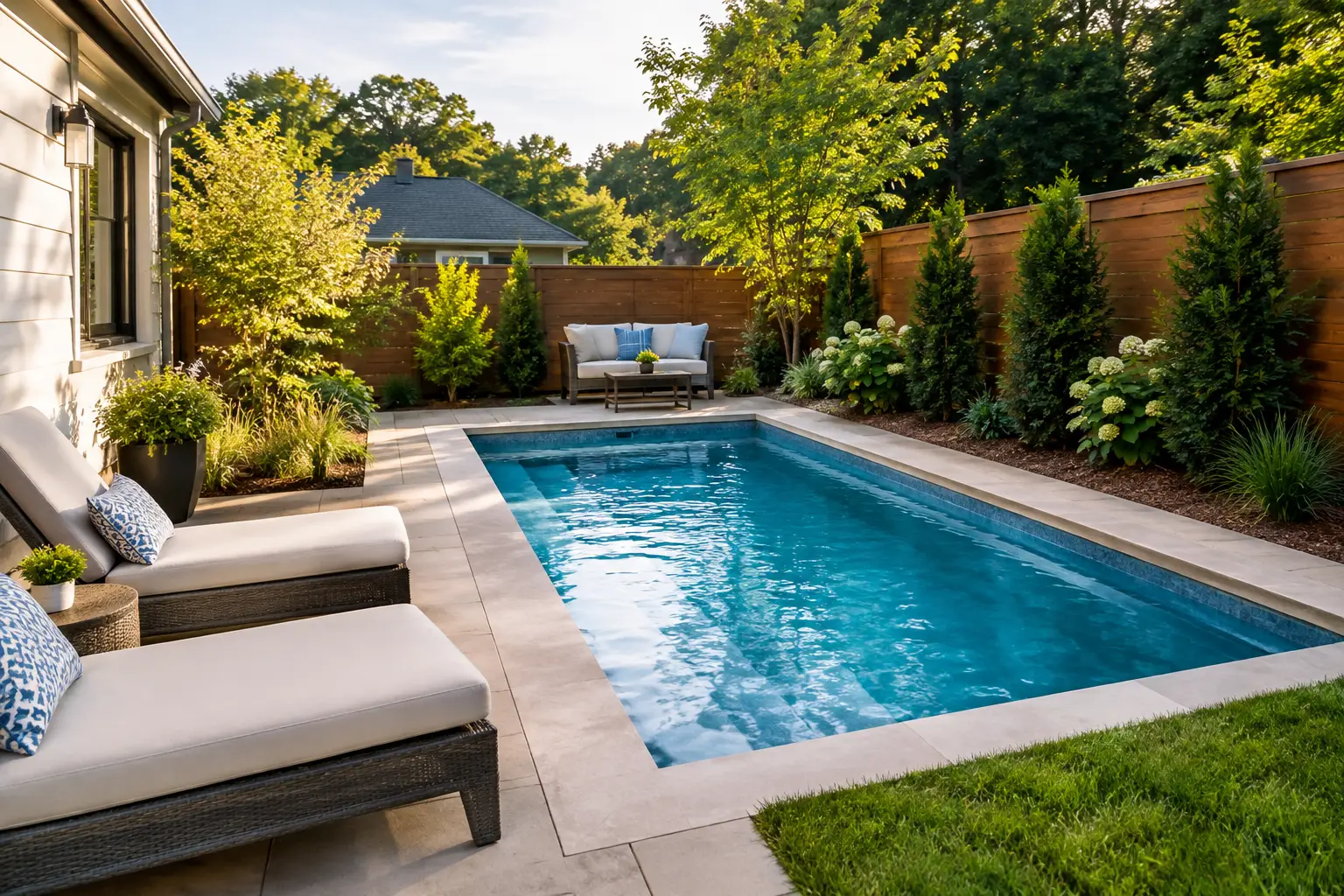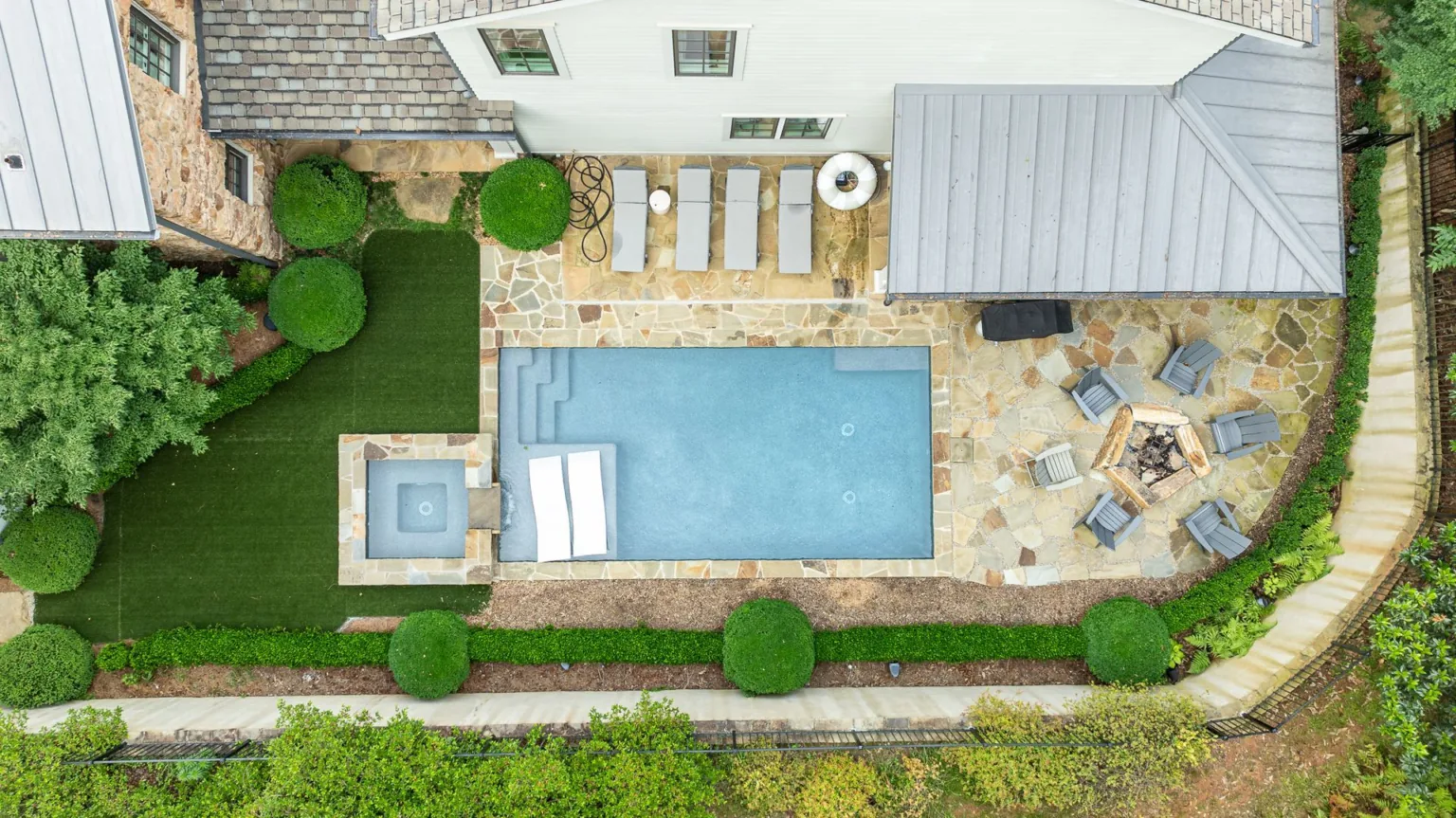
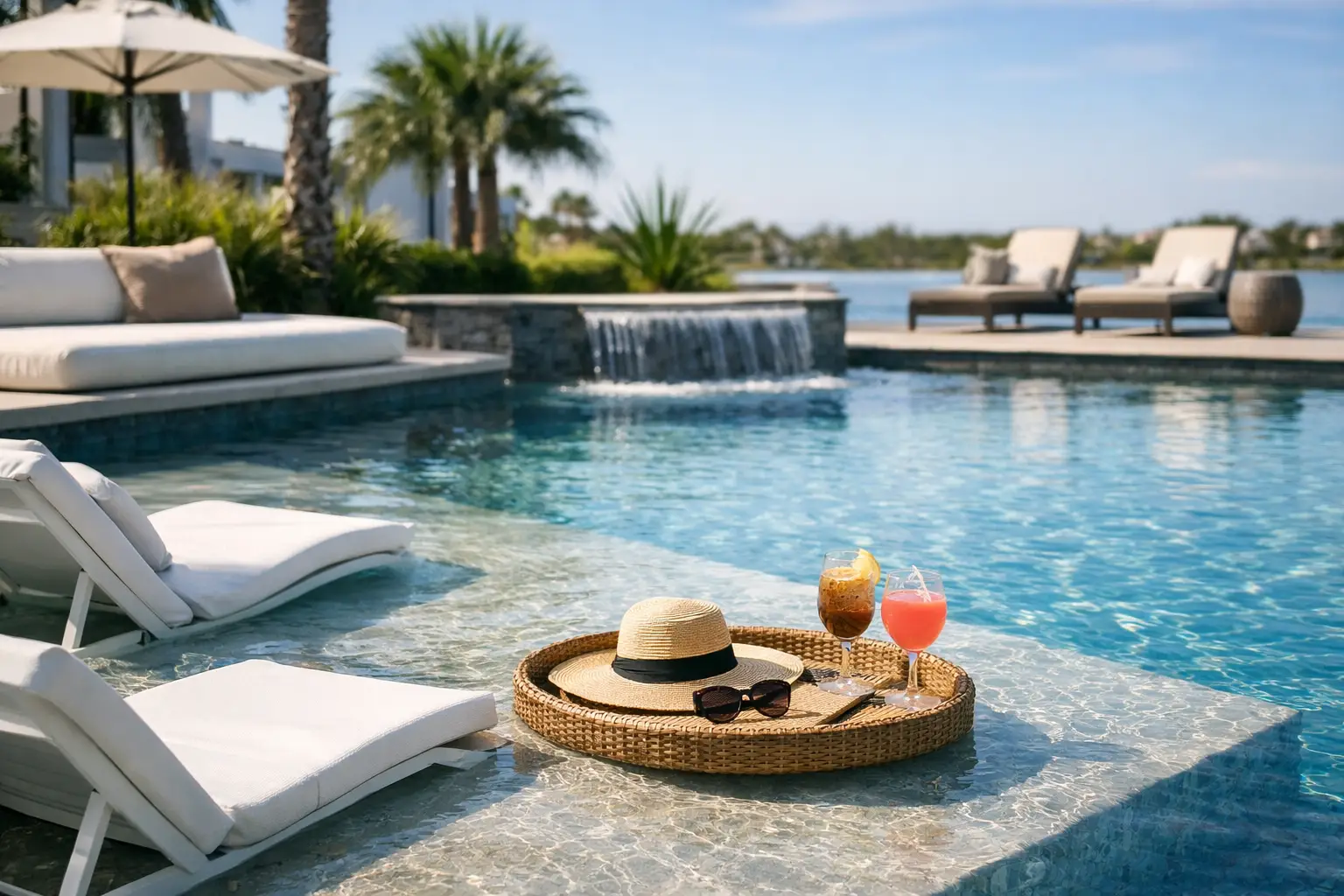
The best tanning ledge designs match the ledge to how your family will use it: a wide shelf for lounging and play, a two-lounger layout with an umbrella for shade, bubblers for movement, or a bench and ledge combination for socializing. A tanning ledge, also called a sun shelf, baja shelf or tanning shelf, is a shallow, flat platform built into the pool just below the waterline. Instead of choosing between swimming and sitting on a hot surface, you get a water-cooled place to relax with your feet in the water.
The right design depends on how much pool space you have and what you want the ledge to do. Here is how to plan one and ten ideas worth considering.
Start with the purpose of the ledge
Before choosing tile or furniture, decide who will use the ledge most. A family with young children may want a broad, open shelf with a gentle transition. Homeowners who entertain may prefer a smaller ledge with two loungers and an umbrella, leaving more room for swimming.
Depth matters as much as size. Most ledges hold a shallow layer of water, usually well under a foot, which suits in-water loungers and casual sitting. A shallower shelf can be easier for toddlers but may not keep chairs fully in the water. A deeper shelf feels more immersive but is less convenient for small children. Your builder should match the depth to the furniture you plan to use and the people who will use it.
10 tanning ledge design ideas
1. A wide resort-style sun shelf
A wide ledge creates the strongest visual impact and gives the pool a true resort feel. It suits larger pools that can support a generous shallow area without cramping the swim zone. Set two or three in-pool chaises across the shelf and leave enough open water around them for easy access. In a compact pool, an oversized shelf can take away too much room for games and swimming.
2. Two loungers with an umbrella sleeve
For many homeowners, this is the most practical layout. Two loungers fit side by side with an umbrella sleeve between or just behind them. It looks polished without turning the shelf into a furniture display.
Shade is more than a luxury in Georgia summers. A well-placed umbrella lets adults stay on the shelf longer and gives kids a break from direct sun. Decide the sleeve location during design, because adding one after the pool is built is harder and rarely looks as clean.
3. Bubblers for movement and sound
Bubblers send low arcs or gentle domes of water up through the ledge, making a still shelf feel active. Kids enjoy them, and the sound can soften traffic or neighborhood noise. With integrated lighting, each bubbler becomes a focal point at night.
One or two bubblers usually give the right effect. Too many make the ledge busy, splash loungers and add equipment. The goal is calm and inviting, not a water park.
4. A ledge that doubles as a play zone
A broad, open shelf gives young children a supervised place to splash while adults sit nearby. This works best without fixed furniture in the center. Keep the surface clear for play and use movable loungers at the edges when you entertain.
Plan for safety. The ledge should be easy to see from where adults sit and from the house, with clearly defined transitions into deeper water and slip-resistant surfaces around the pool. A sun shelf supports supervision; it never replaces it.
5. A built-in bench at the waterline
Pairing a ledge with a built-in bench gives two ways to relax in the same area: lounge on the shelf, then move to the bench to sit upright and talk. It is a strong option for homeowners who host and want the pool to feel social for guests who are not swimming. The bench can follow the pool wall, frame the shelf or sit at a right angle to it. Clean geometry tends to work best, since too many curves and intersecting levels can make a pool look smaller.
6. A geometric shelf for a modern pool
Rectangular pools and crisp, straight-edged ledges are a natural match. Large-format coping and simple waterline tile reinforce the look. Modern does not have to feel cold: a warm white interior finish and soft gray stone coping keep it inviting. The key is carrying a limited palette through the pool rather than mixing competing materials.
7. A curved ledge for a freeform pool
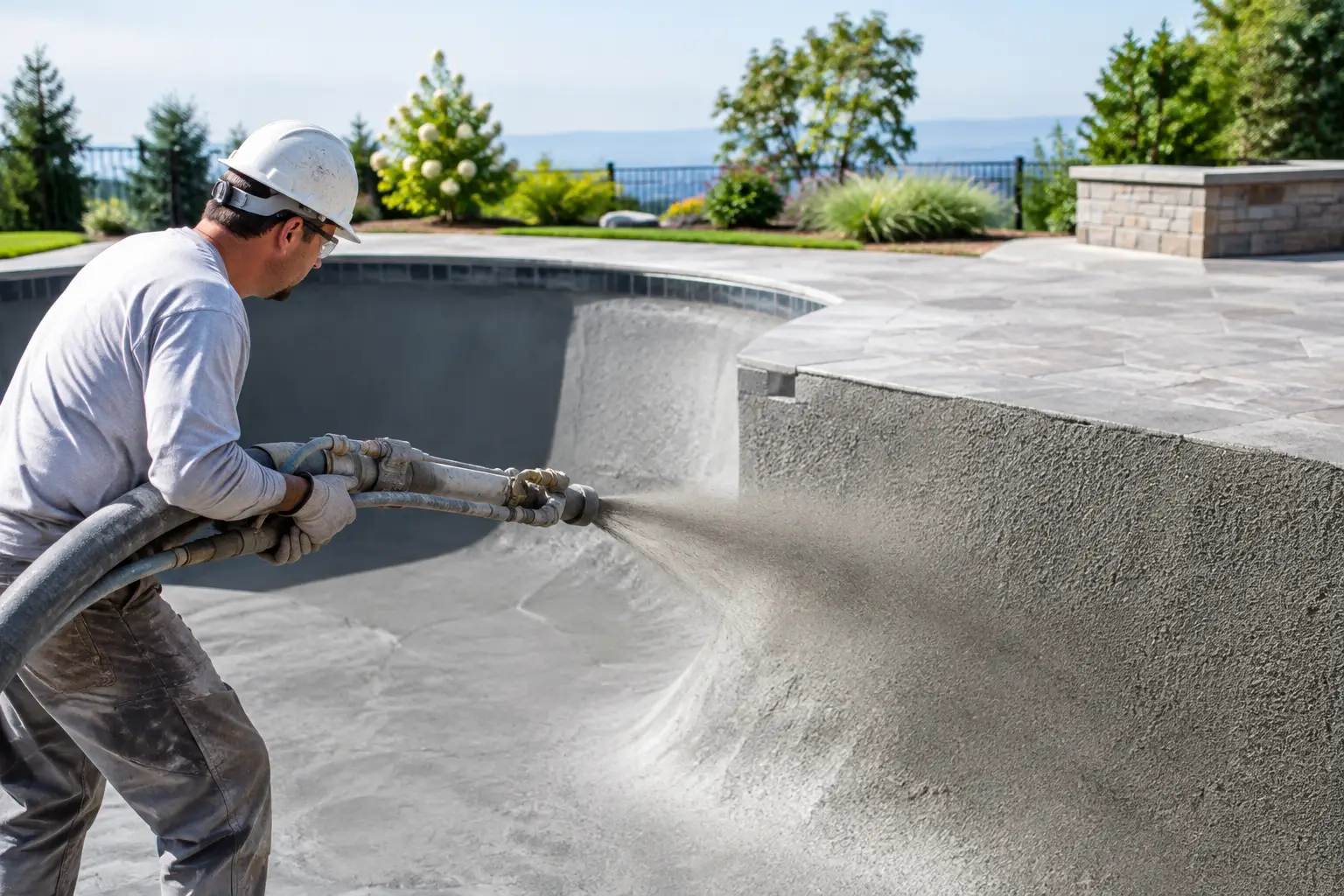
Freeform and lagoon-style pools benefit from a ledge that follows the pool’s natural curves, so it reads as a quiet cove rather than an add-on. A curved shelf works well when the pool is shaped around existing trees, views or irregular property lines. The detail work matters here. Curved coping and tile require experienced installation to keep lines smooth and consistent. This kind of custom shape is where gunite pool construction shines, since gunite pools, often called concrete or shotcrete pools, are formed on site to any shape.
8. A ledge framed by a water feature
Placing the ledge in front of a raised wall with a sheer descent or scupper gives loungers a view of moving water and adds a soft backdrop of sound. A raised wall behind the shelf can also add privacy. Keep the feature in scale with the ledge so it frames the space rather than overwhelms it.
9. Tile that defines the shelf
A ledge is a chance to use tile with purpose. Mosaic tile can outline the shelf edge, mark the change in depth or add a pattern beneath the water. Lighter colors keep the shelf bright, while deeper blue or charcoal tones create a more dramatic, reflective surface. Choose for upkeep as well as appearance: highly textured tile can be harder to clean, and very dark finishes can show mineral deposits more readily.
10. A shelf placed for the best view
Do not automatically put the ledge at the pool entry. Put it where people will want to sit. That might face the tree line, look back toward the house or catch afternoon shade. The best location considers sun direction, views, privacy and how people move from the house to the pool. A beautiful ledge in the wrong place will not get used as often as one designed around the rhythm of the yard.
Finishes and details that make it work
A ledge should look connected to the pool, not like a separate platform. Matching the interior finish across the shelf and the main pool is the most cohesive option, and a contrasting tile border can define the edge while keeping a clean transition. Underwater lighting along the ledge makes the step-down to deeper water easy to see after dark.
Think about the area around the ledge, too. Light-colored coping stays more comfortable underfoot in direct sun, and textured surfaces improve traction. The area around the pool must slope away from the water so Georgia’s heavy rains drain properly instead of pooling.
Furniture needs to be rated for in-pool use. Standard outdoor chairs can stain, corrode, float or damage the pool finish. Purpose-built in-water loungers are made for chlorinated or saltwater pools and sit correctly at shallow depths.
Plan the ledge with the pool
A tanning ledge is easiest to get right when it is designed with the pool’s shape, steps and depth profile, not added at the end. With a 3D model during custom pool design, you can see the ledge size, lounger placement and sightlines before construction begins. For related ideas, see our guides to pool entry designs and luxury pool features.
Want help shaping a tanning ledge around how your family uses the pool? Schedule a consultation or call (706) 705-7751.