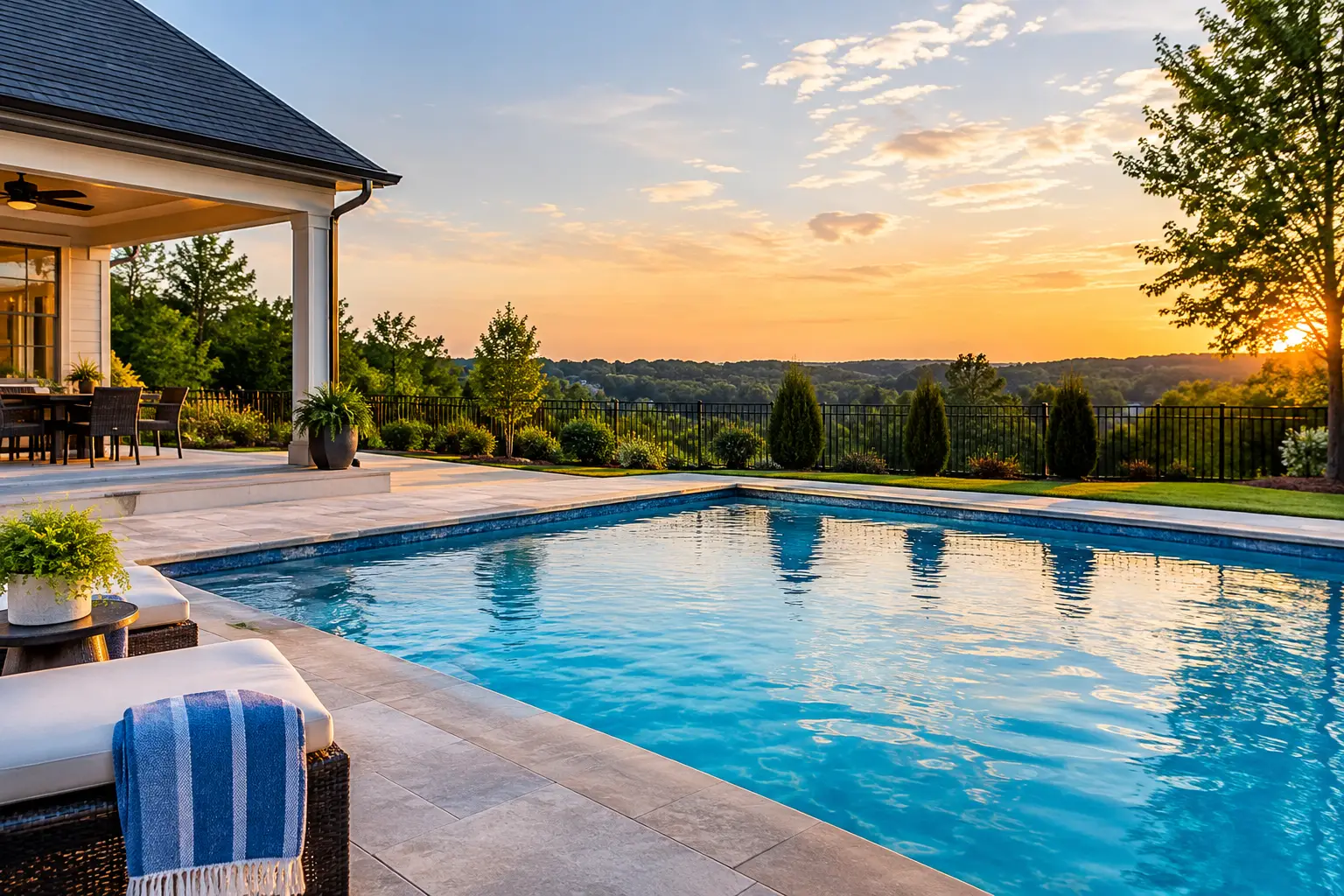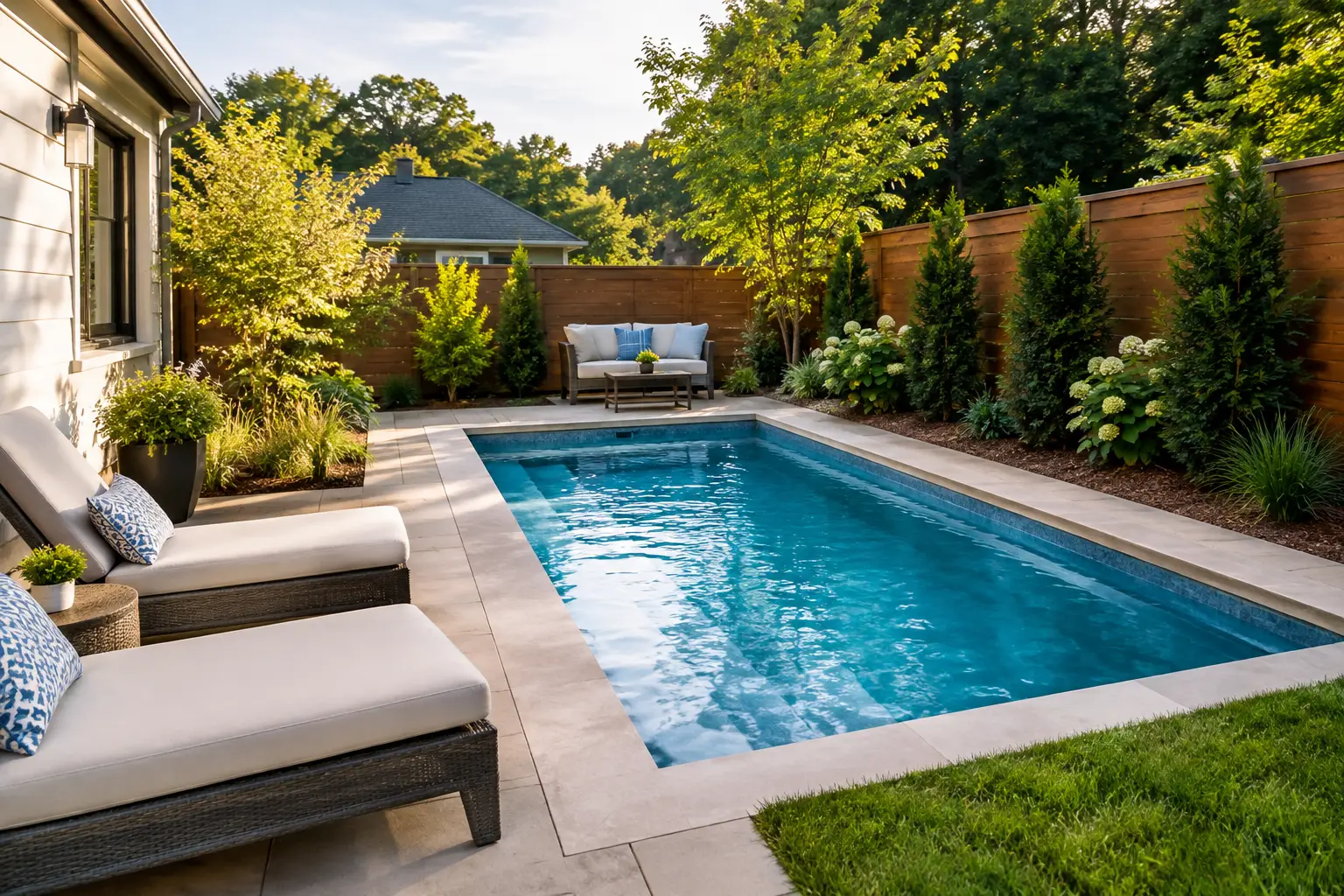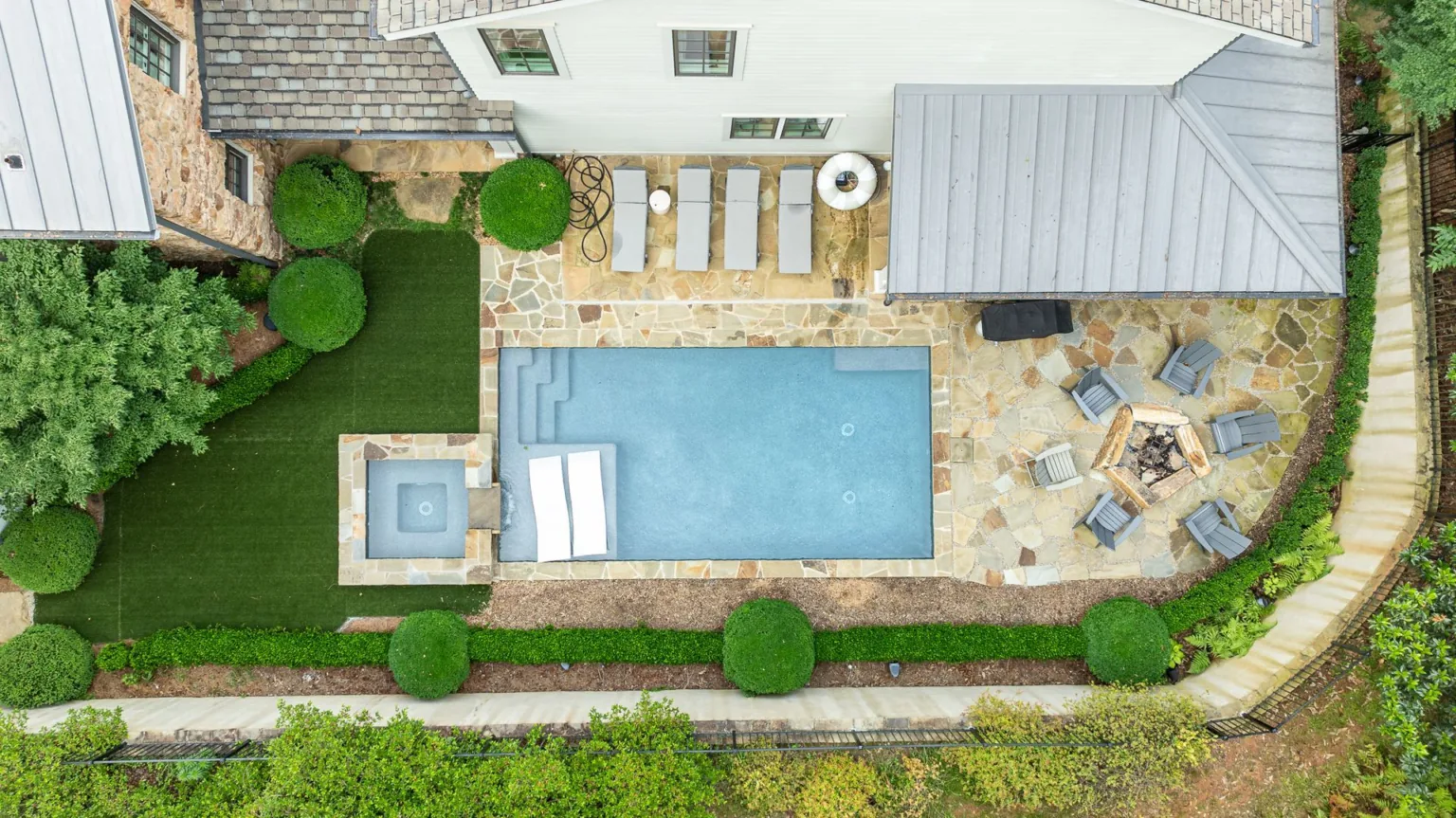

Vinyl liner pools usually make sense when you want an inground pool at a lower starting cost, like a soft, smooth surface and do not need extreme customization. Gunite pools usually make sense when design freedom, a permanent concrete structure and a wide range of finishes are at the top of your list. Both are good choices. They simply solve different problems, and the right one depends on your property, your budget and how you plan to use the pool.
Bulldog Pool Builders builds both vinyl liner and gunite pools, so the goal here is a fair comparison that helps you match the pool to your yard.
The Core Difference
A vinyl liner pool is built on site with a wall system and a shaped floor base. A custom-fit vinyl membrane is then installed over that structure. The liner is both the interior finish and the water barrier.
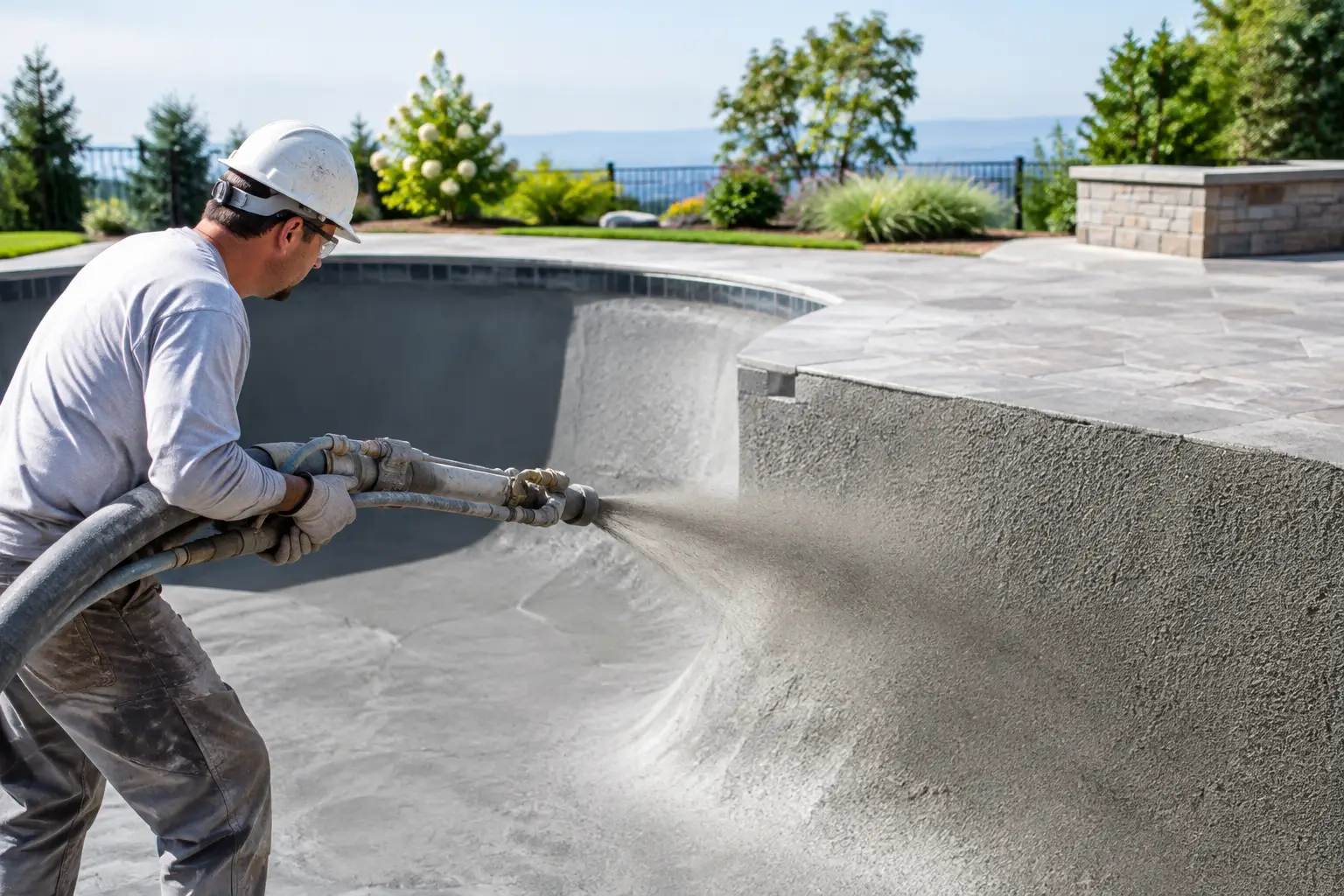
A gunite pool is a reinforced concrete shell sprayed into place and shaped on site. Gunite pools, often called concrete or shotcrete pools, are made by combining a dry concrete mix with water at the nozzle and spraying it over steel reinforcement. After the shell cures, it is finished with tile, coping and an interior surface such as plaster or pebble.
That difference affects almost everything else: upfront cost, feel, appearance, long-term care and flexibility in shape.
Upfront Cost and the Long View
If budget is your first filter, vinyl liner usually has the advantage. It typically costs less to build than a gunite pool of similar size. That can make an inground pool possible while leaving room in the budget for equipment upgrades, lighting or a heater.
The lower starting cost is only part of the picture. A vinyl liner is a wear surface. Sun, water chemistry, age and use all take a toll, and the liner will eventually need to be replaced. That future cost belongs in the budget conversation from the start.
Gunite usually costs more upfront because construction involves more on-site steps, the structure is more substantial and the design is more customized. The concrete shell is built for the long haul. Its interior finish also wears over time and will eventually need to be redone, so neither pool type is free of long-term costs. They just arrive on different schedules and at different scales.
Every property is different, so we do not publish price ranges here. For more on what drives the investment, see our Gunite Pool Cost in Georgia guide, and ask about financing.
Design Freedom
This is one of the biggest decision points.
A vinyl liner pool can look great. Because it is built in the yard rather than delivered as a shell, it offers real flexibility in length, width and layout, and liners come in a range of patterns and colors. For many families, that is more than enough.
Vinyl does have limits. Highly customized curves, wide tanning ledges, raised walls, attached spas, vanishing edges and detailed water features are harder to build, and some are not practical with a liner.
Gunite is the most adaptable option. Because the shell is formed on site, the pool can follow a slope, fit an irregular yard, include an attached spa or step down with the grade. That matters on many Northeast Georgia lots, where uneven terrain and red clay soil are common. See our custom pool design page for how Bulldog plans these projects in 3D before construction.
Surface Feel and Comfort
Vinyl liners have a smooth, soft feel underfoot, which many families like, especially with young kids who spend hours in the shallow end.
Gunite surfaces are firmer and feel different depending on the finish. Standard plaster feels different from a pebble finish, and tile adds its own texture. That does not make gunite uncomfortable. It means the surface experience varies, and it is worth comparing finish samples if comfort is a top priority. Our page on pool features and finishes covers the options.
Day-to-Day Care and Durability
People often lump these together, but they are different things.
A vinyl liner is nonporous, which can make water chemistry easier to keep steady and gives algae less to grab onto. At the same time, the liner can be punctured or torn by sharp objects, pet claws or rough play. Small punctures can often be patched, but the material itself is less rugged than concrete.
Gunite is extremely durable structurally. Its interior finish is porous, so balanced water chemistry and regular brushing matter more. If water care is neglected, staining, scaling or algae become more likely.
So which is easier to own? It depends on what kind of care you mean. Vinyl can be simpler from a surface-care standpoint but carries the risk of liner damage and eventual replacement. Gunite is structurally tougher but asks for more consistent surface care.
Fitting the Pool to the Property
A pool should look like it belongs on the property. Think about how people will move from the house to the water, where chairs will go and how the pool will look from inside the home.
Gunite tends to be the stronger choice when the pool has to work with grade changes, raised walls, spillover spas or a specific architectural look. Vinyl liner pools work well when the layout is straightforward and the goal is family recreation at a practical price.
In either case, the area around the pool must be graded so water drains away from the pool and the house. With Georgia’s heavy rains and clay soil, that is a construction requirement, not an afterthought. See pool drainage planning for more.
Resale and Buyer Perception
Resale is never guaranteed, but buyer perception is real. A well-built pool of either type can appeal to the right buyer. Gunite is often viewed as the more premium, permanent option. Some buyers looking at a vinyl liner pool will ask about the age and condition of the liner. Either way, a pool that is in good condition and fits the home carries more weight than one that looks like an afterthought.
When Vinyl Liner Is the Better Fit
- You want an inground pool at a lower starting cost.
- You prefer a soft, smooth interior surface.
- Your design is relatively simple and does not need complex features.
- You are comfortable planning for the liner to be replaced at some point.
When Gunite Is Worth the Extra Investment
- You want a fully custom shape, depth profile or attached spa.
- Your lot is sloped or irregular and needs a pool designed around it.
- You want premium finishes such as pebble, tile or a vanishing edge.
- You plan to stay in the home for many years and want a permanent concrete structure.
The Right Choice Depends on Your Yard
There is no single winner between vinyl liner and gunite. If you want a practical path to pool ownership with a lower upfront investment, vinyl liner may be right. If you want a custom pool designed around your home with the widest range of features and finishes, gunite is often the stronger option. The best way to decide is to evaluate both against your actual property, not a photo.
Bulldog Pool Builders can walk your yard, compare vinyl liner and gunite for your site and show you a 3D design before construction. Schedule a consultation or call (706) 705-7751.