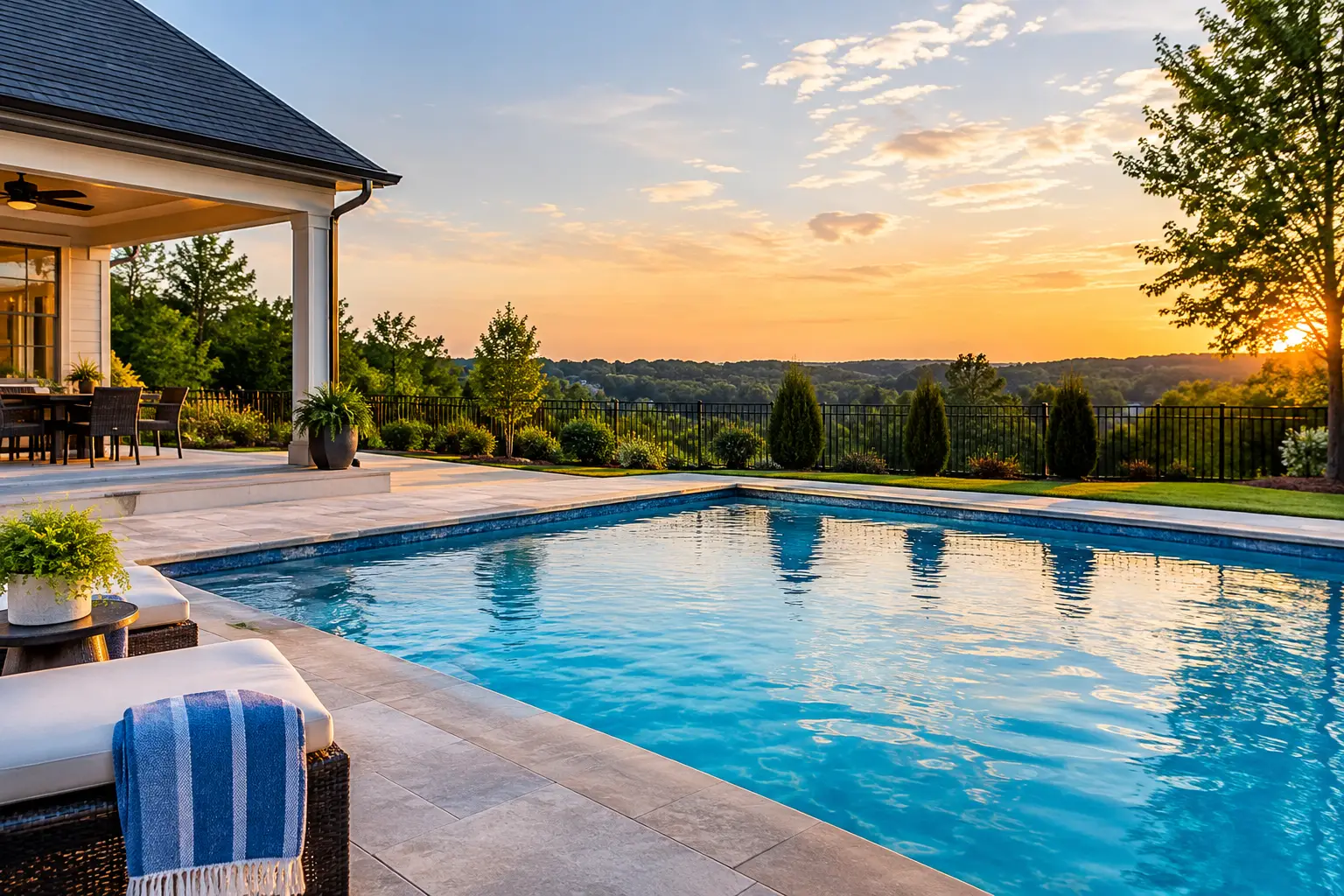
An infinity edge pool takes a site with a view or a real elevation change, a precisely level overflow wall, a properly sized catch basin, and a dedicated hydraulic system to keep water moving over the edge evenly. Those same requirements are what drive the cost: more excavation, more structure, more plumbing and equipment, and more tile and finish work than a conventional pool. The exact price depends on your property and design, so the useful question is not just what an infinity pool costs, but what it will take to build one correctly on your lot.
What Makes an Infinity Edge Pool Different
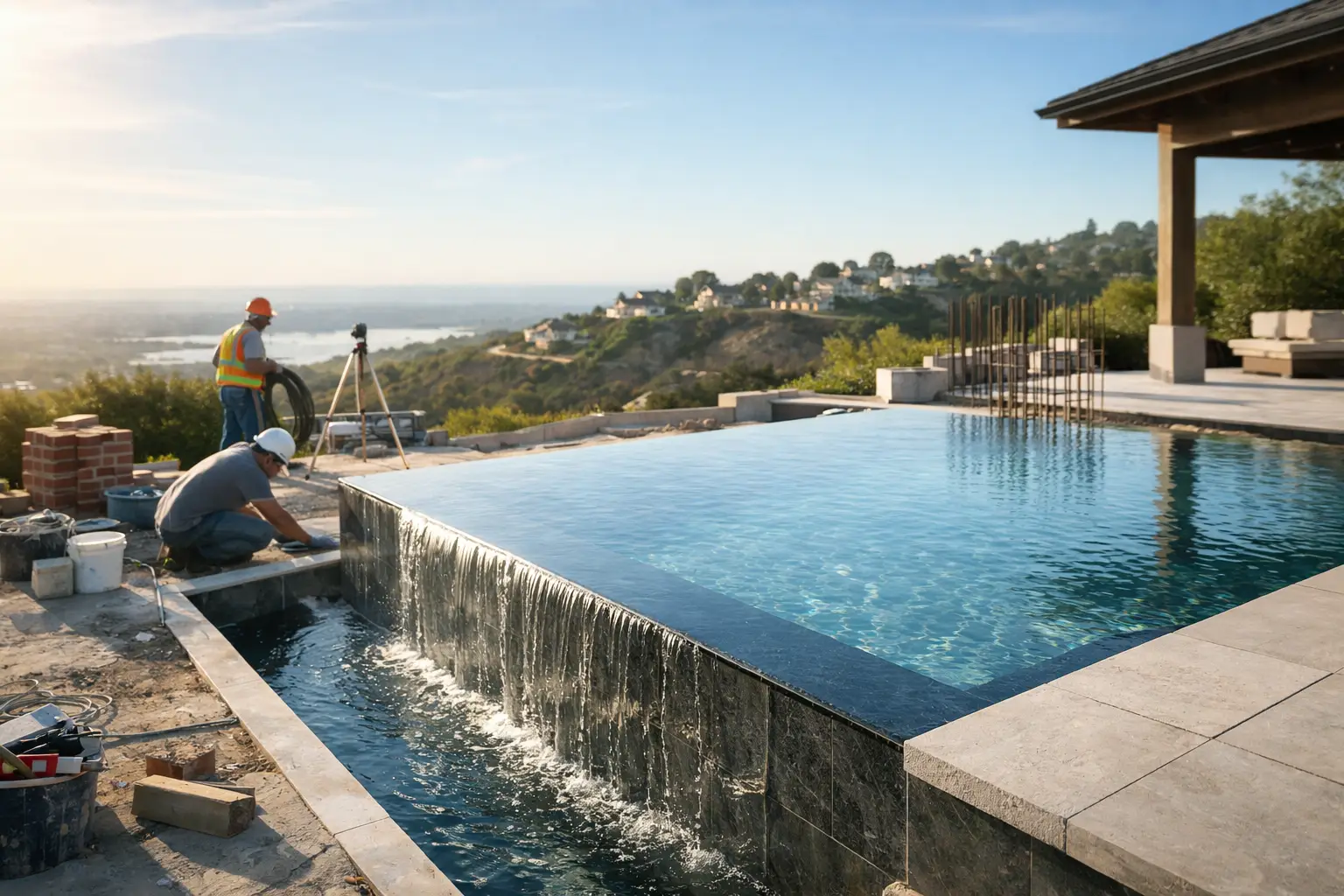
An infinity edge pool, also called a vanishing-edge or negative-edge pool, has at least one wall set slightly lower than the main water level. Water flows over that edge into a catch basin or lower trough, where it is filtered and pumped back into the pool. The result is a clean, level sheet of water that visually removes the far wall, so the surface seems to meet a wooded property line, a lake or the rolling hills common across Northeast Georgia and Upstate South Carolina.
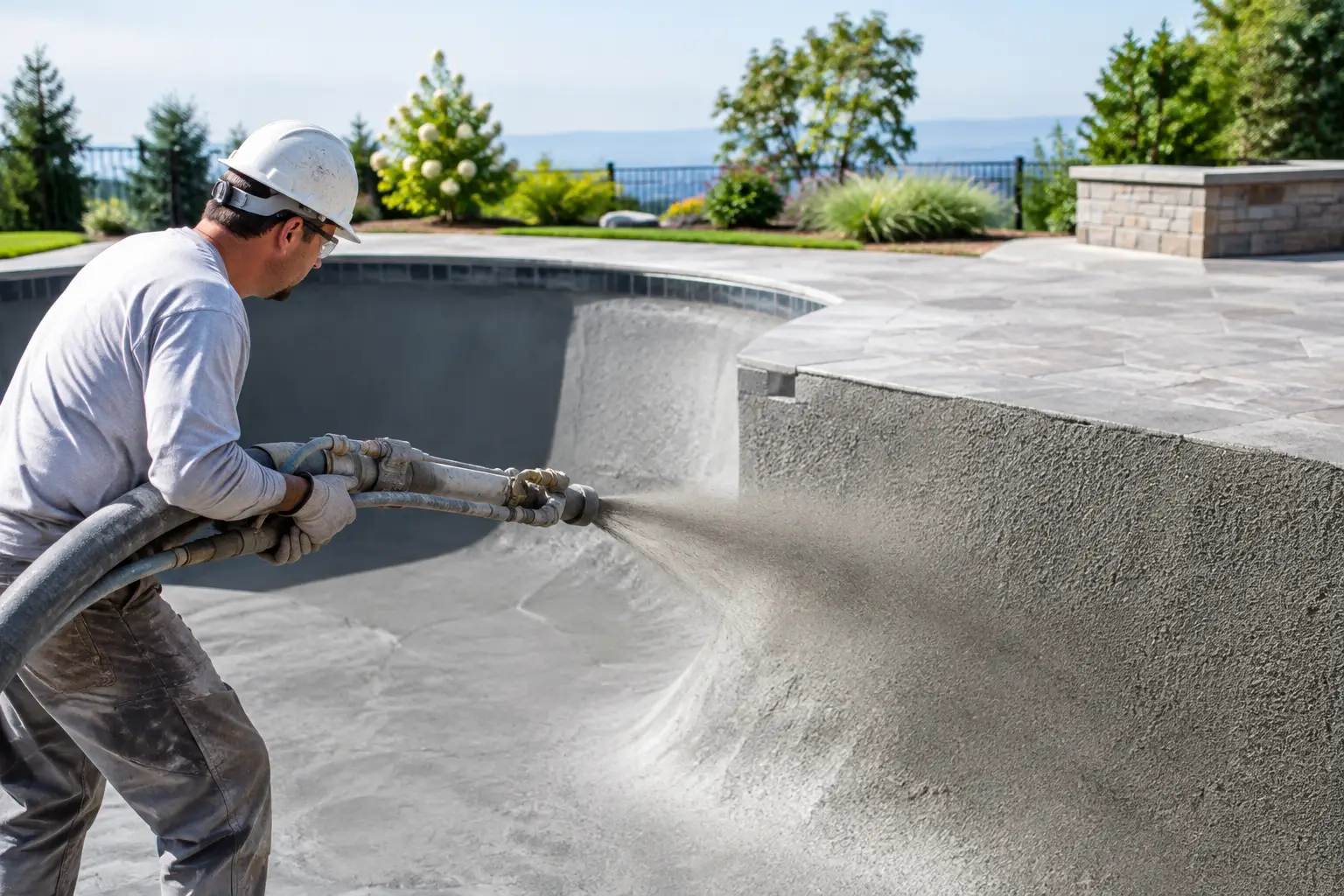
A standard pool holds water just below the coping and uses skimmers to pull in surface debris. An infinity edge depends on engineered overflow, a separate collection system and additional equipment. It is a structural and mechanical feature, not a style of tile or coping, and it has to be designed in from the start. That is why infinity edges are built as custom gunite pools, often called concrete or shotcrete pools. See our page on gunite pool construction for how the shell is formed.
Start With the Property, Not the Pool Shape
The best infinity edge pools are designed around the site. Before settling on a shape, your builder should evaluate grade, drainage patterns, soil, equipment access, setbacks and how the pool will relate to the house.
Slope creates the opportunity
A naturally sloped yard is usually the ideal setting. The catch basin and support structure can sit below the vanishing wall, so the main water surface looks out over the lower yard instead of toward a visible boundary. A steep lot does not make the project easy, though. Significant slopes may need retaining walls, engineered footings, drainage controls and careful equipment planning. Our guide to building a pool on a sloped yard covers those challenges.
Flat lots need a clear reason
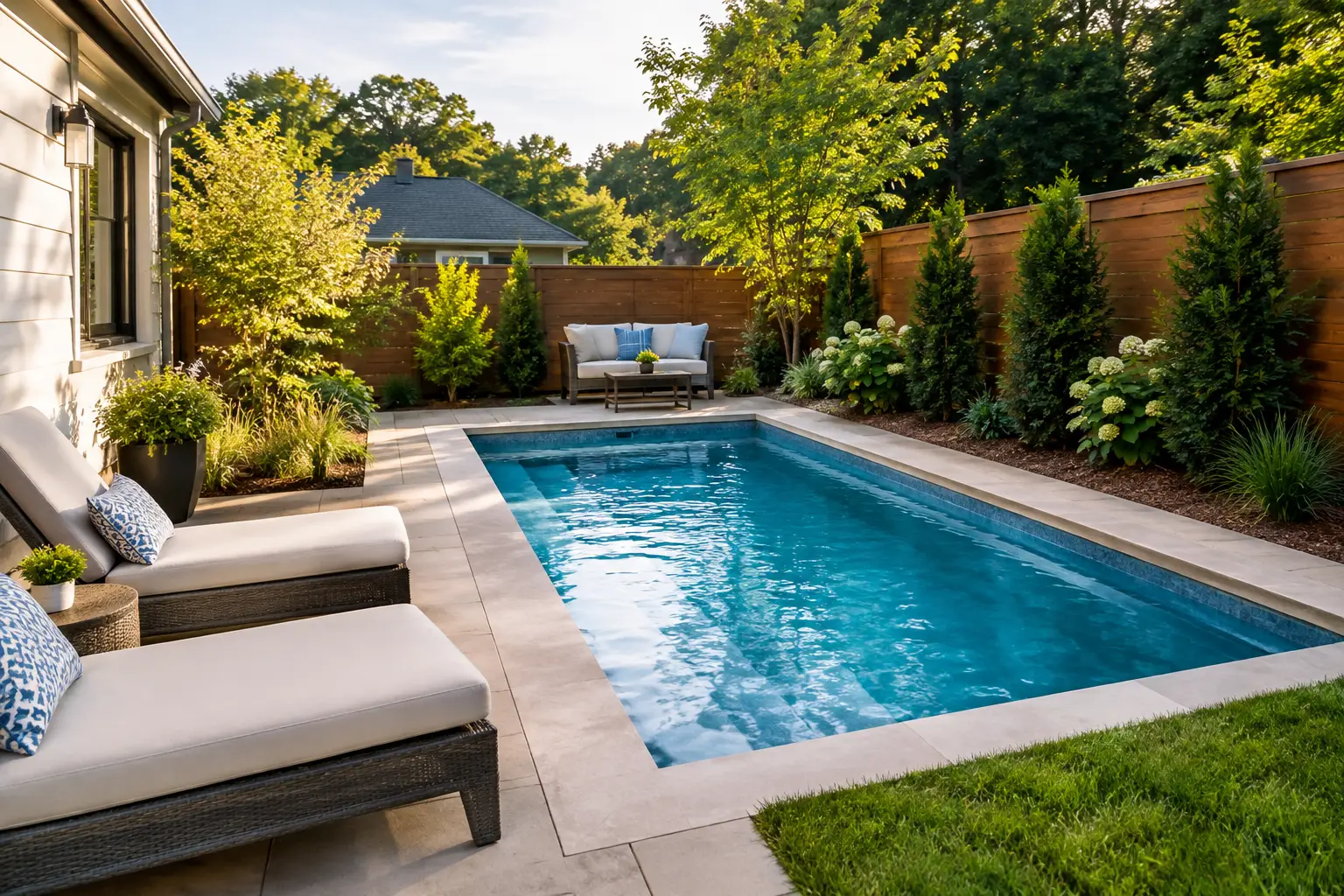
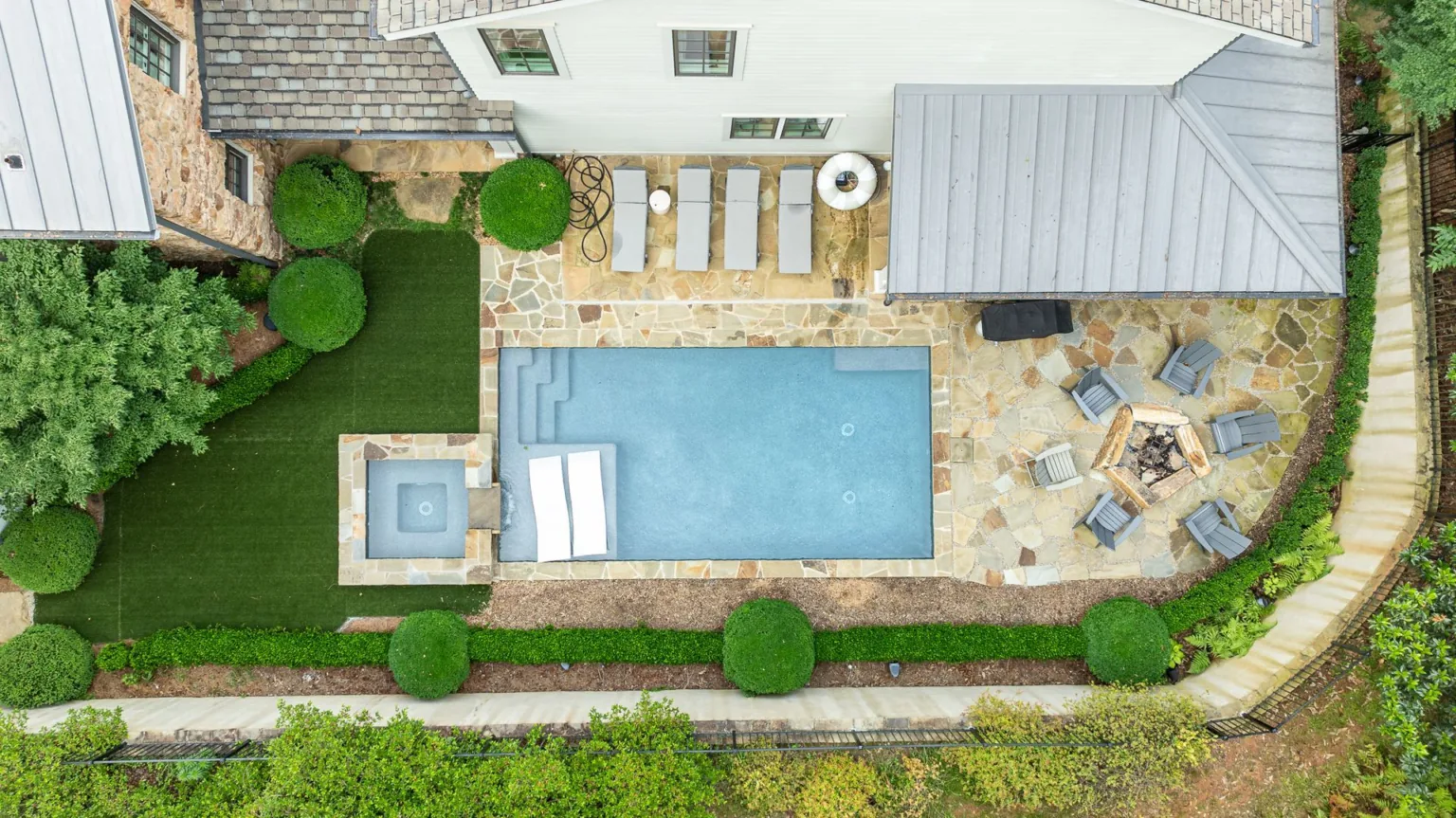
On a flatter lot, the effect can still work when the edge faces something worth looking at, such as a raised spa or a lower area of the yard. But if there is no view or elevation change, another feature may give you more for your budget. A well-designed standard pool with a tanning ledge, integrated spa and quality coping can have just as much impact.
The Engineering Behind the Edge
A vanishing edge demands accuracy at every stage.
- A level weir. The edge wall must be level along its full length so water flows evenly. A small variation can make water favor one side, breaking the smooth line and affecting circulation.
- A properly sized catch basin. The basin has to hold the water displaced by swimmers, rain and normal operation. Its size is calculated from pool volume, edge length, expected bather load and operating conditions. An undersized basin causes water-level problems and strains equipment.
- Balanced hydraulics. Separate plumbing lines, pumps, valves, filtration and automation may be needed. Flow rates must be balanced so water passes over the edge without noise, turbulence or bare spots.
- Structure. The vanishing wall, trough and any raised features must be engineered for water pressure, soil movement and surrounding loads. In a gunite shell, the steel reinforcement and shell construction are what everything else depends on.
Infinity-edge construction leaves little room for shortcuts. Excavation, reinforcing steel, gunite application, waterproofing of the basin, plumbing pressure tests, drainage and tile installation all affect how the edge looks and performs over time.
What Drives the Cost
Infinity edge pools cost more than conventional in-ground pools because the visual effect depends on extra structure, equipment and finish work. The final number depends on your site and design. For a broader look at how custom pools are priced, see our Gunite Pool Cost in Georgia guide. These are the factors that move it most.
Site slope, soil and access
Slope makes the effect possible, but it also adds structure. The shell, edge wall and basin may need retaining walls, engineered footings and extra reinforcement. Northeast Georgia lots often have red clay, buried rock and tight access. A yard that looks simple from the house can become more complex once excavation starts, and if equipment has to squeeze through a narrow side yard, labor and logistics increase.
Pool size and edge length
The length of the vanishing edge matters as much as overall pool size. A compact pool with one shorter edge can deliver the look on a more manageable budget. A large pool with a long edge, multiple water levels or a perimeter-overflow design needs much more structure, tile, plumbing and water management. Shape matters too: straight lines are simpler to form, while curves, raised spas, tanning ledges and integrated water features each add coordination.
Catch basin and equipment
The catch basin is one of the defining cost drivers. It needs its own space, dependable waterproofing and circulation plumbing. An infinity pool may also need additional pumps, automation, valves and filtration capacity. That equipment keeps the edge consistent, and getting it right during construction prevents performance problems later.
Tile, interior finish and waterline detail
The edge is on display all day, so tile, coping, interior finish and lighting all shape how crisp it looks. Glass tile and premium porcelain create a striking edge but raise material and installation costs. A quality plaster or aggregate interior can look beautiful at a different budget level. Look at samples outdoors, because a finish that looks dramatic indoors can read very differently in Georgia sun. Our pool features and finishes page shows the options.
Permits and engineering
Engineering and permit requirements vary by county, city and property. A good builder accounts for them up front rather than presenting a design with unanswered site questions.
Compare Proposals by Scope, Not Just Price
The lowest figure does not always cover the same work. Ask what is included. A clear proposal should identify pool dimensions, edge location and length, catch basin, equipment package, finish selections, drainage and any walls or site work. If allowances are used for tile or other selections, understand what material level they cover.
Operating Costs and Ongoing Care
The build is the largest part of the investment, but operation deserves attention too. Water circulates through the edge system, so pump run times and energy use can be higher than for a standard pool. Variable-speed pumps and good automation help manage that.
Expect more care than a standard pool. The catch basin needs regular cleaning, and edge flow should be checked to make sure it stays even. Evaporation is more noticeable because water constantly moves across a wide surface. Leaves and pollen collect in the trough, especially on wooded Georgia lots. Splash-out, rain and evaporation all affect water balance, so chemistry needs steady attention. Over time, finishes, lights and equipment will need upkeep or replacement, as with any pool.
None of this makes an infinity pool impractical. It means choosing the feature because it fits the property and your expectations, not just because it looks good in a photo.
Is an Infinity Edge Worth It for Your Lot?
For the right property, the value is easy to see. An infinity edge can direct the eye toward a wooded view, create a strong focal point, and give a hillside lot a more intentional look. For a flat lot with no view, a standard design with strong materials and lighting may be a better use of the budget. The goal is to build the feature that makes the most sense for your home.
Every Bulldog Pool Builders project starts with a 3D custom pool design, so you can see the edge, the view and the grade before construction. To find out whether an infinity edge fits your property, schedule a consultation or call (706) 705-7751.