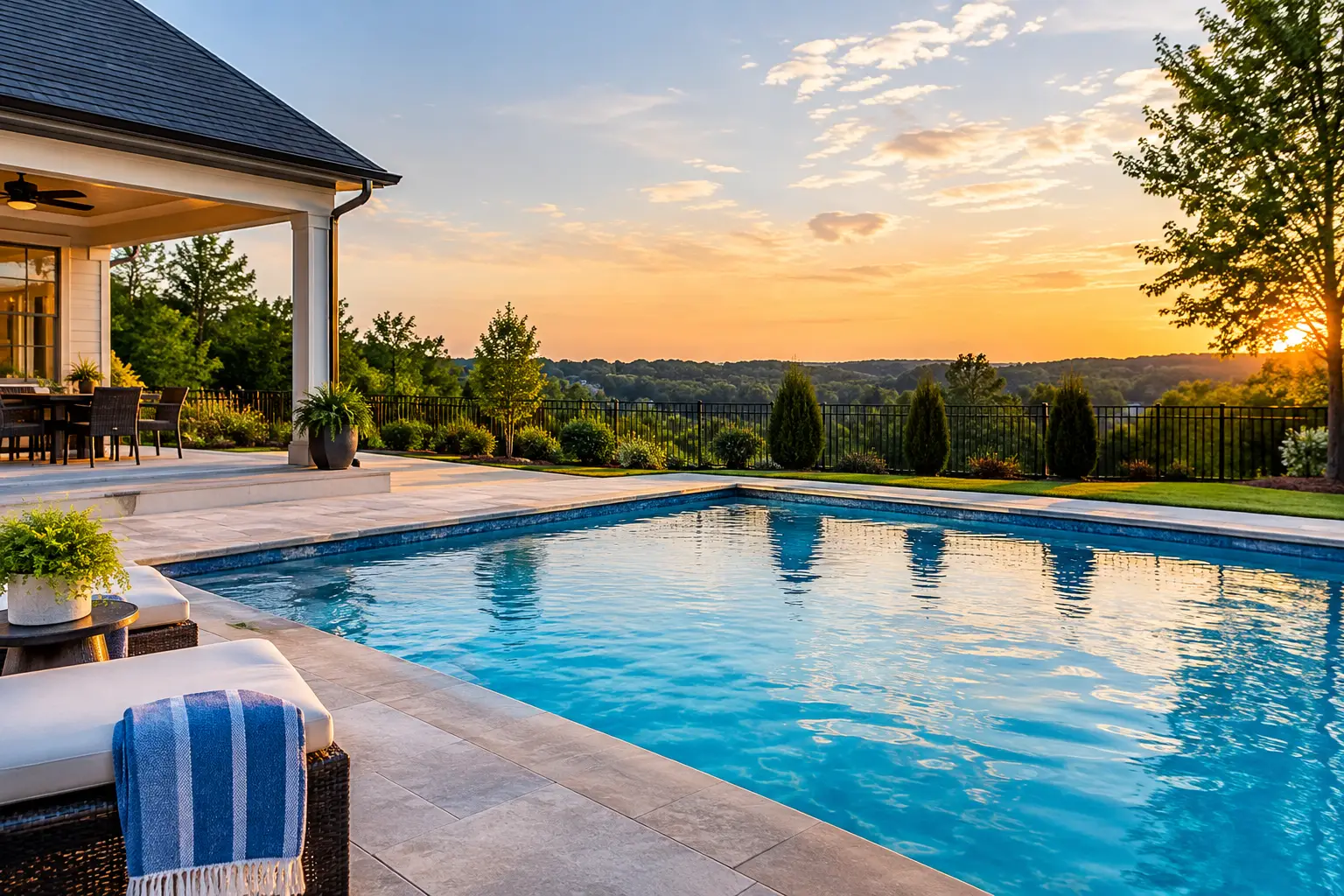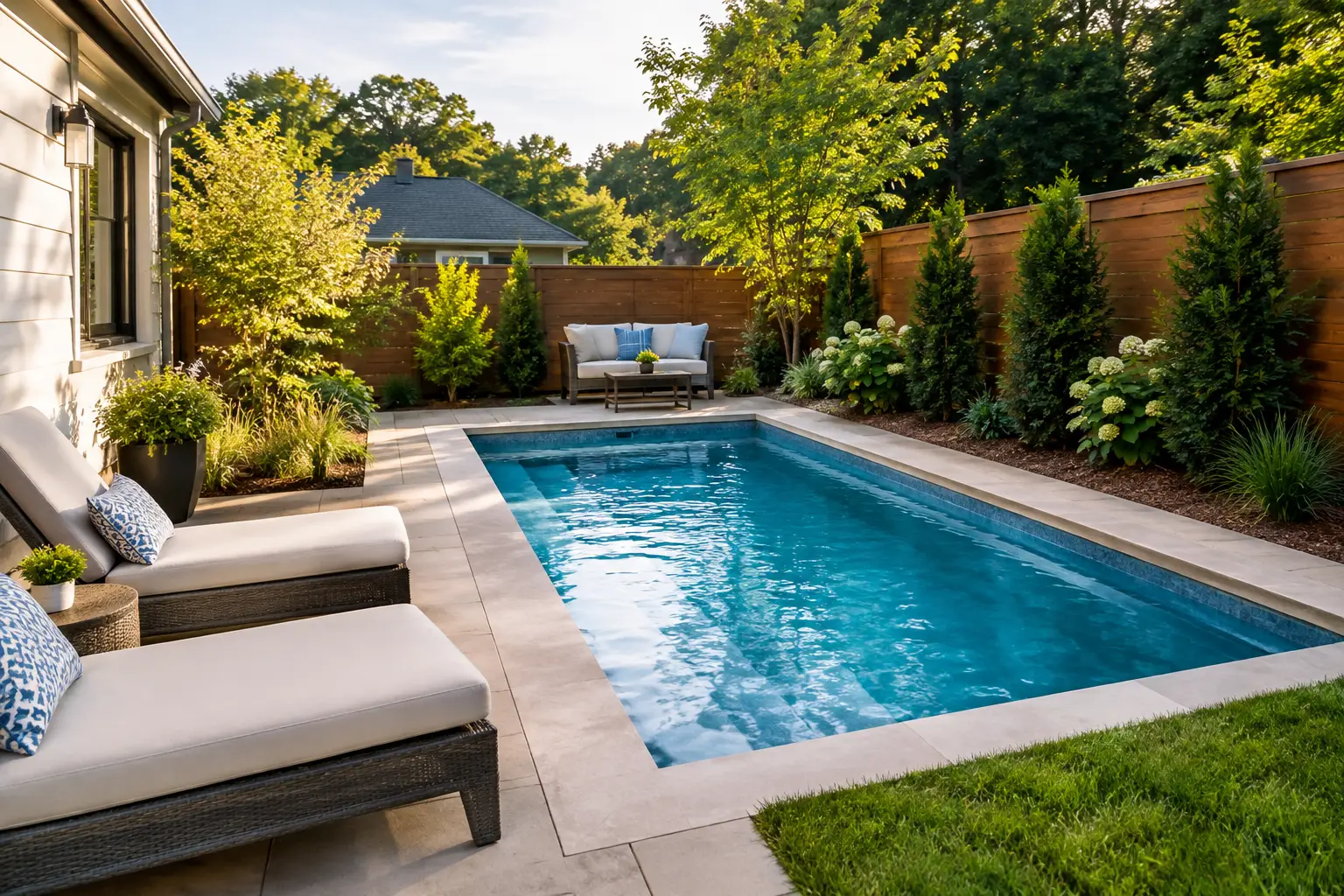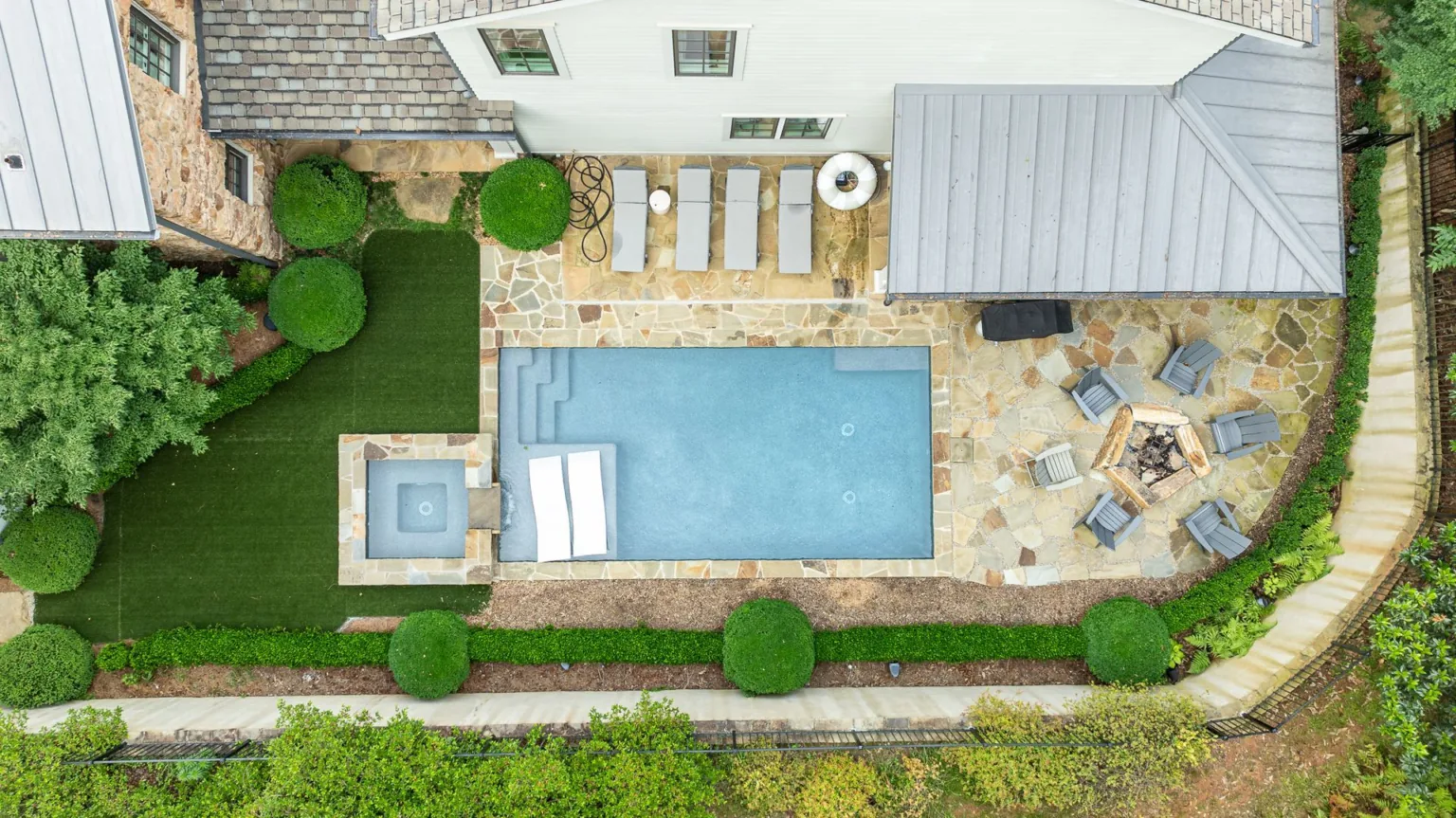
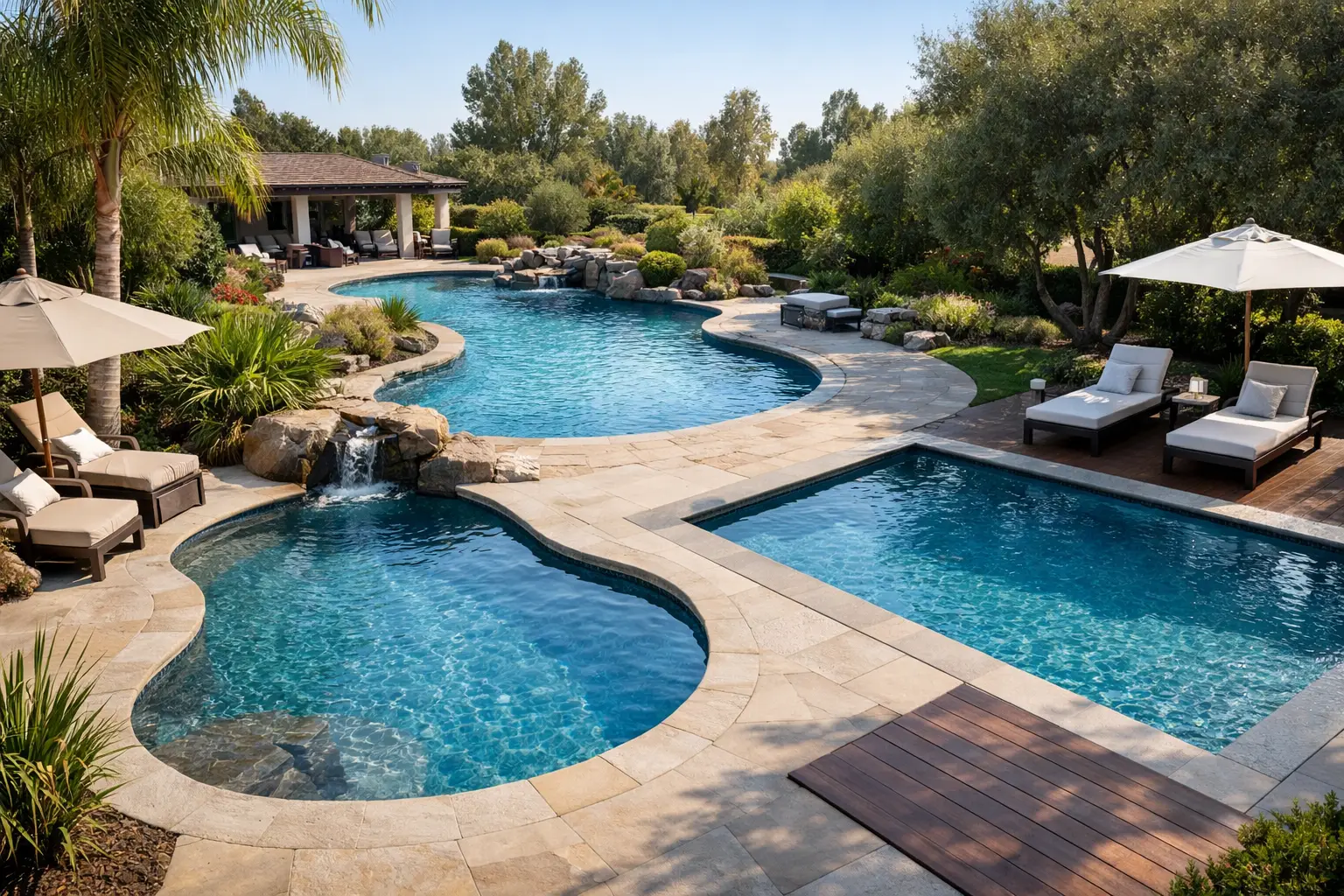
The right pool shape is the one that fits your lot, suits your house and supports the way your family will use the water. Rectangles are efficient and good for swimming laps. Freeform and kidney shapes feel more relaxed and adapt to curves in the land. L-shaped pools separate a swim area from a lounging area. Layout matters just as much: where the pool sits relative to the house, sun and drainage decides how well it works day to day.
Here is how to choose a shape and plan a layout that fits your yard.
Start With How You Will Use the Pool
Before choosing between a clean rectangle and a flowing freeform, decide what the pool needs to do.
- Exercise: a long rectangle or narrow linear pool gives the most usable swim lane.
- Young children: a broad shallow area, a tanning ledge and clear sightlines from the house.
- Entertaining: an open swim area with benches, a ledge or an attached spa where guests can gather.
- Relaxing: curves, a sun shelf and comfortable places to sit in the water.
Many homeowners want a pool for everything. That is normal. The answer is usually to pick the primary use and design from there, rather than chase every feature in one shape.
Common Pool Shapes and What They Do Best
Rectangular pools
Rectangles remain one of the most popular choices. Their straight lines work with modern homes, traditional brick exteriors and properties that already have strong linear geometry. They make efficient use of space, provide a long uninterrupted swim area and leave predictable space around the water for chairs and walkways. They are especially effective on narrow or rectangular lots.
A rectangle does not have to look plain. A tanning ledge, raised spa, waterline tile or raised wall adds a custom finish without giving up the practical layout. The trade-off is that a rectangle can feel formal, which the coping and surrounding materials can soften.
Freeform pools
Freeform pools use flowing curves for a relaxed, natural look. They suit yards with mature trees, irregular property lines, rolling terrain or a less formal home. Curves can work around a tree you want to keep, follow a slope or create a natural edge. Freeform pools pair well with natural stone coping and rock waterfalls.
The key is discipline. Too many curves can make a pool feel busy and leave awkward pockets around it that are hard to use. A good freeform design still leaves clear paths and room for seating.
Kidney-shaped pools
The kidney shape gives a soft look without the complexity of a fully irregular design. Its inward curve creates a natural separation between shallow and deeper areas. It suits traditional or transitional homes and is easy to arrange chairs around. It is less efficient for lap swimming than a rectangle, which matters for serious swimmers but not for most families.
L-shaped pools
An L-shaped pool creates two functional areas without an oversized footprint. One leg can be a longer swim lane while the other holds a shallow area for lounging or young swimmers. It works well when the house itself forms an L or a corner of the yard needs to be used. The inside corner needs careful planning so it does not become dead space; it can be a good spot for an attached spa or built-in benches.
Geometric pools
Geometric pools include squares, sharp-cornered shapes and custom linear forms. They create a tailored, architectural look that suits contemporary homes. They can align with the house, frame a view and create clear zones around the water. On steep or irregular sites, though, forcing a rigid shape can add construction complexity. The pool should work with the site, not fight it.
Shape and Pool Type
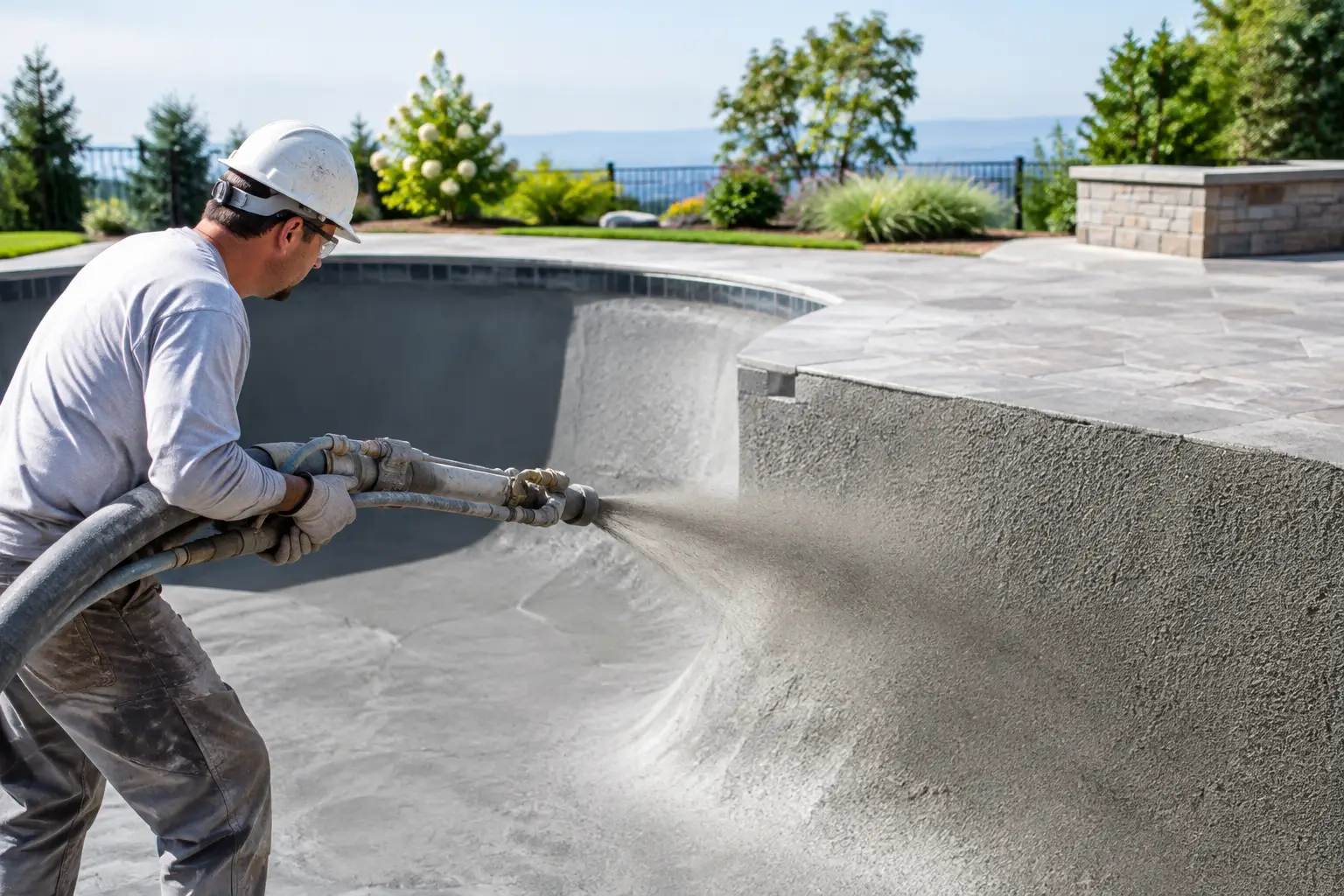
Your construction method affects which shapes are possible. Gunite pools, often called concrete or shotcrete pools, can be built in virtually any shape, including L-shapes, custom geometry and freeform curves. Fiberglass pools come in a range of factory shapes, including rectangles and freeforms with built-in ledges. Vinyl liner pools offer flexible sizing in simpler shapes. Bulldog builds all three. Learn more about custom pool designs.
Let the Lot Lead the Design
Inspiration photos rarely match your property. A freeform pool that looks great online can waste space in a tight, structured yard, and a rectangle forced into an irregular yard can feel rigid. Before deciding, look at the fixed conditions:
- Property lines, easements and setback rules
- Septic systems and utility locations
- Drainage paths
- Slope and soil
- Trees you want to keep
Many Georgia lots are not flat. A sloped yard may call for a raised pool wall, a stepped design or a position that reduces excavation. Red clay soil and heavy rain mean the area around the pool must drain away from the water and the house. See building a pool on a sloped yard.
Plan the Layout From the House Out
Many homeowners start by putting the pool in the biggest open part of the yard. A better approach is to start at the house and work outward. Your back door, covered porch and main sightlines should help set the pool’s position. A pool tied visually to the home usually feels more connected than one pushed to the far edge of the property.
Ask practical questions. If guests step out from the kitchen, where do they reach the pool? If you want to watch children from inside, does the shallow end stay in view? If you swim in the evening, is the walk from the house short and well lit?
Sun, shade and wind
Watch the yard at noon, late afternoon and early evening. A pool that gets good morning light but bakes in the afternoon may be less comfortable than it seems. Too much shade can keep the water cool and the surrounding area damp. Wind matters, too: an exposed spot can cool the water and make sitting nearby less pleasant. Place a tanning ledge where it gets the sun you want.
Privacy
If the sunniest spot is in direct view of a neighbor’s upstairs window, a small shift in orientation or a raised wall may solve it without a full redesign.
Leave room around the water
A common layout mistake is a nice pool with only a narrow walkway around it. Plan space around the pool for chairs that do not block the walking path, and keep a clear route between the house and the water so wet swimmers are not cutting through where people sit.
Place Features and Equipment Carefully
An attached spa should be easy to reach from the house, especially in cooler months. A tanning ledge should not block the main swim path. Learn more in our post on adding a spa to your pool.
Pumps, filters and heaters need a practical location with service access and some distance from where people sit. Placing equipment too far away creates long, inefficient plumbing runs. Underwater lights and step lights should be planned for safety first.
How Shape and Layout Affect Cost
A rectangle is not always the least expensive option, and curves are not always more costly. Site access, excavation conditions, slope, features and finish choices often move the budget more than the outline. Placing the pool far from the house can add plumbing and electrical runs and more grading. Building deep into a slope may require retaining work as part of the pool structure. Cost depends on the property and design; see our Gunite Pool Cost in Georgia guide.
Choose a Shape That Still Fits Years From Now
Trends can inspire a design, but daily use should decide it. Ask whether the pool will still work when children get older or when you entertain more. Then stand in your yard and picture a normal day there. If the shape and layout work for that, you are on the right track.
Bulldog Pool Builders creates a 3D design of your pool before construction so you can see the shape and layout on your actual property. Schedule a consultation or call (706) 705-7751.