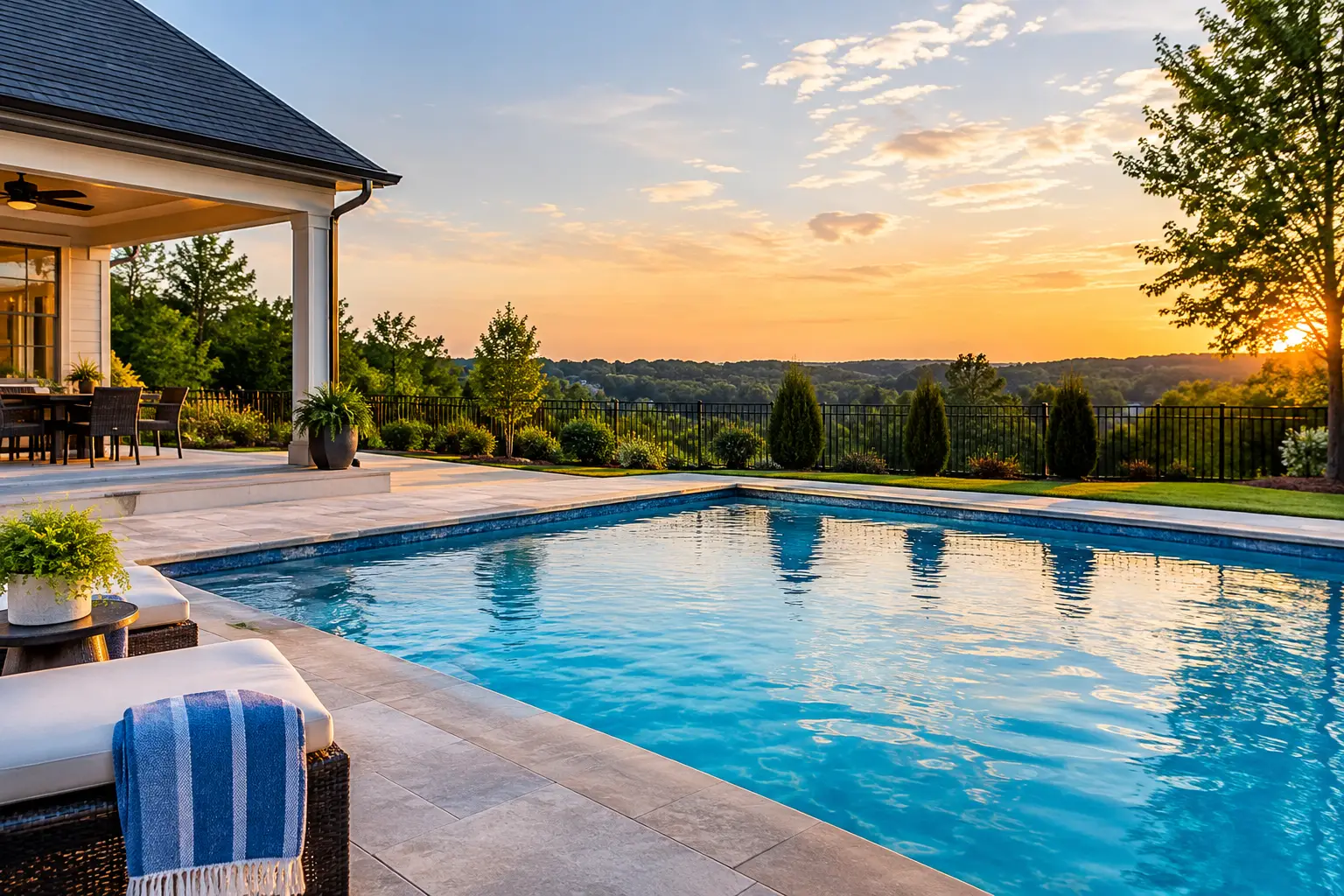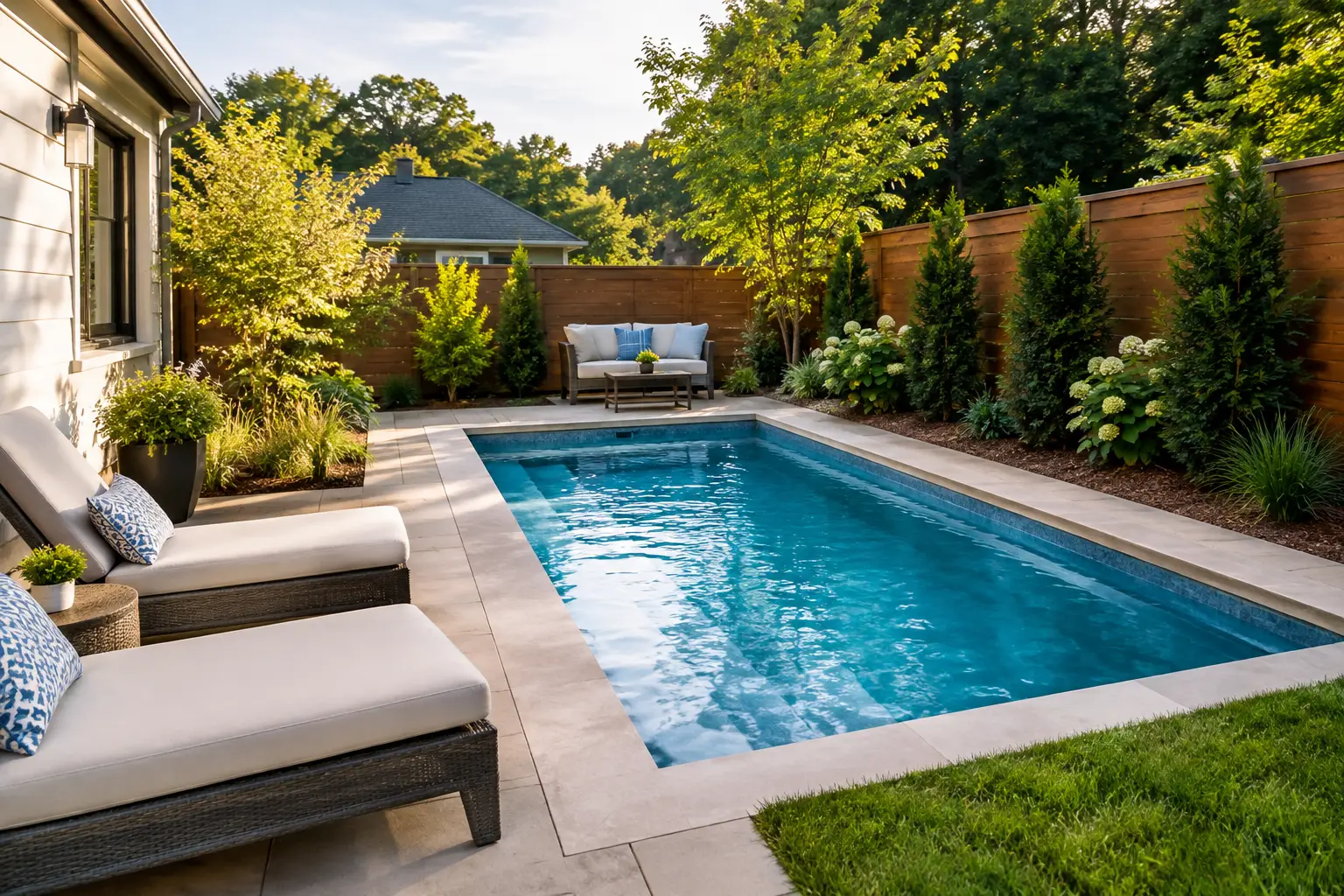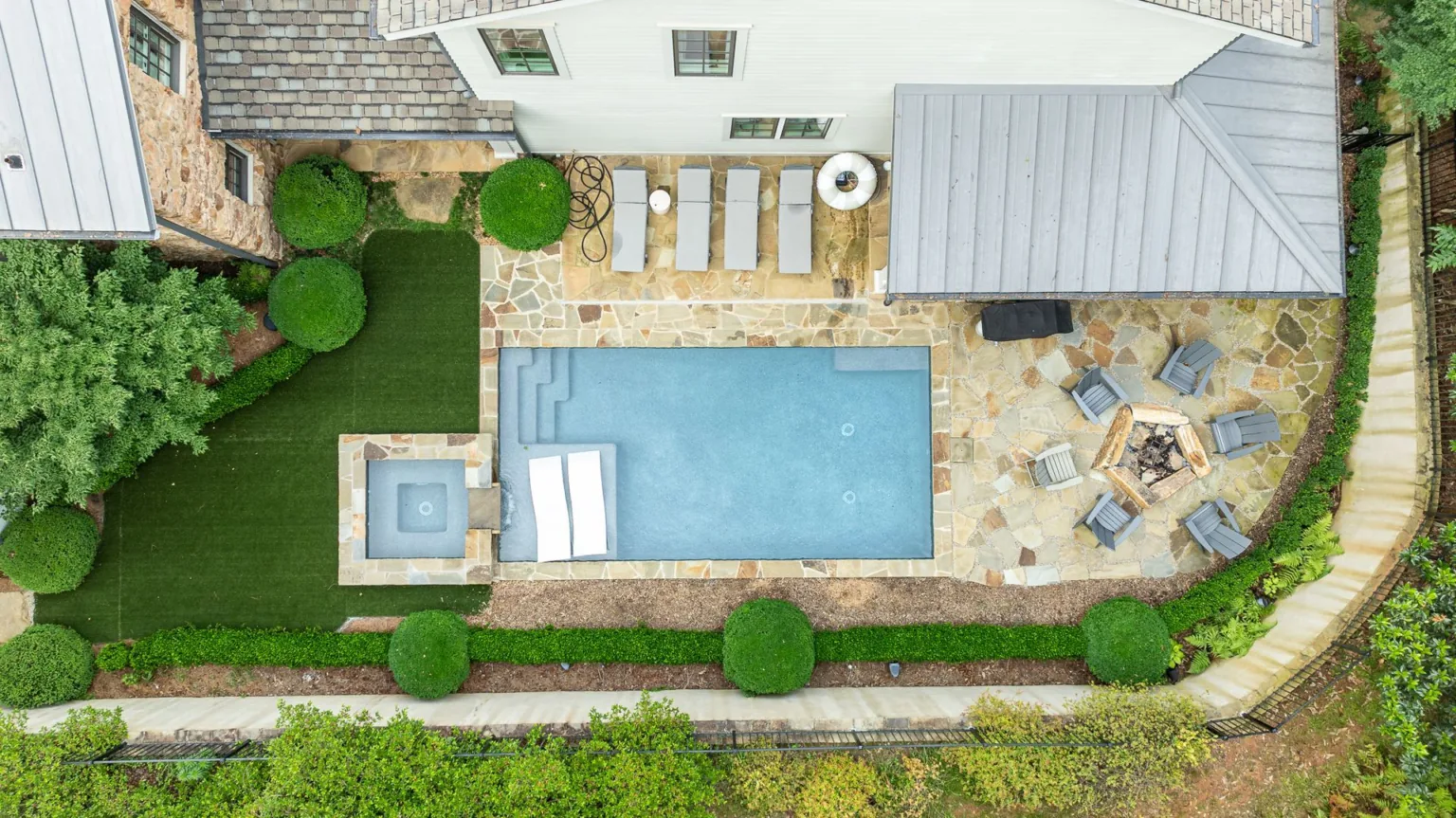
To choose a pool builder, look past the lowest number and check five things: how they evaluate your property, their experience with the pool type you want, how clearly their proposal defines the scope, who will manage your project, and whether their credentials, insurance, and permit knowledge hold up. The right builder has a clear process, understands the construction details behind the design, and tells you honestly when a site condition or design choice changes the plan.
A pool is one of the largest improvements you can make to a home, and the builder you choose shapes the result long after construction ends. Use these checks before you sign a contract.
1. Start with the yard you actually have
The best pool is designed around your lot, not picked from a brochure. Slopes, drainage paths, easements, septic systems, tree roots, utility lines, and access for equipment all affect what can be built and what it will cost.
Ask each builder how they evaluate the property before finalizing the design and price. They should talk about how equipment will reach the backyard, how elevation changes affect the design, where water drains, and where excavated soil will go. Northeast Georgia lots often come with slopes, red clay, rock, and runoff concerns. If your yard has a steep grade or tight access, those realities should be addressed early, not added as a surprise after excavation begins.
Good builders also design for how you will use the pool. How many people will swim? Do young children need a shallow area? Where will chairs go? Is there room for equipment that does not dominate the view? A builder who asks these questions is not steering every homeowner toward the same layout.
2. Look for experience with your pool type
Gunite, fiberglass, and vinyl liner pools each serve different needs. There is no single right answer, but there should be a clear reason behind a builder’s recommendation.
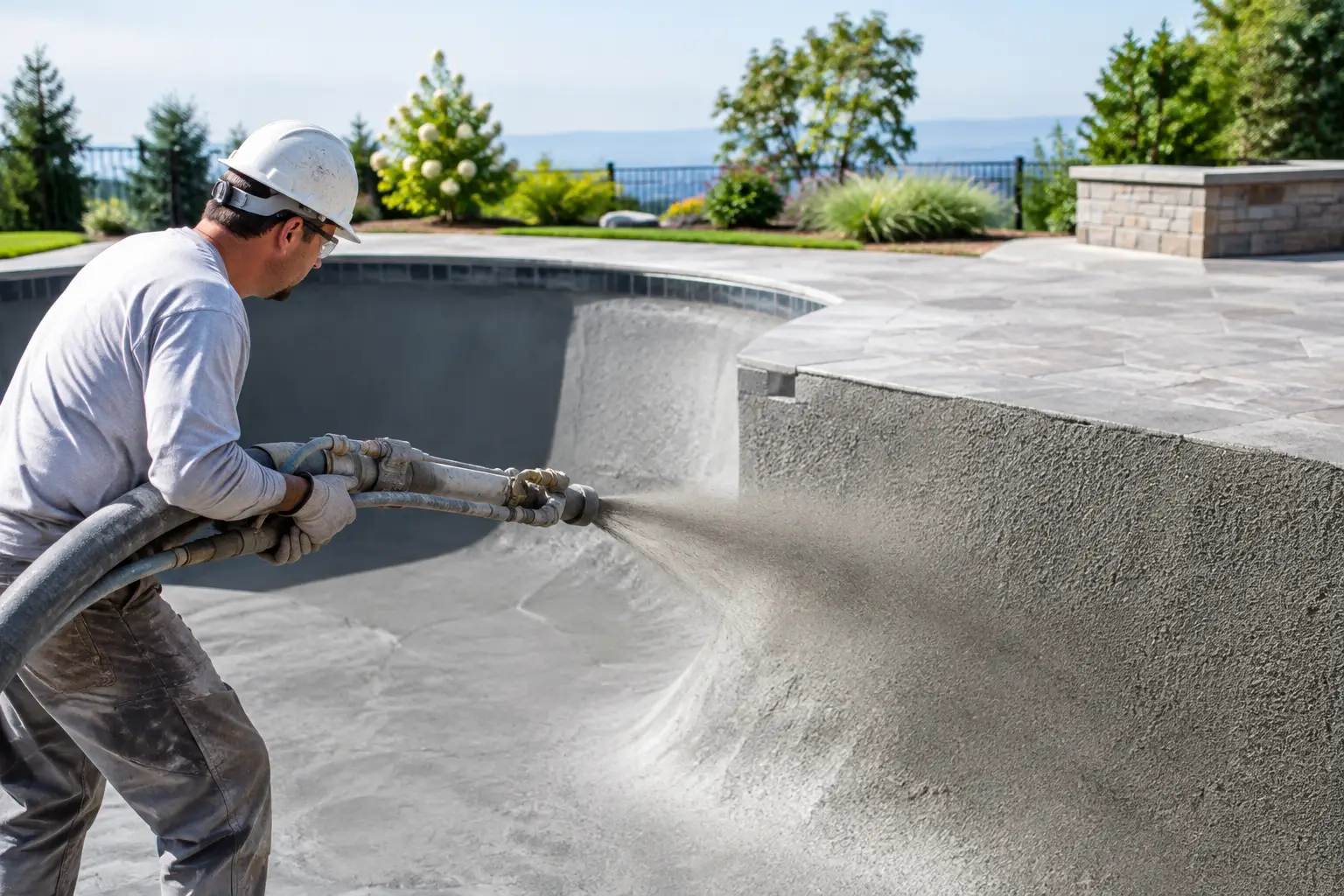
- Gunite pools, often called concrete or shotcrete pools, offer the most freedom in shape, size, depth, finishes, and built-in features. They suit custom designs and challenging lots.
- Fiberglass pools are factory-made and delivered by truck. They install faster when the site and the available shell sizes fit your goals.
- Vinyl liner pools can be a practical choice for some budgets and designs, but the liner will eventually need to be replaced.
Ask the builder to explain the trade-offs in plain language. If every conversation returns to one pool type without considering your property or priorities, that may be a sales preference rather than a design recommendation.
3. Review work that matches your project
Photos help, but they do not tell the whole story. Ask to see completed pools similar in scale, style, and site conditions to yours. If you want a freeform pool on a sloped lot, ask how the builder handled comparable grades.
Look closely at the details: coping transitions, tile alignment, how the pool sits in the yard, and where the equipment is placed. These reveal craftsmanship. A pool should look like it belongs on the property.
Ask for recent references and have a real conversation with them. Did the finished pool match the original plan? Were costs explained clearly? How did the builder handle scheduling, change requests, and the final punch list? Would they hire the company again? Look for patterns in reviews that describe the process, not just star ratings. Every builder runs into an occasional problem. What matters is whether they take ownership and communicate clearly.
4. Compare detailed proposals, not just prices
A low estimate is not automatically a better estimate. It may simply leave out items another builder included. Compare proposals line by line instead of looking only at the total.
A clear proposal should identify:
- Pool type, dimensions, and construction method
- Interior finish, waterline tile, and coping
- Equipment package: pump, filter, sanitation, heating, lighting, and automation
- Included features such as tanning ledges, spas, or water features
- Site preparation, excavation, soil removal, and access limitations
- Electrical work, permits, and inspection coordination
- Drainage work and site cleanup
- Allowances for materials that may vary in price
It should also explain what is excluded and what happens if excavation uncovers rock, poor soil, buried utilities, or drainage conditions that need extra work. You do not need every minor decision made before signing, but you do need to know the assumptions built into the price. A builder who takes time to walk you through the estimate is giving you a clearer path to managing your budget. For more on what drives pricing, see our Gunite Pool Cost in Georgia guide.
5. Ask who will manage the work
A pool build involves excavation, steel, plumbing, electrical, the shell, finishes, and several inspections. Someone needs to own the schedule and answer your questions without passing you from one subcontractor to the next.
Ask who your day-to-day contact will be, how often you will get updates, and which parts of the job are handled in-house. Ask how the team handles delays from weather, inspections, materials, or site discoveries. Heavy Georgia rain can shift schedules. A dependable builder will not promise nothing will change. They will explain how they communicate when it does.
Ask how change orders work too. Any change should be documented with clear pricing and timing before work proceeds.
6. Verify credentials, insurance, and permit knowledge
Do not assume the paperwork takes care of itself. Ask about applicable licenses and registrations, proof of general liability and workers’ compensation coverage, who is responsible for permits, and how inspections are managed in your county or city. Requirements vary, especially for electrical work, setbacks, safety barriers, and stormwater. If you are expected to handle any approval yourself, that should be in writing.
Ask about warranties as well. Understand what the equipment manufacturer covers, what the builder covers, and which operating practices could affect coverage. A polished website is not proof of construction qualifications. Documentation is.
7. Ask about equipment and long-term ownership
The equipment shapes much of your day-to-day experience. Ask what is proposed and why it fits your pool. A family that wants a longer swim season may value a heater or heat pump. Homeowners who travel may want automation and remote monitoring. Water features look and sound great, but they affect circulation and operating costs. Also ask who you can call with a startup question or warranty concern after the job is done.
8. Judge communication before you sign
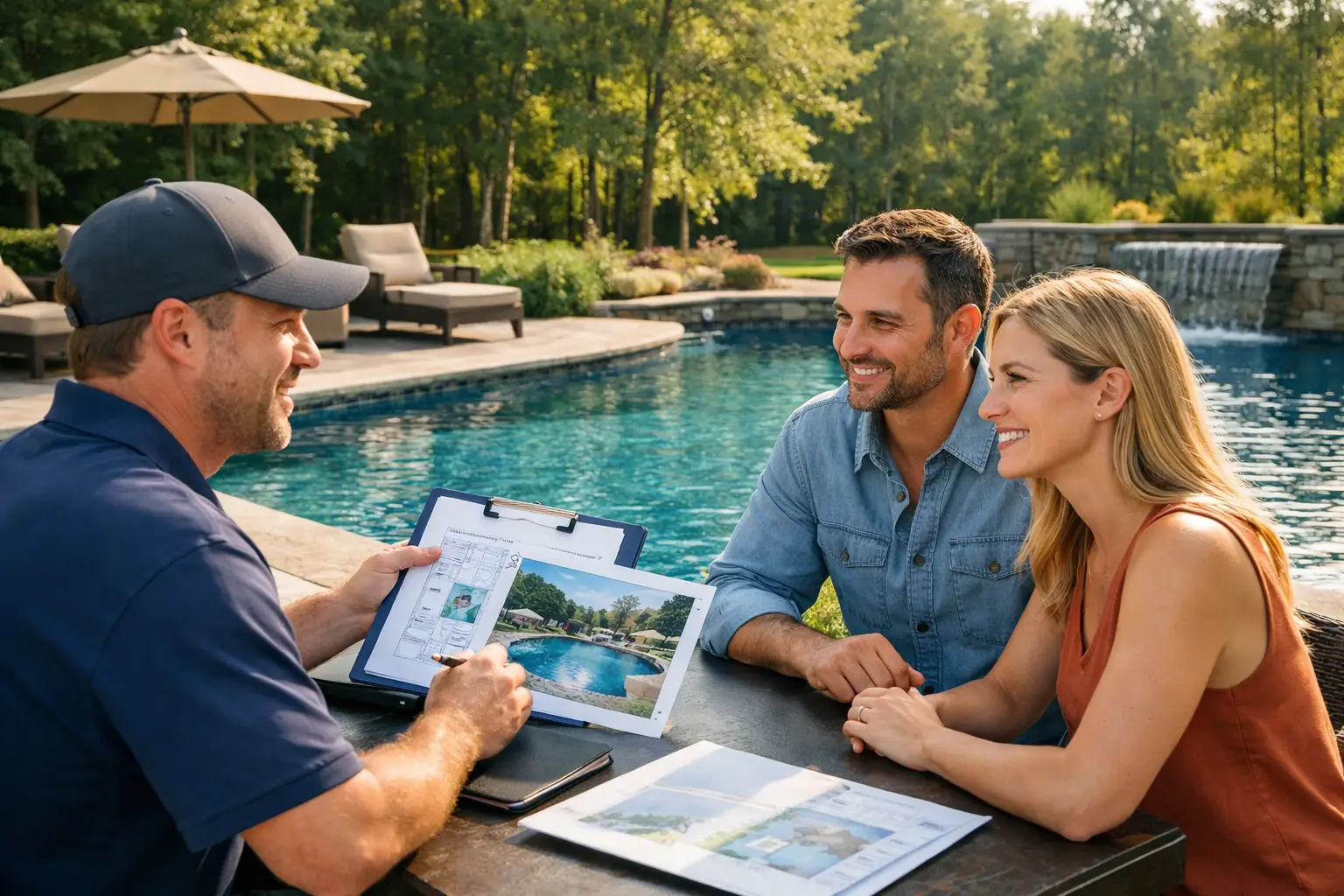
Early conversations are a preview of construction. Does the builder arrive prepared and listen to how you plan to use the pool? Do they answer direct questions clearly and follow through on drawings and pricing? Do they explain limitations without pressure?
Watch for red flags:
- An instant price with no real discussion of your site
- A design pushed before the builder understands your property
- Vague allowances or equipment details that get brushed aside
- Urgency-driven sales tactics
- Promises of an unrealistically fast schedule
A builder who talks honestly about weather, inspections, and lead times is usually more reliable than one who guarantees a quick finish.
Take your time with the decision
The best builder is not always the biggest or the cheapest. It is the one whose planning gives you confidence before the first machine reaches your yard. Bulldog Pool Builders designs and builds new gunite, fiberglass, and vinyl liner pools across Northeast Georgia and Upstate South Carolina. You can see how we work on our process page, or schedule a consultation or call (706) 705-7751 to talk through your project.